Ditapis dengan
Encyclopedia of the modern Middle East, Volume 1
The Encyclopedia of the Modern Middle East is a comprehensive four-volume reference work that provides scholarly coverage of the history, politics, culture, religion, and societies of the Middle East and North Africa from the 19th century to the late 20th century. Edited by leading historians and researchers, the encyclopedia contains detailed entries on key countries, historical events, politi…
- Edisi
- -
- ISBN/ISSN
- -
- Deskripsi Fisik
- ix, 521 pages : illustration ; 28,5 cm
- Judul Seri
- -
- No. Panggil
- 956.003 SIM e
Encyclopedia of the modern Middle East. Volume 4
Volume 4 of the Encyclopedia of the Modern Middle East concludes the comprehensive four-volume reference work covering the history, politics, societies, and cultures of the Middle East and North Africa from the nineteenth century to the contemporary period. Edited by Reeva S. Simon, Philip Mattar, and Richard W. Bulliet, this final volume contains authoritative, scholarly articles written by sp…
- Edisi
- -
- ISBN/ISSN
- 0-02-897064-0
- Deskripsi Fisik
- 2182 pages : illustrations ; 28,5 cm
- Judul Seri
- -
- No. Panggil
- 956.003 SIM e
Encyclopedia of the modern middle east. volume 3
Volume 3 of the Encyclopedia of the Modern Middle East continues the comprehensive coverage of the region’s modern history, societies, politics, cultures, and key personalities. Edited by Reeva S. Simon, Philip Mattar, and Richard W. Bulliet, this reference work offers authoritative, scholarly articles written by specialists in Middle Eastern studies. Entries in this volume span a wide range …
- Edisi
- -
- ISBN/ISSN
- 0-02-896011-4
- Deskripsi Fisik
- 1625 pages : illustration ; 28,5 cm
- Judul Seri
- -
- No. Panggil
- 956.003 SIM e
Encyclopedia of the modern Middle East: Volume 2
The Encyclopedia of the Modern Middle East provides a comprehensive, multidisciplinary reference to the history, politics, cultures, societies, and key figures of the Middle East and North Africa from the nineteenth century to the contemporary period. Edited by leading scholars Reeva S. Simon, Philip Mattar, and Richard W. Bulliet, the work contains detailed articles written by experts, coverin…
- Edisi
- -
- ISBN/ISSN
- 0-02-897062-4
- Deskripsi Fisik
- 059 pages : illustration ; 28,5 cm
- Judul Seri
- -
- No. Panggil
- 956.003 SIM e
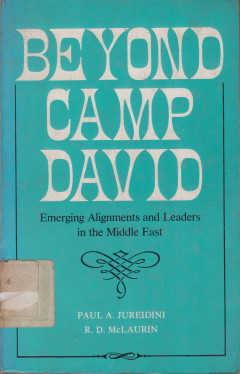
Beyond camp David
“Beyond Camp David” examines the political dynamics of the Near East following the historic Camp David accords. Paul A. Jureidini and Ronald D. McLaurin analyze the shifting regional alliances, the limitations of U.S. diplomacy, and the evolving political structures in the Middle East after 1945. The book provides an in-depth assessment of geopolitical challenges, strategic interests, and t…
- Edisi
- -
- ISBN/ISSN
- 0-8156-2235-X
- Deskripsi Fisik
- xxii, 197 pages : illustrations ; 21,5 cm
- Judul Seri
- -
- No. Panggil
- 327.0956 JUR b

What went wrong? : The Clash between Islam and modernity in the Middle East
This book explores the historical, cultural, and political factors that shaped the relationship between the Islamic world and modernity. Bernard Lewis examines key turning points in Middle Eastern history, addressing why modernization and technological development progressed differently in Islamic societies compared to the West. Through historical analysis, Lewis discusses political structures,…
- Edisi
- -
- ISBN/ISSN
- 0-06-051605-4
- Deskripsi Fisik
- 186 pages : illustration ; 20,5 cm
- Judul Seri
- -
- No. Panggil
- 956.015 LEW w

Society, culture, and change in the Middle East
This book explores the social structures, cultural patterns, and dynamic processes of change occurring in the Middle East during the mid-twentieth century. Raphael Patai analyzes traditional and modern influences shaping Middle Eastern societies, addressing issues such as family life, social organization, modernization, and cultural transformation. As an expanded edition of his earlier work, th…
- Edisi
- -
- ISBN/ISSN
- 0-8122-7289-7
- Deskripsi Fisik
- 560 pages ; 20,5 cm
- Judul Seri
- -
- No. Panggil
- 306.0956 PAT s

The Middle East: A Political and economic survey
This volume provides a comprehensive political and economic survey of the Middle East, examining the region’s historical background, political developments, economic structures, and social dynamics. Edited by Peter Mansfield, the book offers analytical perspectives on the shifting geopolitical landscape, regional conflicts, modernization issues, and the economic challenges faced by Middle Eas…
- Edisi
- -
- ISBN/ISSN
- 0-19-215851-1
- Deskripsi Fisik
- ix, 579 pages : illustration ; 22 cm
- Judul Seri
- -
- No. Panggil
- 956.05 MAN t

The Emergence of the modern Middle East
The Emergence of the Modern Middle East by Albert Hourani provides a comprehensive analysis of the historical transformation of the Middle East from the eighteenth century to the twentieth century. Hourani explores the political, social, and intellectual developments that shaped modern Middle Eastern societies, including the impact of European influence, internal reforms, nationalism, and cultu…
- Edisi
- -
- ISBN/ISSN
- 0-520-03862-6
- Deskripsi Fisik
- xx, 243 pages ; 22 cm
- Judul Seri
- -
- No. Panggil
- 956 HOU e
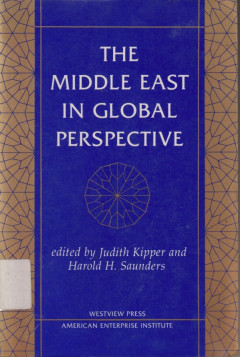
The Middle East in global perspective
This edited volume provides a comprehensive examination of the Middle East within the context of shifting global political dynamics. Bringing together contributions from leading scholars and practitioners, the book analyzes political developments, regional conflicts, economic challenges, sociopolitical transformations, and the evolving role of the Middle East in international affairs. It highli…
- Edisi
- -
- ISBN/ISSN
- 0-8133-0296-X
- Deskripsi Fisik
- viii, 359 pages ; 23 cm
- Judul Seri
- -
- No. Panggil
- 320.956 KIP m
 Karya Umum
  Filsafat
  Agama
Agama  Ilmu-ilmu Sosial
  Bahasa
  Ilmu-ilmu Murni
  Ilmu-ilmu Terapan
  Kesenian, Hiburan, dan Olahraga
  Kesusastraan
  Geografi dan Sejarah