Ditapis dengan

Islam : A short history
Contents: 1. Beginnings 2. Development 3. Culmination 4. Islam triumphant 5. Islam agonistes.
- Edisi
- -
- ISBN/ISSN
- 978-1-8421-2583-0
- Deskripsi Fisik
- xxxii, 192 pages : index ; 20 cm
- Judul Seri
- -
- No. Panggil
- 297.6 Arm i

Defenders of reason in Islam: Mu'tazilism from medieval school to modern symbol
The book examines in particular the influence of the medieval rational school of theology known as the Mu'tazila, which all but disappeared in Sunni Islam in the late Middle Ages, but which has been rediscovered by modernist Muslim intellectuals as part of their challenge against fundamentalist interpretations of Islam
- Edisi
- -
- ISBN/ISSN
- 1-85168-147-7
- Deskripsi Fisik
- xv, 251 pages : bibliography, index ; 22 cm
- Judul Seri
- -
- No. Panggil
- 297.27 Mar d

Why the Dalai Lama matters: His act of truth as the solution for China, Tibet…
Why the Dalai Lama Matters is not only a book about Tibet or the Dalai Lama. It offers revealing, provocative solutions for a world in conflict, dealing with the very fundamentals of human rights and freedom. Why the Dalai Lama Matters explores why he has earned the world's love and respect, and how restoring Tibet's autonomy within China is not only possible, but also highly probable.
- Edisi
- -
- ISBN/ISSN
- 978-1-58270-220-9
- Deskripsi Fisik
- xxiv, 231 pages: illustration ; 23 cm
- Judul Seri
- -
- No. Panggil
- 294.392.3092 Thu w
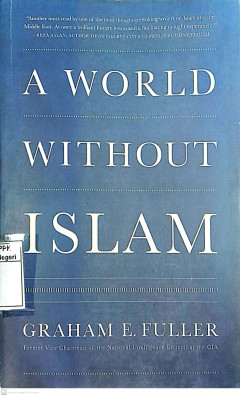
A world without Islam
A World Without Islam takes us on an illuminating journey through history, geopolitics, and religion to investigate whether there is something unique in Islam that breeds violence and conflict. Spanning the rise of Muhammad to the collapse of the Ottoman Empire to the present day, the book analyzes the roots of terrorism, the conflicts in Israel and Chechnya, and the role of Islam in support- i…
- Edisi
- First Edition
- ISBN/ISSN
- 978-0-316-07288-5
- Deskripsi Fisik
- viii, 328 pages : Index ; 24 cm
- Judul Seri
- -
- No. Panggil
- 297.09 Ful w

Islam: Continuity and change in the modern world
This is a single-volume history of Islam. The opening chapters briefly discuss the historical background of the Prophet Muhammad in the 7th century, through the rise of the Islam in 18th through 20th centuries. The final two chapters cover the significant events of the 1980s and 1990s.
- Edisi
- ed.2
- ISBN/ISSN
- 0-8156-2639-8
- Deskripsi Fisik
- xi, 439 pages : index ; 23 cm
- Judul Seri
- -
- No. Panggil
- 297.0903 Vol i

A history of God: The 4000-year quest of Judaism, Christiany and Islam
In this stunningly intelligent book, Karen Armstrong, one of Britain's foremost commentators on religious affairs, traces the history of how men and women have perceived and experienced God, from the time of Abraham to the present.
- Edisi
- -
- ISBN/ISSN
- 0-345-38456-3
- Deskripsi Fisik
- xxiii, 460 pages : Index ; 21 cm
- Judul Seri
- -
- No. Panggil
- 200 Arm h

Prague pilgrim pr prague from every side
The Prague Pilgrim is a book, which apart from instructions on tourist walks, fills in these routes with fascinating story-telling about the history of individual places, buildings and other interesting subjects.
- Edisi
- -
- ISBN/ISSN
- 80-901891-1-3
- Deskripsi Fisik
- 203 pages : illustration ; 24 cm
- Judul Seri
- -
- No. Panggil
- 200.9 Dud p

Fields of blood : Religion and the history of Violence
Fields of Blood is a celebration of the ancient religious ideas and movements that have promoted peace and reconciliation across millennia of civilization. Part 1 : Beginnings Part 2 : Keeping the peace Part 3 : Modernity.
- Edisi
- First Published
- ISBN/ISSN
- 978-0-09956-498-0
- Deskripsi Fisik
- 518 pages : bibl: hlm 457-499 : index ; 20 cm
- Judul Seri
- -
- No. Panggil
- 205.697 Arm f

Serbian orthodox church in history
Verbs belong to the grand family of Slav na- tions. As early as 5th and 6th centuries AD they migrated from their ancient lands in Northern Europe to the Balkan Peninsular which, at the time, constituted northern regions of the Byzantine Empire.
- Edisi
- -
- ISBN/ISSN
- 978-86-86805-62-1
- Deskripsi Fisik
- 113 pages : ilustration ; 22 cm
- Judul Seri
- -
- No. Panggil
- 270 Pop s

Greed, Inc.: Why corporations rule our world
A critical indictment of modern corporate practices argues that today's publicly traded companies enjoy the legal statuses of individuals but are not bound by the same legal and moral responsibilities, in a historical survey that traces the contributions and unethical activities of such companies as Enron, Exxon, and Pfizer.
- Edisi
- Ed. 1
- ISBN/ISSN
- 1-55970-794-1
- Deskripsi Fisik
- xxi, 265 pages : index ; 24 cm
- Judul Seri
- -
- No. Panggil
- 174.4 Row g
 Karya Umum
  Filsafat
  Agama
Agama  Ilmu-ilmu Sosial
  Bahasa
  Ilmu-ilmu Murni
  Ilmu-ilmu Terapan
  Kesenian, Hiburan, dan Olahraga
  Kesusastraan
  Geografi dan Sejarah