Ditapis dengan

Sri Lanka a lost revolution?: The History of JVP
Rohan Gunaratna’s book provides a detailed insider account of the Janatha Vimukthi Peramuna (JVP), a radical left-wing movement in Sri Lanka. It traces its origins, ideology, leadership structure, and the socio-political conditions that fueled its rise. Gunaratna examines the JVP’s armed insurrections particularly those in 1971 and the late 1980s and the failures that led to its ultimate do…
- Edisi
- -
- ISBN/ISSN
- 955-26-004-9
- Deskripsi Fisik
- 366 pages: 22 cm
- Judul Seri
- -
- No. Panggil
- 954.9303 GUN s
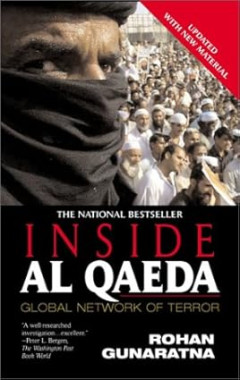
Inside Al Qaeda: Global network of terror
"Inside Al Qaeda examines the leadership, ideology, structure, strategies, and tactics of the most violent politico-religious organization the world has ever seen. Although founded in 1988, Al Qaeda merged with, and still works with, several other extremist groups. Hence Al Qaeda rank and file draw on nearly three decades of terrorist expertise. Moreover, it inherited a full-fledged training an…
- Edisi
- -
- ISBN/ISSN
- 0-425-19114-1
- Deskripsi Fisik
- xlix, 362 Pages : index ; 21 cm
- Judul Seri
- -
- No. Panggil
- 303.625 Gun i

Inside Al Qaeda global network of terror
The book sheds light on Al Qaeda's financial infrastructure and how the organization trains combat soldiers and vanguard fighters for multiple guerrilla, terrorist and semiconventional campaigns in the Middle East, Asia, Africa, the Caucasus and the Balkans. In addition, Rohan Gunaratna investigates the clandestine Al Qaeda operational network in the West.
- Edisi
- First Edition
- ISBN/ISSN
- 81-7436-243-6
- Deskripsi Fisik
- xiii, 271 pages : index ; 21 cm
- Judul Seri
- -
- No. Panggil
- 303.625 Gun i

Sri Lanka: A lost revolution?: The inside story of the JVP
In it's most apparent dimension, this book is a very effective biography of the JVP movement - the lives and tragedies of Sri Lanka's most fearsome insurrection. Sri Lanka - The lost revolution? describes events during a tragic period of our country. The upheaval shook the nation to its very foundation and traumatised an entire generation. No other account of the events that have taken place…
- Edisi
- -
- ISBN/ISSN
- 955-26-004-9
- Deskripsi Fisik
- viii, 366 pages : illustrations (black and white) ; 21 cm
- Judul Seri
- -
- No. Panggil
- 954.92 Gun s
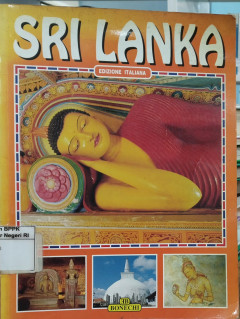
Sri Lanka
After five centuries of colonial rule, Sri Lanka became independent in 1948 and the Republic was founded in 1972. An interesting ethnic mix coexists in the country including 74% Sinhalese, 12.6% Tamil, 5.5 % of Indian Tamils, 7.1% of Moors and 0.3% of Malaysians (also Muslims), 0.3 of "Burghers" (citizens of European origin) and 0.3% of other origins. The four main religions are represented in …
- Edisi
- -
- ISBN/ISSN
- 88-8029-238-2
- Deskripsi Fisik
- 127 pages : illustrations ; 26 cm
- Judul Seri
- -
- No. Panggil
- 954.92 Gun s
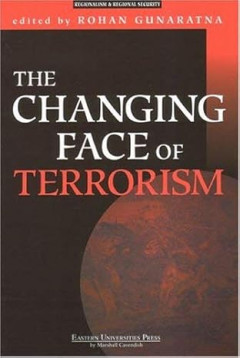
The changing face of terrorism
This book explores how dramatically the face of terrorism has changed in the last decade. Instead of resisting globalization, terrorist groups have taken full advantage of the widespread availability of communication technologies, inexpensive travel, porous borders, privatization of security, and access to saturated weapons markets to grow rapidly in strength, size, and reach. Many rag-tag grou…
- Edisi
- -
- ISBN/ISSN
- 981-210-258-2
- Deskripsi Fisik
- vii, 174 pages ; 23 cm
- Judul Seri
- -
- No. Panggil
- 345.02 Gun c
 Karya Umum
  Filsafat
  Agama
Agama  Ilmu-ilmu Sosial
  Bahasa
  Ilmu-ilmu Murni
  Ilmu-ilmu Terapan
  Kesenian, Hiburan, dan Olahraga
  Kesusastraan
  Geografi dan Sejarah