Ditapis dengan
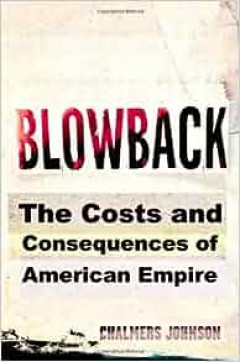
Blowback: The costs and consequences of American empire
Blowback, a term invented by the CIA, refers to the uninted consequences of American policies. In this sure-to-be-controversial book, Chalmers Johnson lays out in vivid detail the dangers faced by our overextended empire, which insists on projecting its military power to every corner of the earth and using American capital and markets to force global economic integration on its own terms. From …
- Edisi
- First Edition
- ISBN/ISSN
- 0-8050-6238-6
- Deskripsi Fisik
- xix, 268 pages : index ; 26 cm
- Judul Seri
- -
- No. Panggil
- 327.73 Joh b

The bubble of American supremacy: The costs of Bush' war in Iraq
The author provided a workable, and severely critical, analysis of the Bush administration's overreaching, militaristic foreign policy. Soros believes that this administration's plans abroad come from the same sort of "bubble" psychology that afflicted our markets in the late 1990s. They have used military supremacy to create a deluded worldview, that might makes right and that "you're either w…
- Edisi
- -
- ISBN/ISSN
- 1-58648-292-0
- Deskripsi Fisik
- xiii, 207 pages : index ; 21 cm.
- Judul Seri
- -
- No. Panggil
- 327. 730090511 Sor b

America at the crossroads: Democracy, power, and the neoconservative legacy
Francis Fukuyama’s criticism of the Iraq war put him at odds with neoconservative friends both within and outside the Bush administration. Here he explains how, in its decision to invade Iraq, the Bush administration failed in its stewardship of American foreign policy. First, the administration wrongly made preventive war the central tenet of its foreign policy. In addition, it badly misjudg…
- Edisi
- -
- ISBN/ISSN
- 978-0-300-11399-0
- Deskripsi Fisik
- xiv, 226 pages : index ; 21 cm
- Judul Seri
- -
- No. Panggil
- 327.73 Fuk a

How America got it right: The U.S. march to military and political supremacy
As the world's dominant political force and military power, he says, we are the only nation that will actually go into the world and strike down evil. And we must not shirk that responsibility - especially because we cannot rely on our so-called allies to defend our freedoms. Alexander tells the dramatic and sometimes surprising story of how, from the American Revolution to the War on Terror, A…
- Edisi
- -
- ISBN/ISSN
- 1-4000-5288-2
- Deskripsi Fisik
- viii, 309 pages : bibl: hlm 293-296 : index ; 25 cm
- Judul Seri
- -
- No. Panggil
- 327.73 Ale h

The U.S.-Japan security alliance: Why it matters and how to strengthen it
For more than three decades, the multifaceted alliance between the United States and Japan has contributed significantly to the security of Japan and the maintenance of peace and security in the Far East.
- Edisi
- -
- ISBN/ISSN
- 0-275-97806-0
- Deskripsi Fisik
- xvi, 106 pages : bibl: hlm 93-98 : index ; 22 cm
- Judul Seri
- -
- No. Panggil
- 327.52 Osi u

Japan's changing political and security role: Domestic and international aspects
The central objective of this study is to describe and analyse the politics of security policy change in Japan and its significance to the Asia-Pacific region as a whole.
- Edisi
- -
- ISBN/ISSN
- 981-3035-98-6
- Deskripsi Fisik
- 57 pages ; 24 cm
- Judul Seri
- -
- No. Panggil
- 327.3433952 Kat j

Deterrence in the second nuclear age
Keith Payne begins by asking, "Did we really learn how to deter predictably and reliably during the Cold War?" He answers cautiously in the negative, pointing out that we know only that our policies toward the Soviet Union did not fail. What we can be more certain of, in Payne's view, is that such policies will almost assuredly fail in the Second Nuclear Age―a period in which direct nuclear t…
- Edisi
- -
- ISBN/ISSN
- 0-8131-0895-0
- Deskripsi Fisik
- xiv, 168 pages : index ; 23 cm
- Judul Seri
- -
- No. Panggil
- 327.17 Pay d
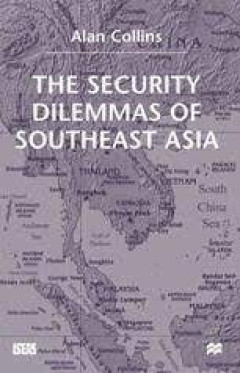
The security dilemmas of Southeast Asia
By examining ethnic tensions in Southeast Asia the book provides an analysis of one of the security dilemma's most recent utilisations. In particular, the book adds to the growing literature on the security dilemma and ethnic conflict by locating the analysis of ethnic tensions in Burma and Malaysia, among others, within the security literature of the Third World. In intra-ASEAN relations the…
- Edisi
- -
- ISBN/ISSN
- 981-230-108-9
- Deskripsi Fisik
- xi, 237 pages : index ; 22 cm
- Judul Seri
- -
- No. Panggil
- 327.160959 Col s

The challenge of conventional arms proliferation in Southeast Asia
This is an inquiry into the arms build-up in Southeast Asia and the measures that can be taken to control the proliferation of conventional arms in the region. It is not a plea for arms control or disarmament as much as an attempt to highlight the armament policies of countries in the region.
- Edisi
- 1st edition
- ISBN/ISSN
- 979-8026-31-4
- Deskripsi Fisik
- vi, 110 pages ; 21 cm
- Judul Seri
- -
- No. Panggil
- 327.117040959 Sin c
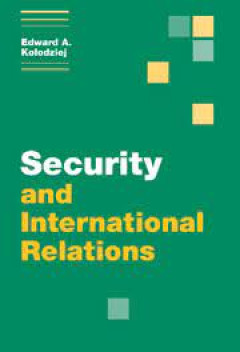
Security and international relations
This new textbook presents security studies as a branch of international relations theory, providing readers with the critical conceptual tools to develop their expertise. The author evaluates the claims of rival theories- realism, neorealism, liberal institutionalism, classical economic liberalism, and Marxism-to explain why international actors choose or eschew force and coercive threats in o…
- Edisi
- First published
- ISBN/ISSN
- 0-521-00116-1
- Deskripsi Fisik
- xi, 349 pages : index ; 23 cm
- Judul Seri
- -
- No. Panggil
- 327.1 Kol s
 Karya Umum
  Filsafat
  Agama
Agama  Ilmu-ilmu Sosial
  Bahasa
  Ilmu-ilmu Murni
  Ilmu-ilmu Terapan
  Kesenian, Hiburan, dan Olahraga
  Kesusastraan
  Geografi dan Sejarah