Ditapis dengan

Terror and consent: The wars for the twenty-first century
Almost every widely held idea we have about the war on terror is wrong, Philip Bobbitt argues, and must be rethought. It is not about religion, nationalism or a'clash of civilizations'. Instead, we face the death of the nation-state and the birth of frontierless, globally networked 'states of terror' that seek to undermine an entire culture of political consent. This dramatic and highly acclaim…
- Edisi
- -
- ISBN/ISSN
- 9780141017662
- Deskripsi Fisik
- x, 672 pages : bibl: hlm 647-661 : index ; 19 cm
- Judul Seri
- -
- No. Panggil
- 303.625 Bob t
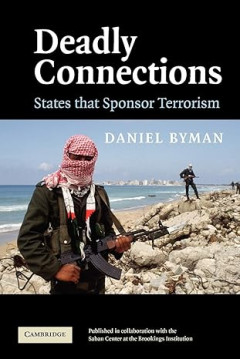
Deadly connections: States that sponsor terrorism
Thousands of people have died at the hands of terrorist groups who rely on state support for their activities. Iran and Syria are well known as sponsors of terrorism, while other countries, some with strong connections to the West, have enabled terrorist activity by turning a blind eye. Daniel Byman's hard-hitting and articulate book analyzes this phenomenon. Focusing primarily on sponsors from…
- Edisi
- -
- ISBN/ISSN
- 0-521-83973-4
- Deskripsi Fisik
- xi, 369 pages : illustrations (black and white) : bibl: hlm 335-357 : index ; 23 cm
- Judul Seri
- -
- No. Panggil
- 303.625 Bym d
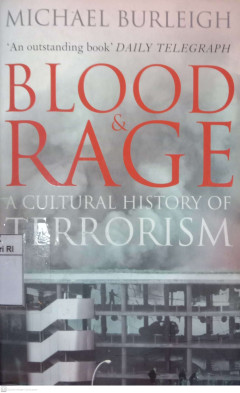
Blood and rage: A cultural history of terrorism
Michael Burleigh lays bare the workings of the terrorist mind and explores the nature of terrorism, from its origins in the West to today's global threat of jihadist violence. This searing analysis focuses on the distorted morality that drives terrorists to organize and operate, revealing who they are and the wider support encouraging them
- Edisi
- -
- ISBN/ISSN
- 978-0-00-724225-2
- Deskripsi Fisik
- xvi, 581 pages : illustration : bibl: hlm 537-549 : index ; 20 cm
- Judul Seri
- -
- No. Panggil
- 303.625 Bur b

The new face of terrorism: Threats from weapons of mass destruction
This revised edition is a comprehensive account of the technological and political possibilities and dangers presented by weapons of mass destruction in the wake of September 11th, 2001. The technical and organizational sophistication of the attacks on September 11th heralds a new era in the age-old war against terrorism. After these attacks, attention became focused on the activities and capac…
- Edisi
- -
- ISBN/ISSN
- 1-86064-825-8
- Deskripsi Fisik
- xii, 312 pages : bibl: hlm 309-312 ; 21 cm
- Judul Seri
- -
- No. Panggil
- 303.625 Gur n

Inside Al Qaeda: Global network of terror
"Inside Al Qaeda examines the leadership, ideology, structure, strategies, and tactics of the most violent politico-religious organization the world has ever seen. Although founded in 1988, Al Qaeda merged with, and still works with, several other extremist groups. Hence Al Qaeda rank and file draw on nearly three decades of terrorist expertise. Moreover, it inherited a full-fledged training an…
- Edisi
- -
- ISBN/ISSN
- 0-425-19114-1
- Deskripsi Fisik
- xlix, 362 Pages : index ; 21 cm
- Judul Seri
- -
- No. Panggil
- 303.625 Gun i

Inside Al Qaeda global network of terror
The book sheds light on Al Qaeda's financial infrastructure and how the organization trains combat soldiers and vanguard fighters for multiple guerrilla, terrorist and semiconventional campaigns in the Middle East, Asia, Africa, the Caucasus and the Balkans. In addition, Rohan Gunaratna investigates the clandestine Al Qaeda operational network in the West.
- Edisi
- First Edition
- ISBN/ISSN
- 81-7436-243-6
- Deskripsi Fisik
- xiii, 271 pages : index ; 21 cm
- Judul Seri
- -
- No. Panggil
- 303.625 Gun i
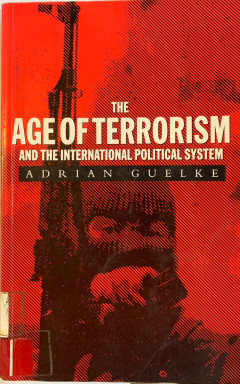
The age of terrorism and the international political system
The book considers how various groups sought to legitimize violence as the struggle against imperialism, how political violence within the developing world was not generally characterized as terrorism but how the label was applied to small groups operating across the international boundaries of developed countries. It shows how campaigns end and groups disintegrate, the effect of the end of the…
- Edisi
- -
- ISBN/ISSN
- 1-86064-338-8
- Deskripsi Fisik
- ix, 230 pages : index ; 22
- Judul Seri
- -
- No. Panggil
- 303.625 Gue a

An end to evil: How to win the war on terror
An End to Evil charts the agenda for what’s next in the war on terrorism, as articulated by David Frum. This world is an unsafe place for Americans—and the U.S. government remains unready to defend its people. In An End to Evil, David Frum and Richard Perle sound the alert about the dangers around us: the continuing threat from terrorism, the crisis with North Korea, the aggressive ambitio…
- Edisi
- -
- ISBN/ISSN
- 0-345-47717-0
- Deskripsi Fisik
- vii, 280 pages : index ; 17 cm
- Judul Seri
- -
- No. Panggil
- 303.625 Fru e

The next war zone: Confronting the global threat of cyberterrorism
An acclaimed correspondent and anti-terrorism expert delves into the massive digital realm, which is fraught with superviruses, monster worms, and zombies--all of which can be used for cyberwarfare, revealing the global struggle for control of the Internet and what the United States is doing to prevent this type of attack.
- Edisi
- Cet. 1
- ISBN/ISSN
- 0-8065-2413-8
- Deskripsi Fisik
- xiii, 303 pages : index ; 23 cm
- Judul Seri
- -
- No. Panggil
- 303.625 Dun n

Why terrorism works : Understanding the threat, responding to the challenge
The greatest danger facing the world today, says Alan M. Dershowitz, comes from religiously inspired, state sponsored terrorist groups that seek to develop weapons of mass destruction for use against civilian targets. In his newest book, Dershowitz argues passionately and persuasively that global terrorism is a phenomenon largely of our own making and that we must and can take steps to reduce t…
- Edisi
- -
- ISBN/ISSN
- 0-300-09766-2
- Deskripsi Fisik
- 271 pages : index ; 22 cm
- Judul Seri
- -
- No. Panggil
- 303.625 Der w
 Karya Umum
  Filsafat
  Agama
Agama  Ilmu-ilmu Sosial
  Bahasa
  Ilmu-ilmu Murni
  Ilmu-ilmu Terapan
  Kesenian, Hiburan, dan Olahraga
  Kesusastraan
  Geografi dan Sejarah