Ditapis dengan

Taking sides: Clashing views on controversial issues in world politics
Taking Sides: Clashing Views on Controversial Issues in World Politics presents a series of opposing essays that explore major debates in international relations. Edited by John T. Rourke, the book brings together contrasting perspectives on global political issues, enabling readers to critically evaluate arguments and develop a deeper understanding of key controversies shaping world affairs. D…
- Edisi
- -
- ISBN/ISSN
- 0-87967-737-6
- Deskripsi Fisik
- xii, 324 pages ; 23,5 cm
- Judul Seri
- -
- No. Panggil
- 327 ROU t

Revolutions and revolutionary movements
This book provides a comprehensive analysis of various revolutions and revolutionary movements in the modern world. James DeFronzo discusses the social, economic, political, and psychological factors that drive revolutions, as well as how these movements develop and influence the social order. By reviewing a number of case studies from different countries, this book highlights common patterns i…
- Edisi
- -
- ISBN/ISSN
- 0-8133-0668-X
- Deskripsi Fisik
- xvi, 336 pages : illustration ; 23 cm
- Judul Seri
- -
- No. Panggil
- 303.64 DEF r

The Lost peace: Leadership in a time of horror and hope, 1945–1953
This book examines the crucial transition period in world history following the end of World War II, when global leaders faced the enormous challenge of building peace and a new international order. Robert Dallek explores the political decisions, conflicts of interest, and the origins of tensions that fueled the Cold War. Through in-depth analysis of major figures such as Truman, Churchill, Sta…
- Edisi
- -
- ISBN/ISSN
- 978-0-06-162866-5
- Deskripsi Fisik
- xii, 420 pages : illustration ; 24 cm
- Judul Seri
- -
- No. Panggil
- 909.82 DAL l

A global agenda: Issues before the 48th General Assembly of the United Nation
This annual volume brings to the public the most accurate, complete, and timely information on the work of the United Nations. Designed to serve international affairs scholars and concerned citizens alike, each volume of Issues offers a comprehensive overview of the many and disparate activities of the entire U.N. system over the course of a year, placing them in the context of ongoing events. …
- Edisi
- -
- ISBN/ISSN
- 1-880632-09-8
- Deskripsi Fisik
- xii, 366 pages ; 23 cm
- Judul Seri
- -
- No. Panggil
- 341.2305 Tes g

The far enemy: Why jihad went global
Since September 11, Al Qaeda has been portrayed as an Islamist front united in armed struggle, or jihad, against the Christian West. However, as the historian and commentator Fawaz A. Gerges argues, the reality is rather different and more complex. In fact, Al Qaeda represents a minority within the jihadist movement, and its strategies have been vehemently criticized and opposed by religious na…
- Edisi
- -
- ISBN/ISSN
- 978-0-521-79140-3
- Deskripsi Fisik
- xii, 345 pages : index ; 23 cm
- Judul Seri
- -
- No. Panggil
- 297.72 Ger f

The post-American world : And the rise of the rest
This is not a book about the decline of America, but rather about the rise of everyone else. So begins Fareed Zakaria's important new work on the era we are now entering. Following on the success of his best-selling "The Future of Freedom", Zakaria describes with equal prescience a world in which the United States will no longer dominate the global economy, orchestrate geopolitics, or overwhelm…
- Edisi
- -
- ISBN/ISSN
- 978-0-141-03805-6
- Deskripsi Fisik
- xxxii, 292 pages : index ; 20 cm
- Judul Seri
- -
- No. Panggil
- 303.49 Zak p
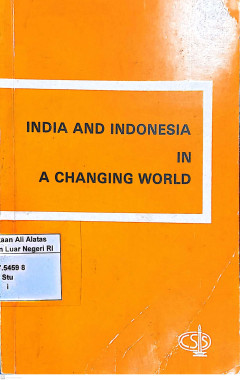
India and Indonesia in a changing world
Neither India nor Indonesia may yet be categorized as a super- power, rather, they are both developing countries within the total spectrum of nations in this single world. This reality can not be denied. However, even though neither of us are superpowers, both In- dia and Indonesia have definite roles to play in international relations. There can be no doubt that the roles of India and Indonesi…
- Edisi
- First Edition
- ISBN/ISSN
- -
- Deskripsi Fisik
- x, 131 pages ; 22 cm
- Judul Seri
- -
- No. Panggil
- 327.54598 Stu i

Soft Power: The means to sucess in world politics
Joseph Nye coined the term "soft power" in the late 1980s. It is now used frequently - and often incorrectly - by political leaders, editorial writers, and academics around the world. So what is soft power? Soft power lies in the ability to attract and persuade. Whereas hard power - the ability to coerce - grows out of a country's military or economic might, soft power arises from the attractiv…
- Edisi
- -
- ISBN/ISSN
- 1586483064
- Deskripsi Fisik
- xvi, 191 pages : illustrations ; 22 cm
- Judul Seri
- -
- No. Panggil
- 327.73 Nye s

The end of history and the last man
Ever since its first publication in 1992, The End of History and the Last Man has provoked controversy and debate. Francis Fukuyama's prescient analysis of religious fundamentalism, politics, scientific progress, ethical codes, and war is as essential for a world fighting fundamentalist terrorists as it was for the end of the Cold War. Now updated with a new afterword, The End of History and th…
- Edisi
- Ed. 1
- ISBN/ISSN
- 978-0-7432-8455-4
- Deskripsi Fisik
- xxiii, 432 pages ; 21 cm
- Judul Seri
- -
- No. Panggil
- 901 Fuk e

Worlds in collision: Terror and the future of global order
Longer pieces then started appearing, and more recently books. What almost all of this analysis and imagining revealed was a sense not only that one historical era had ended, but that some- thing of truly epic significance had occurred which would affect the human international political consciousness with the same impact as the dropping of the atomic bombs, the First World War or the Thirty Ye…
- Edisi
- Cet. 1
- ISBN/ISSN
- 0-333-99805-7
- Deskripsi Fisik
- x, 376 pages : index ; 21 cm
- Judul Seri
- -
- No. Panggil
- 303.625 Boo w
 Karya Umum
  Filsafat
  Agama
Agama  Ilmu-ilmu Sosial
  Bahasa
  Ilmu-ilmu Murni
  Ilmu-ilmu Terapan
  Kesenian, Hiburan, dan Olahraga
  Kesusastraan
  Geografi dan Sejarah