Ditapis dengan
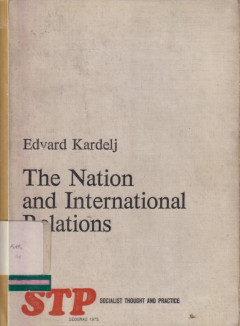
The Nation and international relations
The Nation and International Relations discusses the ideological, political, and historical foundations of national identity within the socialist framework of Yugoslavia. Edvard Kardelj examines the development of nations, the nature of state sovereignty, and how socialist self-management shapes international relations. The book analyzes the balance between national independence and global coop…
- Edisi
- -
- ISBN/ISSN
- -
- Deskripsi Fisik
- 211 pages ; 20 cm
- Judul Seri
- -
- No. Panggil
- 327.17 KAR n
Zero-Sum future: American power in an age of anxiety
Zero-Sum Future examines the shifting landscape of global power in the post–Cold War era, arguing that rising economic insecurity and geopolitical competition are pushing major nations toward zero-sum thinking. Gideon Rachman analyzes how globalization, financial instability, and the emergence of new world powers shape American influence in the 21st century. Through historical context and con…
- Edisi
- -
- ISBN/ISSN
- 978-1-4391-7661-0
- Deskripsi Fisik
- viii, 340 pages ; 24 cm
- Judul Seri
- -
- No. Panggil
- 973.93 RAC z
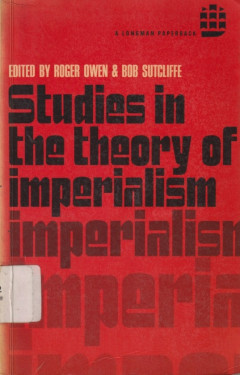
Studies in the theory of imperialism
Studies in the Theory of Imperialism presents a collection of influential essays examining the historical, economic, and political foundations of imperialism. Edited by Roger Owen and Bob Sutcliffe, the volume explores major theoretical perspectives—including Marxist, Leninist, and dependency theory—and analyzes how imperialist structures shape global power relations. Contributors investiga…
- Edisi
- -
- ISBN/ISSN
- 0-582-48753-6
- Deskripsi Fisik
- 390 pages : illustration ; 21,5 cm
- Judul Seri
- -
- No. Panggil
- 325.1 OWE s
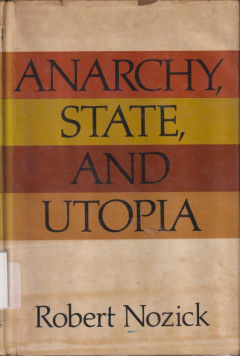
Anarchy, state, and utopia
Anarchy, State, and Utopia is a landmark work of political philosophy in which Robert Nozick presents a rigorous defense of libertarianism. Challenging the dominant theories of distributive justice, Nozick argues for a minimal state limited to the protection of individuals against force, theft, and fraud. He rejects redistributive taxation and egalitarian principles, offering instead an entitle…
- Edisi
- -
- ISBN/ISSN
- 465-00270-6
- Deskripsi Fisik
- xvi, 367 pages ; 24 cm
- Judul Seri
- -
- No. Panggil
- 320.51 NOZ a

Political culture and political change in communist states
This edited volume explores the dynamics of political culture and the processes of political change within communist states during the mid-20th century. Featuring contributions from leading scholars, the book examines ideology, state structures, leadership patterns, social mobilization, and internal transformations across various communist regimes. Through comparative analysis, it highlights bo…
- Edisi
- -
- ISBN/ISSN
- 0-8419-0289-5
- Deskripsi Fisik
- xiii, 286 pages ; 22 cm
- Judul Seri
- -
- No. Panggil
- 320.532 BRO p
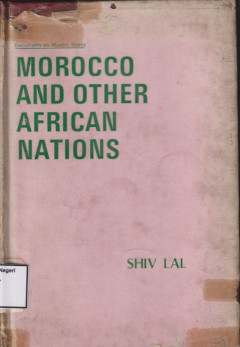
Morocco and other African nations
This book is a collection of documents on Morocco and various other African countries, compiled as part of the "Documents on Muslim States" series. Edited by Shiv Lal, this book presents a compilation of reports, political data, diplomatic notes, and government documents related to political developments in the African region, particularly countries with Muslim populations and governments. The …
- Edisi
- -
- ISBN/ISSN
- -
- Deskripsi Fisik
- 23 cm
- Judul Seri
- -
- No. Panggil
- 964 LAL m

Le Maroc à i’heure de i’Indépendance : Tome I, 1955–1957
This book is the official documentation of Morocco's struggle and transition to independence from 1955 to 1957. Written by King Mohammed V and translated from Arabic, this work contains speeches, political statements, early state policies, and reflections by Moroccan leaders on the critical period leading up to and following the proclamation of independence. This book provides a comprehensive o…
- Edisi
- -
- ISBN/ISSN
- -
- Deskripsi Fisik
- 333 pages : illustration ; 21,5 cm
- Judul Seri
- -
- No. Panggil
- 964.5 MOH l

The Maghreb in the modern world: Algeria, Tunisia, Morocco
This book is an in-depth study of the political, economic, and social dynamics of the Maghreb region, encompassing Algeria, Tunisia, and Morocco, in the modern era. Samir Amin, a leading economist and thinker, analyzes the legacies of colonialism, the process of state-building, economic challenges, and the social and political movements that shaped the Maghreb's regional identity. Using a polit…
- Edisi
- First published
- ISBN/ISSN
- 0140211182
- Deskripsi Fisik
- 256 pages ; 18 cm
- Judul Seri
- -
- No. Panggil
- 960.4 AMI m
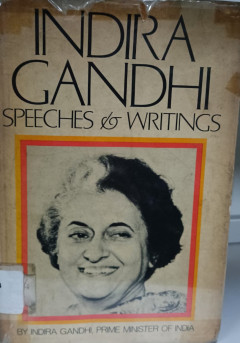
Indira Gandhi: Speeches & writings
Indira Gandhi: Speeches & Writings is a curated collection of speeches, statements, and reflections by Indira Gandhi, India’s first and only female Prime Minister. Originally published as India: The Speeches and Reminiscences of Indira Gandhi, the book provides insight into her political vision, leadership style, and perspectives on national development, foreign policy, social justice, and gl…
- Edisi
- -
- ISBN/ISSN
- 0-06-011407-X
- Deskripsi Fisik
- 221 pages ; 24 cm
- Judul Seri
- -
- No. Panggil
- 954.04 GAN i

Constitution of the Mongolian People's Republic
This book presents the full text and foundational principles of the Constitution of the Mongolian People’s Republic, outlining the structure, functions, and authority of the socialist state. It details the organization of government institutions, including the State Great Khural, the Council of Ministers, the judiciary, and local administrative bodies. The constitution also defines the politi…
- Edisi
- -
- ISBN/ISSN
- -
- Deskripsi Fisik
- 60 pages ; 25 cm
- Judul Seri
- -
- No. Panggil
- 342.517 MON c
 Karya Umum
  Filsafat
  Agama
Agama  Ilmu-ilmu Sosial
  Bahasa
  Ilmu-ilmu Murni
  Ilmu-ilmu Terapan
  Kesenian, Hiburan, dan Olahraga
  Kesusastraan
  Geografi dan Sejarah