Ditapis dengan

Nixon and Mao: The week that changed the world
Contents: 1. Setting out 2. Arrival 3. Chou En-Lai 4. At the Diaoyutai 5. Meeting with Mao 6. Mao Tse-Tung 7. The long freeze etc.
- Edisi
- -
- ISBN/ISSN
- 978-1-4000-6127-3
- Deskripsi Fisik
- xxii, 404 pages : illustrations (black and white) : bibl: hlm 375-386 : index ; 24 cm
- Judul Seri
- -
- No. Panggil
- 327.73 Mac n

Ethiopia, The United States, and The Soviet Union
The United States and its Western allies donate millions of dollars in emergency aid to alleviate the effects of the Ethiopian famine. Despite this aid, the Marxist regime in Ethiopia continues resolutely hostile to the United States and a firm friend to the Soviet Union whose emergency aid has been minimal. Moreover, the regime is pressing ahead vigorously with its socialist programs of po…
- Edisi
- -
- ISBN/ISSN
- 0-8093-1338-3
- Deskripsi Fisik
- xviii, 199 pages : illustration (black and white) : bibl: hlm 190-191 : index ; 22 cm
- Judul Seri
- -
- No. Panggil
- 327.73 Kor e
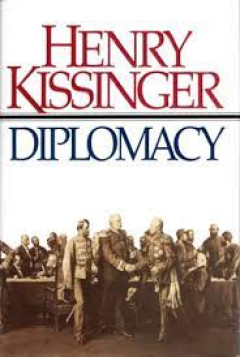
Diplomacy
A brilliant, sweeping history of diplomacy that includes personal stories from the noted former Secretary of State, including his stunning reopening of relations with China. The seminal work on foreign policy and the art of diplomacy. Moving from a sweeping overview of history to blow-by-blow accounts of his negotiations with world leaders, Henry Kissinger describes how the art of diplomacy has…
- Edisi
- -
- ISBN/ISSN
- 0-671-65991-X
- Deskripsi Fisik
- 912 pages : illustration : index ; 24 cm
- Judul Seri
- -
- No. Panggil
- 327.73 Kis d

The opportunity: America's moment to alter history's course
America's great military, economic, and political power discourages traditional challenges; no ideological fault line divides the world into warring blocs. India, China, Japan, Russia, and Europe all seek a prolonged period of stability that would support economic growth.The opportunity thus exists for unprecedented cooperation among the major powers. This is good, because they share vulnerabil…
- Edisi
- ed. 1
- ISBN/ISSN
- 978-58648-453-8
- Deskripsi Fisik
- xiv, 254 pages : ilustrations : index ; 19 cm
- Judul Seri
- -
- No. Panggil
- 327.73 Haa o

America at the crossroads: Democracy, power, and the neoconservative legacy
Francis Fukuyama’s criticism of the Iraq war put him at odds with neoconservative friends both within and outside the Bush administration. Here he explains how, in its decision to invade Iraq, the Bush administration failed in its stewardship of American foreign policy. First, the administration wrongly made preventive war the central tenet of its foreign policy. In addition, it badly misjudg…
- Edisi
- -
- ISBN/ISSN
- 978-0-300-11399-0
- Deskripsi Fisik
- xiv, 226 pages : index ; 21 cm
- Judul Seri
- -
- No. Panggil
- 327.73 Fuk a

America's secret war: Inside the hidden worldwide struggle between America an…
"In America's Secret War, George Friedman identifies the United States' most dangerous enemies, delves into presidential strategies of the last quarter century, and reveals the real reasons behind the attack of 9/11- and the Bush administration's motivation for the war in Iraq. It describes in detail America's covert and overt efforts in the global war against terrorism: not only are U.S. armie…
- Edisi
- 1st ed.
- ISBN/ISSN
- 0-385-51245-7
- Deskripsi Fisik
- xii, 354 pages : maps : index ; 25 cm.
- Judul Seri
- -
- No. Panggil
- 327.73 Fri a

A tangled web: The making of foreign policy in the Nixon Presidency
Richard Nixon's accomplishments in foreign affairs have long been cited as enduring successes: during his Administration the United States reestablished ties with China, initiated detente with the U.S.S.R., and ended American participation in the Vietnam War. A Tangled Web challenges these views and stands on its own as the first fully authoritative account of the Nixon-Kissinger record in its …
- Edisi
- First Edition
- ISBN/ISSN
- 0-8090-9151-8
- Deskripsi Fisik
- xix, 647 pages : Illustrations : bibl: hlm 608-620 : index ; 24 cm.
- Judul Seri
- -
- No. Panggil
- 327.73 Bun t

The grand chessboard: American primacy and its geostrategic imperatives
The heart of The Grand Chessboard is Brzezinski's analysis of the four critical regions of Eurasia and of the stakes for America in each arena - Europe, Russia, Central Asia, and East Asia. The crucial fault lines may seem familiar, but the implosion of the Soviet Union has created new rivalries and new relationships, and Brzezinski maps out the strategic ramifications of the new geopolitical r…
- Edisi
- -
- ISBN/ISSN
- 0-465-02726-1
- Deskripsi Fisik
- xiv, 223 pages : maps : index ; 25 cm.
- Judul Seri
- -
- No. Panggil
- 327.73 Brz t
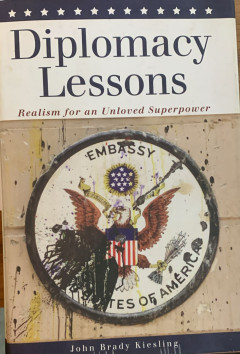
Diplomacy lessons: Realism for an unloved superpower
In Diplomacy Lessons, Kiesling reminds readers that U.S. power does not rest on military might alone and that anger at America has real consequences for U.S. national interests. The security and prosperity of the American people depend on efficient cooperation with foreigners on a range of issues, not only terrorism and nuclear nonproliferation but also trade policy, environmental protection, a…
- Edisi
- Ed. 1
- ISBN/ISSN
- 978-1-59797-017-4
- Deskripsi Fisik
- ix, 317 pages : index ; 23 cm
- Judul Seri
- -
- No. Panggil
- 327.73 Bra d

How America got it right: The U.S. march to military and political supremacy
As the world's dominant political force and military power, he says, we are the only nation that will actually go into the world and strike down evil. And we must not shirk that responsibility - especially because we cannot rely on our so-called allies to defend our freedoms. Alexander tells the dramatic and sometimes surprising story of how, from the American Revolution to the War on Terror, A…
- Edisi
- -
- ISBN/ISSN
- 1-4000-5288-2
- Deskripsi Fisik
- viii, 309 pages : bibl: hlm 293-296 : index ; 25 cm
- Judul Seri
- -
- No. Panggil
- 327.73 Ale h
 Karya Umum
  Filsafat
  Agama
Agama  Ilmu-ilmu Sosial
  Bahasa
  Ilmu-ilmu Murni
  Ilmu-ilmu Terapan
  Kesenian, Hiburan, dan Olahraga
  Kesusastraan
  Geografi dan Sejarah