Ditapis dengan

Sri Lanka's hybrid presidential and parliamentary system and the separation o…
This book examines Sri Lanka’s unique hybrid presidential–parliamentary system and evaluates its implications for the doctrine of separation of powers. It explores the historical evolution of the system, the constitutional reforms that shaped the balance between executive and legislative institutions, and the practical challenges that arise from overlapping powers. Through an analysis of po…
- Edisi
- 1
- ISBN/ISSN
- -
- Deskripsi Fisik
- xxii, 132 pages ; 21,5 cm
- Judul Seri
- -
- No. Panggil
- 342.5493 ZAF s

Sri Lanka a lost revolution?: The History of JVP
Rohan Gunaratna’s book provides a detailed insider account of the Janatha Vimukthi Peramuna (JVP), a radical left-wing movement in Sri Lanka. It traces its origins, ideology, leadership structure, and the socio-political conditions that fueled its rise. Gunaratna examines the JVP’s armed insurrections particularly those in 1971 and the late 1980s and the failures that led to its ultimate do…
- Edisi
- -
- ISBN/ISSN
- 955-26-004-9
- Deskripsi Fisik
- 366 pages: 22 cm
- Judul Seri
- -
- No. Panggil
- 954.9303 GUN s
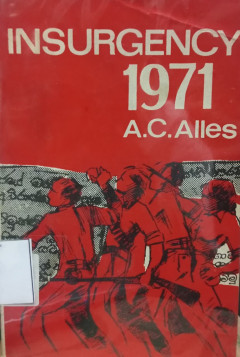
Insurgency-1971
Insurgency – 1971 by A. C. Alles provides a detailed account of the 1971 JVP insurrection in Sri Lanka, examining its origins, leadership, and ideological motivations. The book analyzes the political climate and social tensions that allowed the uprising to grow rapidly among youth. Through official records and firsthand insights, Alles describes the government’s countermeasures and the chal…
- Edisi
- -
- ISBN/ISSN
- -
- Deskripsi Fisik
- v, 296 pages : illustration ; 21 cm
- Judul Seri
- -
- No. Panggil
- 954.92 ALL i
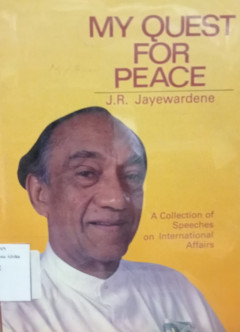
My quest for peace
My Quest for Peace presents J. R. Jayewardene’s reflections on his lifelong efforts to promote peace within Sri Lanka and on the international stage. The book highlights his political journey, key negotiations, and diplomatic initiatives aimed at resolving conflict. Through personal insights, Jayewardene recounts the challenges and complexities of leadership during turbulent times. Overall, t…
- Edisi
- -
- ISBN/ISSN
- -
- Deskripsi Fisik
- 216 pages ; 21,5 cm
- Judul Seri
- -
- No. Panggil
- 923.242 JAY m
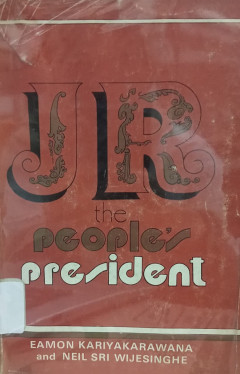
J R the people's president
This book presents a detailed biography of J. R. Jayewardene, the influential Sri Lankan statesman who became the country’s first executive president. It explores his political journey from his early years, through his rise within the United National Party, to his key role in shaping Sri Lanka’s constitution and economic policies. The authors highlight both his visionary leadership and the …
- Edisi
- -
- ISBN/ISSN
- -
- Deskripsi Fisik
- 151 pages : illustrations ; 21 cm
- Judul Seri
- -
- No. Panggil
- 923.15 KAR j
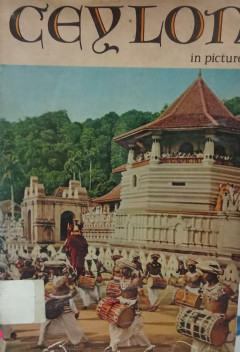
Ceylon in picture
Ceylon in Picture presents a visual portrayal of early 20th-century Ceylon through a collection of photographs accompanied by descriptive notes. The book highlights the island’s landscapes, cultural traditions, and daily life, offering readers an impression of its natural beauty and social diversity. Egan’s images document important landmarks, rural villages, and colonial-era developments. …
- Edisi
- -
- ISBN/ISSN
- 0-8069-1082-8
- Deskripsi Fisik
- 64 pages : illustrations ; 24,5 cm
- Judul Seri
- -
- No. Panggil
- 915.5493 EGA c

Collective indentities nationalisms and protest in modern Sri Langka
This book explores the formation and transformation of collective identities in modern Sri Lanka, focusing on the interplay between ethnicity, nationalism, and political mobilization. Roberts analyzes historical and contemporary movements to show how cultural narratives and social structures shape public protest. Through detailed case studies, he illustrates the tensions and interactions among …
- Edisi
- -
- ISBN/ISSN
- -
- Deskripsi Fisik
- ix, 537 pages ; 21,5 cm
- Judul Seri
- -
- No. Panggil
- 954.93 ROB c

The Revolt in the temple
This book commemorates 2,500 years of the land, race, and faith of the Sinhalese Buddhist people, weaving together their history, philosophy, and nationhood. The author explores the deep ethical and spiritual teachings of Buddhism as a foundation for both individual and societal integrity. He argues that Buddhist ideals can inform practical political and social reforms in the modern world. Ulti…
- Edisi
- -
- ISBN/ISSN
- -
- Deskripsi Fisik
- 700 pages : 21 cm
- Judul Seri
- -
- No. Panggil
- 954.93 TIM r
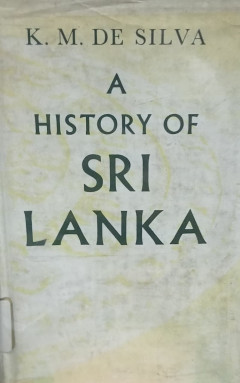
A History of Sri Lanka
A History of Sri Lanka by K. M. de Silva provides a comprehensive overview of Sri Lanka’s political, social, and cultural development from ancient times to the modern era. The book explores the island’s early civilizations, the influence of Buddhism, and the impact of successive foreign powers, including the Portuguese, Dutch, and British. De Silva offers detailed analysis of colonial polic…
- Edisi
- -
- ISBN/ISSN
- -
- Deskripsi Fisik
- vii, 603 pages : illustrations ; 21,5 cm
- Judul Seri
- -
- No. Panggil
- 954.93 SIL h
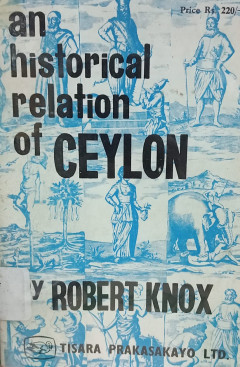
An Historical relation of Ceylon
An Historical Relation of Ceylon presents Robert Knox’s detailed account of his twenty-year captivity in the Kingdom of Kandy in the 17th century. The book describes the island’s geography, society, customs, economy, and political structure based on Knox’s direct observations. His narrative offers valuable insights into daily life in Ceylon and interactions between locals and foreign visi…
- Edisi
- -
- ISBN/ISSN
- -
- Deskripsi Fisik
- 409 pages : 21 cm
- Judul Seri
- -
- No. Panggil
- 954.9301 ROB h
 Karya Umum
  Filsafat
  Agama
Agama  Ilmu-ilmu Sosial
  Bahasa
  Ilmu-ilmu Murni
  Ilmu-ilmu Terapan
  Kesenian, Hiburan, dan Olahraga
  Kesusastraan
  Geografi dan Sejarah