Ditapis dengan
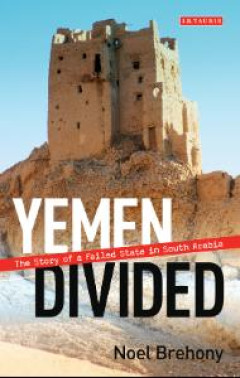
Yemen divided: The story of a failed state in South Africa
South Yemen has come to be seen as a potential Al-Qaeda stronghold and at the heart of a separatist movement threatening to rip apart southern Arabia. How has this country of forbidding mountains and arid deserts gone from British colony to communist state and then to 'terrorist base' in just half a century? In Yemen Divided, author and Middle East expert Noel Brehony tells for the first time t…
- Edisi
- -
- ISBN/ISSN
- 978-1-78076-491-7
- Deskripsi Fisik
- xxiii, 257 pages : illustrations ; 23 cm
- Judul Seri
- -
- No. Panggil
- 953.3 Bre y
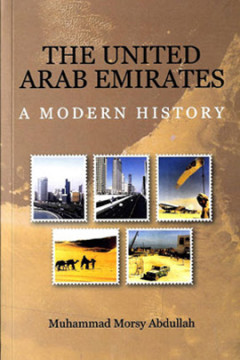
The United Arab Emirates: A modern history
The British withdrawal from the Gulf in 1971 brought to an end the British Imperial era in the history of the Trucial States and marked the birth of the United Arab Emirates. This book, first published in 1978, establishes the political, social, economic and cultural heritage of the UAE and explains the formative issues in the development of the new state. From 1892 to 1971 the history of t…
- Edisi
- -
- ISBN/ISSN
- 0-903696-37-1
- Deskripsi Fisik
- 365 pages : illustrations (black and white) ; 23 cm
- Judul Seri
- -
- No. Panggil
- 953.5 Abd u
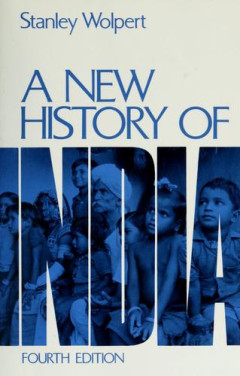
A new history of India
The fourth edition of the most readable and illuminating one-volume history of India is revised to bring students fully up to date on developments since 1988, including the assassination of Rajiv Gandhi, the successive rise of three new central governments to power, escalating violence in Kashmir, Punjab, and Assam, and the effects of accelerating urbanization and rural development. Wolpert pla…
- Edisi
- Ed. 4
- ISBN/ISSN
- 0-19-507660-5
- Deskripsi Fisik
- xiii, 505 pages : illustrations (black and white) ; 20 cm
- Judul Seri
- -
- No. Panggil
- 954 Wol n
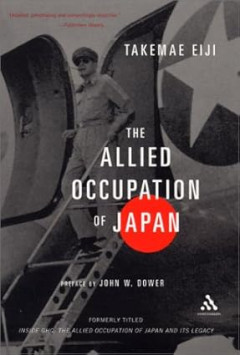
The allied occupation of Japan
Japan's success in charting a new course in the years following World War II stems from the reforming impetus of GHQ/SCAP, Headquarters of the American-led allied occupation that indirectly governed the nation for nearly seven years. This is the story of the reforms of the Occupation period and of the remarkable men and women, Japanese and American, who implemented them. Professor Takemae intro…
- Edisi
- -
- ISBN/ISSN
- 0-8264-6247-2
- Deskripsi Fisik
- xIv, 751 pages : illustrations (black and white) ; 23 cm
- Judul Seri
- -
- No. Panggil
- 952 Eij a
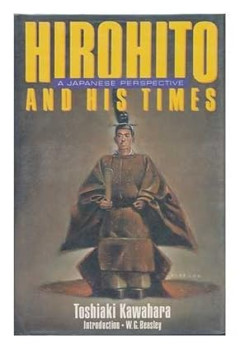
Hirohito and his times: A Japanese perspective
Traces the life of the Japanese Emperor, discusses his changing role in Japanese politics, and includes reminiscences from close associates. Contents: Part one : Early years - New century, old ways - Imperial studies Part two : The emperor at war - The limits of power - Patriots and soldiers Part Three : The emperor peace - Another emporer outside the mot - Friends and enemies.
- Edisi
- -
- ISBN/ISSN
- 4-7700-1479-1
- Deskripsi Fisik
- xiv, 216 pages ; 22 cm
- Judul Seri
- -
- No. Panggil
- 952 Kaw h

Indians: Why we are, what we are
The Book is a Pot Pourri about Contemporary India - A Must for a Foreigner visiting India and the less Travelled Indian. A Retired Naval Officer, Ranjit Rai Makes a modest attempt to explain India to Indians and Foreigners. The Book Consists of diverse chapters that merge, titilate, illuminate, argue and offer solutions in an agreeable style. Contents: 1. A journey through India 2. The India…
- Edisi
- -
- ISBN/ISSN
- 81-7049-080-4
- Deskripsi Fisik
- 233 pages : illustrations (black and white) ; 22 cm
- Judul Seri
- -
- No. Panggil
- 954 Rai i
Indian bureaucracy: Through the ages
In the century we are witnessing a major discursive shift in interpretation of relationships between politics, bureaucracy, markets and social concern. The credit for the ring of new changes goes to major developments in the global political economy. These are reflected mainly in repeated assertions of commitment to liberalization. Consequently, over four decades old Indian model of development…
- Edisi
- -
- ISBN/ISSN
- 81-87317-30-2
- Deskripsi Fisik
- viii, 279 pages ; 22 cm
- Judul Seri
- -
- No. Panggil
- 954 Tiw i

Taliban and the Afghan turmoil: The role of USA, Pakistan, Iran, and China
Rather unexpectedly, a new phenomenon called the Taliban was sprung on an unsuspecting world in late 1994. Even those who knew about it earlier, looked upon it as just another Islamic fundamentalist faction ridden Afghan politics. But the Taliban's captures of Kabul in September 1996 and their claim to governance in the war-torn country introduces a new complexion on this band of mostly young A…
- Edisi
- -
- ISBN/ISSN
- 81-7002-066-2
- Deskripsi Fisik
- 160 pages ; 23 cm
- Judul Seri
- -
- No. Panggil
- 958.1 Sre t

India 50 years of independence 1: Towards independence-The pre-1947 period
This volume one: Towards independence-the pre-1947 period, studies India and the simon report; An insight into the khilafat movement; Failure of sir stafford cripp's mission; Gandhi and partition of India; India's independence and the war.; The fourth dimension of Indian national movement; History of the act of 1935; The sphere of provincial government under the government of India act, 1935; P…
- Edisi
- Vol. 1
- ISBN/ISSN
- 81-7100-919-0
- Deskripsi Fisik
- xii, 353 pages ; 24 cm
- Judul Seri
- -
- No. Panggil
- 954 Gro i
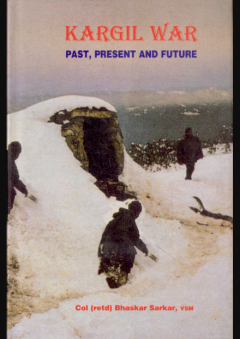
Kargil war: Past, present and future
The Kargil war came out of the blue after 28 years of peace in the subcontinent. It came in the wake of the well publicized bus diplomacy and the Lahore declaration which seemed to herald a new era of Indo-Pak relations. It caught the government of India, the army and the intelligence agencies flat footed. It shocked the Indian people. The war is perhaps over. The intruders have been mostly pus…
- Edisi
- -
- ISBN/ISSN
- 1-897829-61-2
- Deskripsi Fisik
- xiii, 208 pages : illustrations (black and white) ; 23 cm
- Judul Seri
- -
- No. Panggil
- 355.02 Sar k
 Karya Umum
  Filsafat
  Agama
Agama  Ilmu-ilmu Sosial
  Bahasa
  Ilmu-ilmu Murni
  Ilmu-ilmu Terapan
  Kesenian, Hiburan, dan Olahraga
  Kesusastraan
  Geografi dan Sejarah