Ditapis dengan

Hak-hak asasi manusia dalam politik luar negeri
Buku ini membahas kaitan antara hak-hak asasi manusia dan politik luar negeri. bagian I,membahas kaitan ini secara umum; bagian II membicarakan sejumlah negara dan wilayah tertentu. sudut pandang buku ini adalah panduan antara realisme dan optimisme. realisme berarti mengakui bahwa hak-hak asasi manusia bukan satu-satunya pertimbangan yang menjadi pedoman politik luar negeri dan menyadari sepen…
- Edisi
- Ed.1
- ISBN/ISSN
- 979-461-290-1
- Deskripsi Fisik
- x,232 halaman : index ; 21 cm
- Judul Seri
- -
- No. Panggil
- 323 Bae h

The Portuguese military and the state: Rethinking transitions in Europe and L…
The breakdown of authoritarian regimes and the transition to more open forms of government and new market structures require extensive change, especially when such shifts lead to the disintegration of previous political, social, and economic systems. In his exploration of the Portuguese case, Lawrence Graham contends that during transitions the absence of a civilian-based opposition movement wi…
- Edisi
- -
- ISBN/ISSN
- 0-8133-8613-6
- Deskripsi Fisik
- xiii, 153 pages : index ; 23 cm
- Judul Seri
- -
- No. Panggil
- 322.5094 Gra p

Saudi Arabia and Iran: Power and rivalry in the Middle East
In the wake of the 1979 Iranian revolution, relations between states in the Middle East were reconfigured and reassessed overnight. Amongst the most-affected was the relationship between Iran and Saudi Arabia. The existence of a new regime in Tehran led to increasingly vitriolic confrontations between these two states, often manifesting themselves in the conflicts across the region, such as tho…
- Edisi
- -
- ISBN/ISSN
- 978-1-78453-466-0
- Deskripsi Fisik
- xii, 298 pages : index, bibliography ; 20 cm
- Judul Seri
- -
- No. Panggil
- 327.538055 Mab s
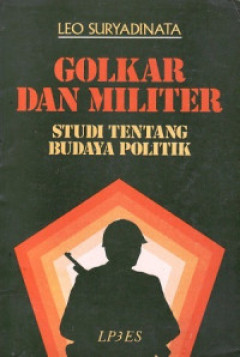
Golkar dan militer: Studi tentang budaya politik
Buku ini menjelajahi kemungkinan-kemungkinan hipotetis dan empiris untuk menjawab pertanyaan-pertanyaan di atas. Melalui tinjauan historis untuk memahami asal-usul kelahiran dan perkembangannya hingga se- karang, Leo Suryadinata mengembangkan studi budaya politik terhadap partai terbesar di Indonesia itu dengan suatu kesimpulan yang menarik bahwa, Golkar tidaklah bisa dilihat semata-mata sebaga…
- Edisi
- Cet.1
- ISBN/ISSN
- 979-8391-02-0
- Deskripsi Fisik
- x, 200 halaman : ilustrasi : index ; 23 cm
- Judul Seri
- -
- No. Panggil
- 322.5 Sur g

Pakistan: Between mosque and military
This book analyzes the origins of the relationships between Islamist groups and Pakistan's military, and explores the nation's quest for identity and security. Tracing how the military has sought U.S. support by making itself useful for concerns of the moment, while continuing to strengthen the mosque-military alliance within Pakista. Haqqani offers an alternative view of political developments…
- Edisi
- -
- ISBN/ISSN
- 969-402-498-6
- Deskripsi Fisik
- xi, 397 pages : illustrations (black and white) : index ; 24 cm
- Judul Seri
- -
- No. Panggil
- 322.5 Haq p

Reformasi antara harapan dan realita
Dalam kurun waktu yang disebut reformasi, Sulastomo menulis beragam topik. Sebuah wujud perhatiannya pada masalah kemasyarakatan. Perihal UUD 1945, gelombang demokrasi, kepemimpinan, reformasi TNI, kesejahteraan rakyat, hingga globalisasi. Buku ini memaparkan pemikiran dan pandangan dari sosok yang mendeklarasikan Gerakan Jalan Lurus. Penyampaian gagasan Sulastomo memiliki kontribusi bagi perke…
- Edisi
- Cetakan Pertama
- ISBN/ISSN
- 979-709-093-0
- Deskripsi Fisik
- xii, 267 halaman ; 21 cm
- Judul Seri
- -
- No. Panggil
- 322.44 Sul r

The new Chinese leadership : Challenges and opportunities after the 16th part…
This volume presents a concise history of how China's Communist Party (CCP) selected a new generation of leaders in late 2002 and why the individuals, in their late 40s and 50s, were so well qualified to govern China. These leaders are trying to lead China to become a regional and world power in which their people can enjoy a modest living standard and take pride in the nation's achievements. A…
- Edisi
- -
- ISBN/ISSN
- 0-521-600588
- Deskripsi Fisik
- viii, 256 pages : illustrations (black and white) : index ; 24 cm
- Judul Seri
- -
- No. Panggil
- 322.44 Chu n

Reformasi Prematur: Jawaban Islam terhadap reformasi total
Buku ini ditulis oleh seorang ilmuwan politik muda ini menyimpulkan, bahwa hanya Islam saja yang bisa menawarkan alternatif bagi adanya reformasi total sebagaimana Nabi Muhammad SAW pada abad ke 6.
- Edisi
- Cet.1
- ISBN/ISSN
- 885215698K0450
- Deskripsi Fisik
- xvii, 292 hlm : bibl: hlm 281-288 : index ; 24 cm
- Judul Seri
- -
- No. Panggil
- 322.44 Cha r
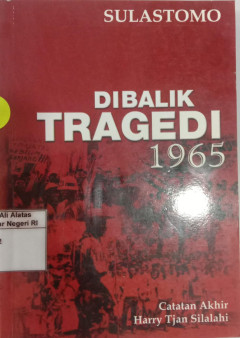
Dibalik tragedi 1965
Dalam buku ini, Mas Tom, sebagai aktivis dan pemimpin HMI semasa prolog Gerakan 30 September memberikan kesaksian perkembangan pertentangan politik , berhadapan dengan kelompok lain di Tanah Air, kelompok keagamaan dan kelompok kebangsaan, termasuk suku ABRI, Khususnya Angkatan Darat.
- Edisi
- Cet.1
- ISBN/ISSN
- 979-97204-2-7
- Deskripsi Fisik
- xi,178 halaman : ilustrasi : index ; 19 cm.
- Judul Seri
- -
- No. Panggil
- 322.42 Sul d

Inside the PLO: Covert units, secret funds, and the war against Israel and th…
The authors describe the origins and rise of the Palestine Liberation Organization, its complex structure, and the personalities who preside over it. They say that the PLO is equal parts terrorist organization and multinational corporation, involved in murder, extortion, and drug trafficking. Chapter 1: The Death of Abu Jihad Chapter 2: The Rise of the PLO Chapter 3: Convert Units and Operat…
- Edisi
- ed. 1
- ISBN/ISSN
- 0-688-10742-7
- Deskripsi Fisik
- 336 pages : illustrations (black and white) : index ; 23 cm
- Judul Seri
- -
- No. Panggil
- 322.42 Liv i
 Karya Umum
  Filsafat
  Agama
Agama  Ilmu-ilmu Sosial
  Bahasa
  Ilmu-ilmu Murni
  Ilmu-ilmu Terapan
  Kesenian, Hiburan, dan Olahraga
  Kesusastraan
  Geografi dan Sejarah