Ditapis dengan
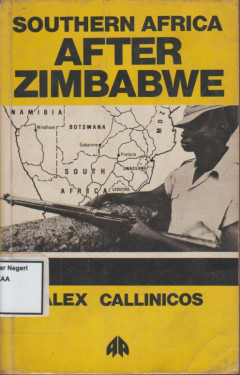
Southern Africa after Zimbabwe
Southern Africa after Zimbabwe examines the shifting political landscape in the region in the early 1980s following Zimbabwe’s independence in 1980. Alex Callinicos analyzes the effects of Zimbabwe’s liberation on neighboring countries and evaluates the broader regional struggle against colonialism, apartheid, and imperialism. The book provides insights into the dynamics of revolutionary mo…
- Edisi
- -
- ISBN/ISSN
- 0-86104-336-7
- Deskripsi Fisik
- 186 pages ; 20 cm
- Judul Seri
- -
- No. Panggil
- 968.910 CAL s
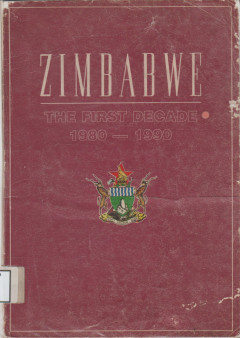
Zimbabwe: The First decade, 1980–1990
Zimbabwe: The First Decade, 1980–1990 provides a comprehensive overview of the political, social, and economic developments that shaped Zimbabwe in its first ten years after independence. Produced as an official national publication, the book documents major achievements, challenges, and transformations in governance, national unity, education, health, agriculture, infrastructure, and foreign…
- Edisi
- -
- ISBN/ISSN
- -
- Deskripsi Fisik
- 352 pages : illustration ; 29,5 cm
- Judul Seri
- -
- No. Panggil
- 968.9105 TIM z

The Struggle for Zimbabwe: The Chimurenga war
The Struggle for Zimbabwe: The Chimurenga War provides a comprehensive and detailed narrative of Zimbabwe’s liberation struggle against colonial rule. Written by journalists David Martin and Phyllis Johnson, the book examines the origins, development, and climax of the armed resistance led by liberation movements such as ZANU and ZAPU. Drawing from first-hand accounts, interviews, and histori…
- Edisi
- -
- ISBN/ISSN
- 0-571-11066-5
- Deskripsi Fisik
- xvii, 378 pages : illustration ; 22,5 cm
- Judul Seri
- -
- No. Panggil
- 968.9104 MAR t

Mugabe: Power, plunder, and the struggle for Zimbabwe
This revised and updated edition by Martin Meredith offers a comprehensive and critical examination of Robert Mugabe’s rise to power, his decades-long rule, and the political, social, and economic turmoil that unfolded in Zimbabwe under his leadership. Drawing on extensive research and firsthand accounts, Meredith exposes how Mugabe transformed from a celebrated liberation hero into one of Af…
- Edisi
- -
- ISBN/ISSN
- 978-1-86842-291-3
- Deskripsi Fisik
- 259 pages : illustration ; 20 cm
- Judul Seri
- -
- No. Panggil
- 968.9105 MER m

What happens after Mugabe? : Can Zimbabwe rise from the ashes?
What Happens After Mugabe? examines the uncertain political, economic, and social future of Zimbabwe at a time when Robert Mugabe’s leadership was nearing its end. Geoff Hill investigates the collapse of Zimbabwe’s economy, the erosion of democratic institutions, state-sponsored violence, and the humanitarian crisis that emerged during Mugabe’s rule. Drawing on interviews, historical anal…
- Edisi
- -
- ISBN/ISSN
- 978-1-77007-102-5
- Deskripsi Fisik
- xiv, 178 pages : illustration ; 21 cm
- Judul Seri
- -
- No. Panggil
- 968.91 HIL w

Zimbabwe: The Past is the future – rethinking land, state and nation in the…
This book provides a critical examination of Zimbabwe’s political, social, and economic trajectory in the years following independence. Edited by David Harold-Barry, it brings together the perspectives of multiple scholars who analyze the deepening national crisis, focusing on land redistribution, governance, state power, and national identity. Through historical insight and contemporary anal…
- Edisi
- -
- ISBN/ISSN
- 1-77922-025-1
- Deskripsi Fisik
- xv, 274 pages : illustration ; 21,5 cm
- Judul Seri
- -
- No. Panggil
- 968.91 HAR z
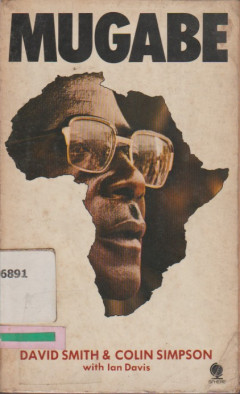
Mugabe
“Mugabe” by David Smith and Colin Simpson (with Ian Davies) is an investigative and biographical account of Robert Mugabe, charting his rise from rural teacher to one of Africa’s most controversial political figures. The book examines Mugabe’s early life, his ideological influences, and the development of Zimbabwe’s nationalist movement. It details his imprisonment, leadership within …
- Edisi
- -
- ISBN/ISSN
- 0-7221-3981-4
- Deskripsi Fisik
- vii, 217 pages : illustration ; 18 cm
- Judul Seri
- -
- No. Panggil
- 968.91 SMI m

With the people: An autobiography from the Zimbabwean struggle
With the People is the political autobiography of Maurice Nyagumbo, one of Zimbabwe’s most influential nationalist leaders during the struggle against colonial rule. The book recounts his personal journey from rural upbringing to becoming a central figure in the African nationalist movement. Nyagumbo details the hardships faced under colonial oppression, his experiences in detention, and his …
- Edisi
- -
- ISBN/ISSN
- 0-86921-019-x
- Deskripsi Fisik
- 248 pages ; 19,5 cm
- Judul Seri
- -
- No. Panggil
- 968.91 NYA w
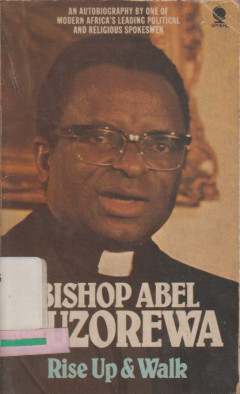
Rise up and walk: An autobiography
Rise Up and Walk is the autobiography of Bishop Abel Tendekai Muzorewa, one of Zimbabwe’s most prominent religious and political leaders during the transition from colonial rule to independence. In this personal narrative, Muzorewa recounts his early life, spiritual calling, and rise to leadership within the United Methodist Church. He details his political involvement through the African Nat…
- Edisi
- -
- ISBN/ISSN
- 0-7221-7663-4
- Deskripsi Fisik
- 289 pages ; 18 cm
- Judul Seri
- -
- No. Panggil
- 968.9104092 MUZ r
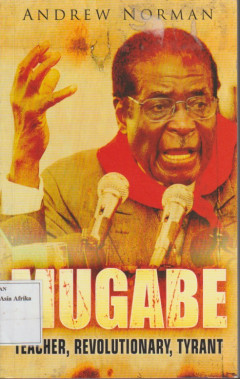
Mugabe: Teacher, revolutionary, tyrant
“Mugabe: Teacher, Revolutionary, Tyrant” by Andrew Norman presents an in-depth biography of Robert Mugabe, tracing his transformation from a teacher and nationalist revolutionary leader into one of Africa’s most controversial political figures. The book explores his early life, ideological development, rise within the Zimbabwe African National Union (ZANU), and his central role in the l…
- Edisi
- -
- ISBN/ISSN
- 9781866274914
- Deskripsi Fisik
- 192 pages : illustration ; 20 cm
- Judul Seri
- -
- No. Panggil
- 968.9103092 NOR m
 Karya Umum
  Filsafat
  Agama
Agama  Ilmu-ilmu Sosial
  Bahasa
  Ilmu-ilmu Murni
  Ilmu-ilmu Terapan
  Kesenian, Hiburan, dan Olahraga
  Kesusastraan
  Geografi dan Sejarah