Ditapis dengan

Yugoslavia in international relations and in the Non-Aligned movement
Edvard Kardelj's book Yugoslavia in International Relations and in the Non-Aligned Movement examines Yugoslavia's role in international relations and its contribution to the formation and development of the Non-Aligned Movement (NAM). As one of the main ideologues and architects of Yugoslavia's foreign policy, Kardelj explains how the country adopted a position independent of both the Western a…
- Edisi
- -
- ISBN/ISSN
- -
- Deskripsi Fisik
- 234 pages ; 20 cm
- Judul Seri
- -
- No. Panggil
- 327.172 KAR y
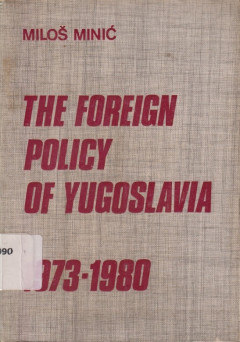
The Foreign policy of Yugoslavia 1973–1980
This book examines Yugoslavia's foreign policy during the period 1973–1980, when the country faced complex international dynamics amidst the Cold War. Miloš Minić, a prominent figure in Yugoslav diplomacy, outlines the principles of non-aligned foreign policy, relations with major powers, and Yugoslavia's role in multilateral diplomacy. This book serves as an important reference for underst…
- Edisi
- -
- ISBN/ISSN
- -
- Deskripsi Fisik
- 340 pages ; 20 cm
- Judul Seri
- -
- No. Panggil
- 327.495 MIN f
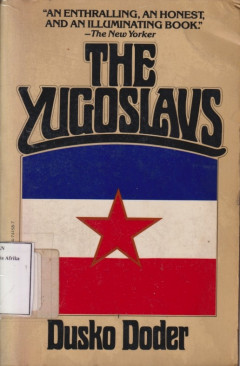
The Yugoslavs
This book provides an in-depth analysis of the society, politics, and social conditions of Yugoslavia after World War II. Journalist and Balkan observer Dusko Doder describes the internal dynamics of the federation, including the ethnic tensions, political structures, and social transformations that shaped the modern Yugoslav identity. With a comprehensive bibliography and index, this book is a…
- Edisi
- -
- ISBN/ISSN
- 0–394–74158–7
- Deskripsi Fisik
- xiv, 256 pages ; 20,5 cm
- Judul Seri
- -
- No. Panggil
- 949.703 DOD y

Tito and non-alignment: President Tito's addresses at conferences of non-alig…
World stability has been discussed for years now as wholly dependent on a balance of power and fear, and bloc negotiation. At the same time, however, we have been witness to persisting instability, as the end result of precisely these presumptions. There is no particular need to point out that non-aligned policy has been the political force that has imparted positive elements of stability to an…
- Edisi
- -
- ISBN/ISSN
- -
- Deskripsi Fisik
- 119 pages ; 20 cm
- Judul Seri
- -
- No. Panggil
- 327.17 TIT t

The Nation and international relations
The Nation and International Relations discusses the ideological, political, and historical foundations of national identity within the socialist framework of Yugoslavia. Edvard Kardelj examines the development of nations, the nature of state sovereignty, and how socialist self-management shapes international relations. The book analyzes the balance between national independence and global coop…
- Edisi
- -
- ISBN/ISSN
- -
- Deskripsi Fisik
- 211 pages ; 20 cm
- Judul Seri
- -
- No. Panggil
- 327.17 KAR n

Petunjuk singkat tentang Yugoslavia
Buku ini berisi tentang data statistik mengenai Yugoslavia sekitar tahun 1975
- Edisi
- -
- ISBN/ISSN
- -
- Deskripsi Fisik
- 40 halaman ; 15 cm
- Judul Seri
- -
- No. Panggil
- 949.7 Beo y

Tito and the rise and fall of Yugoslavia
Contents: 1. The history of the South Slavs 2. Youth 3. The making of a communist 4. Wartime 5. The Utasha terror etc.
- Edisi
- -
- ISBN/ISSN
- 1-85619-437-X
- Deskripsi Fisik
- xii, 436 pages : illustrations (black and white) ; 24 cm
- Judul Seri
- -
- No. Panggil
- 949.7 Wes t

The Croat question: Partisan politics in the formation of the Yugoslav social…
Explores the historical roots of the conflict in Yugoslavia and provides a background to understanding the entrenched antagonism between Serbs and Croats. Its particular focus is the Yugoslav Communist Party's attempts to resolve this problem in the process of remaking the state.
- Edisi
- -
- ISBN/ISSN
- 0-8133-8542-3
- Deskripsi Fisik
- xviii, 318 pages : illustrations (black and white) ; 23 cm
- Judul Seri
- -
- No. Panggil
- 949.702 Irv c

The truth about Yugoslavia: Why working people should oppose intervention
Examines the roots of the carnage in Yugoslavia during the 1990s, where Washington and its imperialist rivals in Europe are competing with each other for influence as they intervene militarily in an attempt to reimpose capitalist relations.
- Edisi
- Ed. 1
- ISBN/ISSN
- 0-87348-776-1
- Deskripsi Fisik
- 89 pages : illustrations (black and white) ; 21 cm
- Judul Seri
- -
- No. Panggil
- 949.7 Fys t

The black book of Bosnia: The consequences of appeasement
The war in the former Yugoslavia has shamed the leading nations of the world. Unspeakable crimes against humanity have been committed in Bosnia, Croatia and Serbia, yet American and European policymakers have cravenly stood aside while whole villages and communities were erased from the face of the earth.Americans are appalled by the images on their television screens of the carnage, but most o…
- Edisi
- -
- ISBN/ISSN
- 0-465-09835-5
- Deskripsi Fisik
- xiii, 219 pages : illustrations (black and white) ; 20 cm
- Judul Seri
- -
- No. Panggil
- 949.70274 Mou b
 Karya Umum
  Filsafat
  Agama
Agama  Ilmu-ilmu Sosial
  Bahasa
  Ilmu-ilmu Murni
  Ilmu-ilmu Terapan
  Kesenian, Hiburan, dan Olahraga
  Kesusastraan
  Geografi dan Sejarah