Ditapis dengan
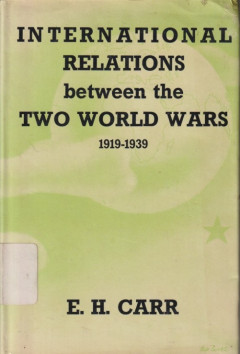
International relations between the two world wars 1919–1939
This book provides a comprehensive analysis of international relations during the interwar period from 1919 to 1939. E. H. Carr examines the political, economic, and diplomatic developments that shaped the fragile international order after World War I. The work discusses the consequences of the peace treaties, the rise of new power dynamics, and the failures of collective security leading to Wo…
- Edisi
- -
- ISBN/ISSN
- 0 333 08318 0
- Deskripsi Fisik
- viii, 302 pages : illustration ; 19 cm
- Judul Seri
- -
- No. Panggil
- 327.090 CAR i
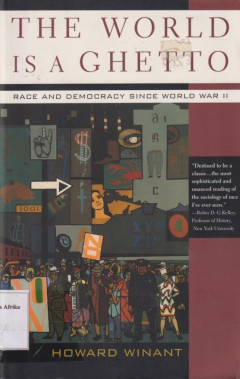
The World is a Ghetto: Race and democracy since World War II
This book examines the evolution of race and democracy in the global context since World War II. Howard Winant explores the transformation of racial politics, the rise of social movements, and the challenges posed by racial inequality in modern democratic societies. Through historical and comparative analysis, the author argues that race has become a central issue in contemporary global politic…
- Edisi
- -
- ISBN/ISSN
- 0-465-04340-2
- Deskripsi Fisik
- xvi, 428 pages ; 23 cm
- Judul Seri
- -
- No. Panggil
- 305.8 WIN w
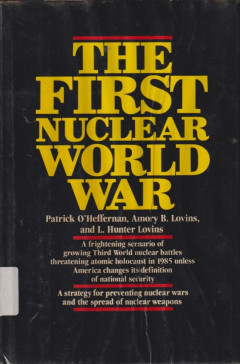
The First nuclear world war
The First Nuclear World War presents a strategic analysis aimed at preventing future nuclear conflicts and limiting the spread of nuclear weapons. Written by Patrick O’Heffernan, Amory B. Lovins, and L. Hunter Lovins, the book explores the political, military, and technological factors that shape global nuclear policy. It examines the dangers posed by nuclear proliferation, the risks of misca…
- Edisi
- -
- ISBN/ISSN
- 0-688-01589-1
- Deskripsi Fisik
- 444 pages ; 24 cm
- Judul Seri
- -
- No. Panggil
- 355.0217 OHE t
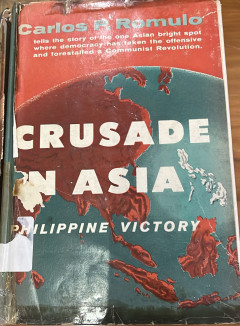
Crusade in Asia: Philippine victory
This book presents a firsthand political and historical account of the Philippines’ struggle and role in Asia during and after the Second World War. Written by Carlos P. Romulo, a prominent Filipino diplomat, soldier, and statesman, the work reflects on the broader Asian conflict against imperialism and totalitarianism, highlighting the Philippine experience as a symbol of democratic resistan…
- Edisi
- -
- ISBN/ISSN
- -
- Deskripsi Fisik
- 309 pages ; 21 cm
- Judul Seri
- -
- No. Panggil
- 959.904 ROM c
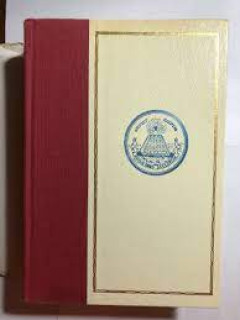
America enters the world: A people's history of the Progressive Era and Worl…
America Enters the World is Volume Seven of Page Smith’s multi-volume narrative history of the American people. This volume explores the United States during the Progressive Era and its entry into World War I. Smith examines political reforms, social movements, changing national identity, and the rise of American influence abroad. Through a detailed, story-driven approach, the book traces how…
- Edisi
- Volume 7
- ISBN/ISSN
- 0070585733
- Deskripsi Fisik
- xiii, 1089 pages : maps ; 24 cm
- Judul Seri
- -
- No. Panggil
- 973 SMI a

Invasion-They’re Coming!: The German account of the allied landings and the…
This book presents the German perspective on the Allied invasion of Normandy on June 6, 1944, and the ensuing 80 days of fighting in France. Written by Paul Carell, a former German propaganda official, this book describes the dynamics of strategy, troop movements, and the experiences of German commanders and soldiers in facing the massive attack that determined the course of World War II. With …
- Edisi
- -
- ISBN/ISSN
- -
- Deskripsi Fisik
- 288 pages : illustration ; 21,5 cm
- Judul Seri
- -
- No. Panggil
- 940.5421 CAR i
Canada and the far east 1940
This book analyzes Canada’s political, economic, and diplomatic relations with the Far East during the year 1940, in the context of rising tensions leading to World War II. Written under the Institute of Pacific Relations Inquiry Series, it examines Canada’s strategic interests, trade connections, and evolving foreign policy toward East Asian nations. The work provides historical insight in…
- Edisi
- -
- ISBN/ISSN
- -
- Deskripsi Fisik
- ix, 152 pages ; 23,5 cm 1. Judul
- Judul Seri
- -
- No. Panggil
- 327.7105 LOW c

The Kings depart: The tragedy of Germany – Versailles and the German revolu…
This book presents a historical study of Germany's transition from the collapse of the Empire at the end of World War I to the birth of the Weimar Republic. Richard M. Watt outlines various important events such as Germany's defeat in 1918, the Treaty of Versailles with its political and economic consequences, and the German Revolution of 1918–1919. Through a detailed narrative approach based…
- Edisi
- -
- ISBN/ISSN
- -
- Deskripsi Fisik
- 604 pages : illustration ; 24 cm
- Judul Seri
- -
- No. Panggil
- 943.084 WAT k
Canaris
Canaris is a biography of Admiral Wilhelm Canaris, an important figure who led the German military intelligence service (Abwehr) during the Nazi era. Written by Karl Heinz Abshagen and translated by Alan Houghton Brodrick, this book describes Canaris' life, career, and complex role in the German intelligence network. In addition to being a high-ranking officer, Canaris was known for his ambival…
- Edisi
- -
- ISBN/ISSN
- -
- Deskripsi Fisik
- 264 pages ; 22 cm
- Judul Seri
- -
- No. Panggil
- 303.6443 ABS c
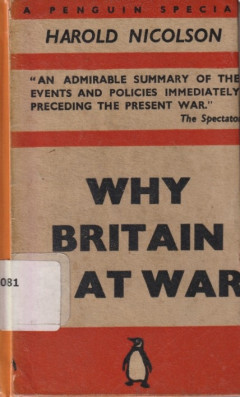
Why Britain is at war
This book contains Harold Nicolson's explanation of why Britain entered World War II, written at the very beginning of the conflict in 1939. Nicolson outlines the political conditions in Europe, the rise of Nazi Germany, the failure of appeasement, and the danger of Hitler's expansion to international security. As a diplomat and member of the British Parliament, Nicolson's views provide a direc…
- Edisi
- -
- ISBN/ISSN
- -
- Deskripsi Fisik
- 160 pages ; 18 cm
- Judul Seri
- -
- No. Panggil
- 941.081 NIC w
 Karya Umum
  Filsafat
  Agama
Agama  Ilmu-ilmu Sosial
  Bahasa
  Ilmu-ilmu Murni
  Ilmu-ilmu Terapan
  Kesenian, Hiburan, dan Olahraga
  Kesusastraan
  Geografi dan Sejarah