Ditapis dengan
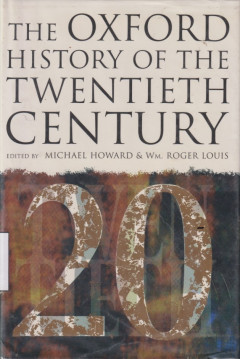
The Oxford history of the twentieth century
This book presents a comprehensive overview of 20th-century world history through contributions from leading international historians. Edited by Michael Howard and William Roger Louis, this work examines the political, economic, social, cultural, and technological developments that shaped the modern world. Major themes such as the world wars, colonialism and decolonization, global economic chan…
- Edisi
- -
- ISBN/ISSN
- 0–19–820428–0
- Deskripsi Fisik
- xxii, 458 pages : illustration ; 24 cm
- Judul Seri
- -
- No. Panggil
- 909.82 HOW o
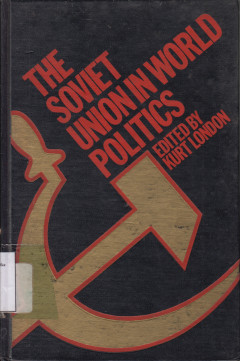
The Soviet Union in world politics
The Soviet Union in World Politics is a collection of scholarly articles edited by Kurt London, discussing the role of the Soviet Union in international political dynamics during the 20th century. This book highlights Soviet foreign policy, global strategy, diplomatic relations, and its ideological influence on other countries during the Cold War. Written by experts, this work provides an in-de…
- Edisi
- -
- ISBN/ISSN
- 0-89158-263-0
- Deskripsi Fisik
- xiii, 380 pages ; 23,5 cm
- Judul Seri
- -
- No. Panggil
- 327.47 LON s

Southeast Asia in international politics, 1941-1956
This book explains about international relations of Southeast Asia during the critical period from World War II to the years immediatelly following the first Indochina settlement. Set against a global background, it explores the policies not only of the countries of the region (including Australia and New Zealand), but also of outside countries with interest in Southeast Asia-the European power…
- Edisi
- -
- ISBN/ISSN
- 0-8014-0971-3
- Deskripsi Fisik
- 372 pages : index ; 24 cm
- Judul Seri
- -
- No. Panggil
- 327.0959 COL s
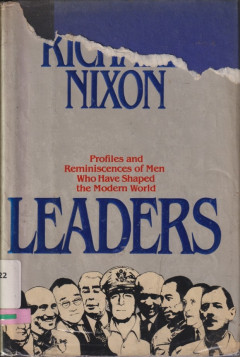
Leaders
In this reflective work, former U.S. President Richard Nixon offers his insights on global leadership through a series of biographical portraits and personal evaluations of major world figures. Drawing from his extensive experience in international politics and diplomacy, Nixon analyzes the qualities, decisions, and historical moments that shaped the leaders who influenced the 20th century. The…
- Edisi
- -
- ISBN/ISSN
- 0-446-51249-4
- Deskripsi Fisik
- 371 pages : illustration ; 23,5 cm
- Judul Seri
- -
- No. Panggil
- 909.82 NIX l
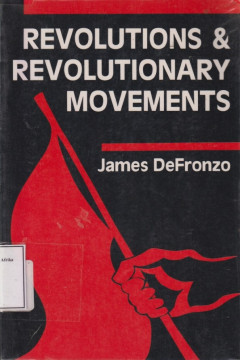
Revolutions and revolutionary movements
This book provides a comprehensive analysis of various revolutions and revolutionary movements in the modern world. James DeFronzo discusses the social, economic, political, and psychological factors that drive revolutions, as well as how these movements develop and influence the social order. By reviewing a number of case studies from different countries, this book highlights common patterns i…
- Edisi
- -
- ISBN/ISSN
- 0-8133-0668-X
- Deskripsi Fisik
- xvi, 336 pages : illustration ; 23 cm
- Judul Seri
- -
- No. Panggil
- 303.64 DEF r

An ethic for survival: Adlai Stevenson speaks on international affairs, 1936-…
The title of this volume suggests itself from Stevenson's own phrasing in an address at a dinner held in his honor and celebrating the creation of the Stevenson Foundation in the Herbert Lehman Institute of Ethics at the Jewish Theological Seminary of America. Because of his lifetime search for such an ethic, Stevenson's statement is pertinent: "War is no longer rational, we say, yet the respon…
- Edisi
- -
- ISBN/ISSN
- -
- Deskripsi Fisik
- 571 pages : bibl: hlm 553-566 : index ; portrait ; 25 cm.
- Judul Seri
- -
- No. Panggil
- 327.73 Pro e
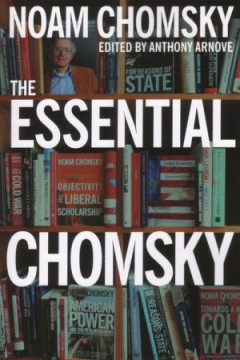
The essential Chomsky
One of the World's most prominent public intellectuals, Noam Chomsky has, in more than fifty years of writing on politics, philosophy, and language, revolutionized modern linguistics and established himself as one of the most original and wide-ranging political and social critics of our time. The Essential Chomsky brings together selections from his most important writings since 1959 - from his…
- Edisi
- -
- ISBN/ISSN
- 978-1-59558-189-1
- Deskripsi Fisik
- ix, 515 pages : index ; 23 cm
- Judul Seri
- -
- No. Panggil
- 320 Cho e

New world order: Western fundamentalism in action
For over a billion Muslims all over the world the new For world order is dead even before it was born. Twentieth century has witnessed many a people talking of a new world order. After the First World War, the American President Woodrow Wilson tried to breath some fresh air into the debate on the future world order and came out with the dream of a world ruled by principles and universally accep…
- Edisi
- -
- ISBN/ISSN
- 969-448-039-6
- Deskripsi Fisik
- 306 pages : index ; 22 cm
- Judul Seri
- -
- No. Panggil
- 322 Kor n
 Karya Umum
  Filsafat
  Agama
Agama  Ilmu-ilmu Sosial
  Bahasa
  Ilmu-ilmu Murni
  Ilmu-ilmu Terapan
  Kesenian, Hiburan, dan Olahraga
  Kesusastraan
  Geografi dan Sejarah