Ditapis dengan
The Colombo plan and other essays
The Colombo Plan, and Other Essays by Frederic Benham provides a concise analysis of the economic and social significance of the Colombo Plan in Asia. Originally published in 1956 by the Royal Institute of International Affairs, this volume of essays examines the motivations, mechanisms, and impact of technical and financial aid coordinated under the Colombo Plan. The author discusses developme…
- Edisi
- -
- ISBN/ISSN
- -
- Deskripsi Fisik
- viii, 89 pages : illustrations ; 19 cm
- Judul Seri
- -
- No. Panggil
- 338.0951 BEN c

Glory of the royal cities: A Visual celebration of ancient Sri Lanka
This book presents a vivid photographic exploration of the ancient royal cities of Sri Lanka, capturing their architectural splendor, cultural heritage, and historical significance. Through high-quality visual documentation, Sunil de Costa showcases the grandeur of monuments, temples, palaces, and archaeological sites that shaped Sri Lanka’s ancient civilization. The work serves both as an ar…
- Edisi
- -
- ISBN/ISSN
- 978-955-50332-1-3
- Deskripsi Fisik
- xvii, 243 pages : illustration ; 29 cm
- Judul Seri
- -
- No. Panggil
- 954.93 COS g

Educational policies and progress during British rule in Ceylon (Sri Lanka), …
This book presents a comprehensive study of the development of educational policies and the progress of the education system in Sri Lanka during the British colonial period from 1796 to 1948. J. E. Jayasuriya examines the major reforms, legislative measures, missionary influence, structural changes, and the evolution of both primary and secondary education under British administration. Through …
- Edisi
- -
- ISBN/ISSN
- -
- Deskripsi Fisik
- 558 pages ; 21,5 cm
- Judul Seri
- -
- No. Panggil
- 379.5493 JAY e

Links between Sri Lanka and The Netherlands: A Book of Dutch Ceylon
This work presents a historical overview of the connections between Sri Lanka and the Netherlands during the period of Dutch presence on the island. R. L. Brohier offers a detailed account of Dutch Ceylon, including the political, cultural, and economic influences of the Dutch administration. Through documented events, archival references, and descriptive narratives, the book highlights the lon…
- Edisi
- -
- ISBN/ISSN
- -
- Deskripsi Fisik
- 165 pages : illustration ; 28 cm
- Judul Seri
- -
- No. Panggil
- 954.93 BRO l
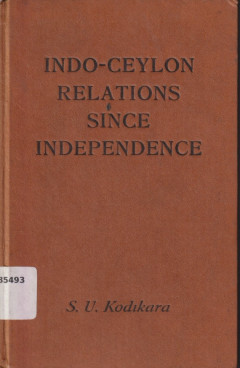
Indo-Ceylon relations since independence
This book examines the development of bilateral relations between India and Ceylon (Sri Lanka) since both countries gained independence. S. U. Kodikara outlines the historical, political, economic, and social factors influencing the dynamics of relations between the two countries, including the issue of citizenship of Indian Tamils, political agreements, and India's role in the stability of the…
- Edisi
- -
- ISBN/ISSN
- -
- Deskripsi Fisik
- viii, 262 halaman: illustration; 23 cm
- Judul Seri
- -
- No. Panggil
- 327.5493 KOD i
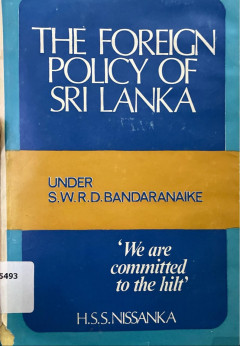
The Foreign policy of Sri Lanka: Under S.W.R.D. Bandaranaike
This book provides a comprehensive analysis of Sri Lanka’s foreign policy during the tenure of Prime Minister S.W.R.D. Bandaranaike (1956–1959). It examines the political philosophy and strategic considerations that shaped Bandaranaike’s approach to international relations, particularly his advocacy of nonalignment, regional cooperation, and a foreign policy grounded in national identity …
- Edisi
- -
- ISBN/ISSN
- -
- Deskripsi Fisik
- xv, 190 pages : illustrations :25 cm
- Judul Seri
- -
- No. Panggil
- 327.5493 NIS f

Premadasa of Sri Langka: A Political biography
Premadasa of Sri Lanka: A Political Biography by Bradman Weerakoon explores the life and career of President Ranasinghe Premadasa, one of Sri Lanka’s most influential and controversial leaders. The book traces his rise from humble beginnings to the highest political office, highlighting his determination and distinct leadership style. It examines his major policies, social development initiat…
- Edisi
- -
- ISBN/ISSN
- -
- Deskripsi Fisik
- 108 pages : illustrations ; 22,5 cm
- Judul Seri
- -
- No. Panggil
- 923.15493 WEE p
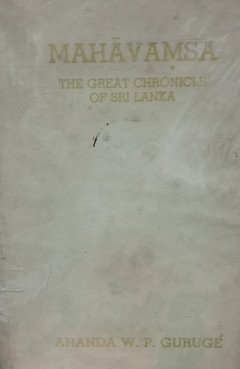
Mahavamsa: The Great Chronicle
Mahavamsa: The Great Chronicle by Ananda W. P. Guruge presents a detailed historical narrative of Sri Lanka, focusing on the island’s ancient kings, Buddhist heritage, and cultural evolution. The book offers a scholarly translation and commentary that illuminate the political, religious, and social context of the chronicle. Guruge’s work highlights the Mahavamsa’s importance as both a his…
- Edisi
- -
- ISBN/ISSN
- 955-9034-02-2
- Deskripsi Fisik
- xi, 1129 pages ; 21 cm
- Judul Seri
- -
- No. Panggil
- 294.309 GUR m
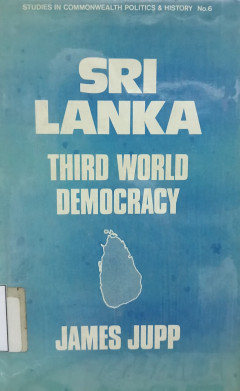
Sri Lanka: Third world democracy
This book provides an in-depth analysis of Sri Lanka’s political evolution as a developing-world democracy. It explores the historical roots of its democratic institutions and the social tensions that have shaped its political landscape. Jupp examines ethnic conflict, governance challenges, and the impact of economic development on political stability. Overall, the book offers a critical asse…
- Edisi
- -
- ISBN/ISSN
- 0-7146-3093-4
- Deskripsi Fisik
- ix, 421 pages ; 21,5 cm
- Judul Seri
- -
- No. Panggil
- 320.954 JUP s
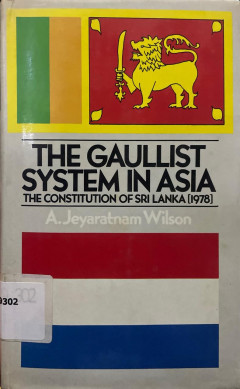
The Gaullist system in Asia: The Constitution of Sri Lanka
This book analyzes the influence of the French Gaullist model on the constitutional and political structure of Sri Lanka. It explores how Sri Lanka adopted elements of a strong executive presidency—similar to the system established by Charles de Gaulle in France—while adapting them to the country’s unique political, social, and historical context. The book examines the development of the …
- Edisi
- -
- ISBN/ISSN
- 0-333-27276-5
- Deskripsi Fisik
- xvii, 157 pages ; 22,5 cm
- Judul Seri
- -
- No. Panggil
- 342.549 WIL g
 Karya Umum
  Filsafat
  Agama
Agama  Ilmu-ilmu Sosial
  Bahasa
  Ilmu-ilmu Murni
  Ilmu-ilmu Terapan
  Kesenian, Hiburan, dan Olahraga
  Kesusastraan
  Geografi dan Sejarah