Ditapis dengan

The prosperity agenda : What the world wants from America--and what we need i…
In this provocative, ingenious book, Soderberg and Katulis make one of the most controversial arguments that foreign policy circles have seen in years: no more putting all our eggs in the basket of promoting democracy or market reforms, or even diplomacy, sanctions, or cash handouts to faltering governments. Instead, they argue, we should go right to the citizens of troubled nations and give th…
- Edisi
- -
- ISBN/ISSN
- 978-0-470-10529-0
- Deskripsi Fisik
- xi, 260 pages : index ; 25 cm
- Judul Seri
- -
- No. Panggil
- 327.7300905 Sod p

Common responsibility in the 1990's: The stockholm initiative on global secur…
The Stockholm Initiative on Global Security and Governance brings out the most urgent themes from the international indepen- dent commissions of the 1980's, chaired by Willy Brandt and Olof Palme, by Gro Harlem Brundtland and Julius Nyerere. The memorandum on COMMON RESPONSIBILITY IN THE 1990's focuses on major areas for multilateral cooperation and on ways and means to strengthen international…
- Edisi
- -
- ISBN/ISSN
- 91-38-10806-2
- Deskripsi Fisik
- 48 pages ; 21 cm
- Judul Seri
- -
- No. Panggil
- 327.17 Nil c

Navigating a new world: Canada's global future
In Navigating a New World Lloyd Axworthy charts how we can become active citizens in the demanding world of the twenty-first century, to make it safer, more sustainable and more humane. Throughout he emphasizes the human story. As we meet refugees from civil war and drought, child soldiers and landmine victims, the moral imperative is clear: this is a deeply compassionate appeal to confront pov…
- Edisi
- -
- ISBN/ISSN
- 0-676-97464-3
- Deskripsi Fisik
- xiv, 450 pages : index ; 23 cm
- Judul Seri
- -
- No. Panggil
- 327.17 Axw n
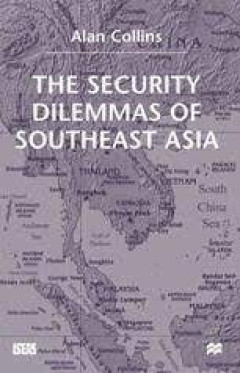
The security dilemmas of Southeast Asia
By examining ethnic tensions in Southeast Asia the book provides an analysis of one of the security dilemma's most recent utilisations. In particular, the book adds to the growing literature on the security dilemma and ethnic conflict by locating the analysis of ethnic tensions in Burma and Malaysia, among others, within the security literature of the Third World. In intra-ASEAN relations the…
- Edisi
- -
- ISBN/ISSN
- 981-230-108-9
- Deskripsi Fisik
- xi, 237 pages : index ; 22 cm
- Judul Seri
- -
- No. Panggil
- 327.160959 Col s

Asia Pacific after the cold war
This book, entitled Asia Pacific After The Cold War, presents a com- pilation of papers written by Jusuf Wanandi from 1989 to 1996. Of the papers compiled, some were presented at conferences, seminars as well as at workshops in various countries, and the others are revised articles already published in newspapers and journals. This compilation is of interest because it does not only contain iss…
- Edisi
- First Published
- ISBN/ISSN
- 979-8026-48-9
- Deskripsi Fisik
- vi, 245 pages ; 25 cm
- Judul Seri
- -
- No. Panggil
- 327.116 Wan a
Security and international relations
This new textbook presents security studies as a branch of international relations theory, providing readers with the critical conceptual tools to develop their expertise. The author evaluates the claims of rival theories- realism, neorealism, liberal institutionalism, classical economic liberalism, and Marxism-to explain why international actors choose or eschew force and coercive threats in o…
- Edisi
- First published
- ISBN/ISSN
- 0-521-00116-1
- Deskripsi Fisik
- xi, 349 pages : index ; 23 cm
- Judul Seri
- -
- No. Panggil
- 327.1 Kol s
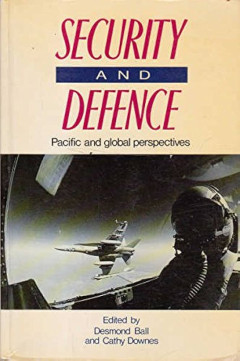
Security and defence: Pacific and global perspectives
Security and defence" provides a comprehensive in-depth study of Australia and the Asia--Pacific region, with a fresh approach which counters the traditional Euro- and American-centric view of strategy and defence in this part of the world. It deals with three broad issues of concern: * Global issues: the future of the nuclear strategic balance between the super-powers, the development of non-p…
- Edisi
- -
- ISBN/ISSN
- 0-04-442161-3
- Deskripsi Fisik
- xxv,517 pages : bibl: hlm 472-482 : index ; 23 cm.
- Judul Seri
- -
- No. Panggil
- 327.1 Bal s

UNIDIR implementing resolution 1540: The role of regional organizations
Contents: 1. Introduction 2. Resolution 1540 in Latin America and the role of the organization of American States 3. Facilitating implementation of resolution 1540 in South-East Asia and the South Pacific 4. Implementing resolution 1540 in Africa : Balancing competing priorities.
- Edisi
- -
- ISBN/ISSN
- 978-92-9045-190-7
- Deskripsi Fisik
- xii, 164 pages : illustrations ; 21 cm
- Judul Seri
- -
- No. Panggil
- 658.1 Sch u

Forward engagement: RSIS as a think tank of international studies and securit…
In many ways, the S. Rajaratnam School of International Studies (RSIS) is a microcosm of the Singapore brand of government. The DNA of Singapore's policymaking is its forward-looking nature. S. Rajaratnam's trademark is taking the long view while Lee Kuan Yew articulated his wish for leadership foresight and the admiration for 'helicopter quality' candidates in policymaking. This was how RSIS' …
- Edisi
- -
- ISBN/ISSN
- 978-0-00-098716-7
- Deskripsi Fisik
- xviii, 155 pages ; 23 cm
- Judul Seri
- -
- No. Panggil
- 355.03 Cho f

Power & responsibility: Building international order in an era of transnation…
The contents of this book: Part I. Power 1. Sovereignty's Last Best Chance 2. Interests and Order : The United States and the Major and Rising Powers 3. Power and Institutions : An Effective International Architecture for Responsible Sovereignty Part II. Responsibility 4. Arresting Climate Change 5. The Second Nuclear Age
- Edisi
- -
- ISBN/ISSN
- 978-08157-4706-2
- Deskripsi Fisik
- xxii, 360 pages ; 24 cm
- Judul Seri
- -
- No. Panggil
- 355.033 Jon p
 Karya Umum
  Filsafat
  Agama
Agama  Ilmu-ilmu Sosial
  Bahasa
  Ilmu-ilmu Murni
  Ilmu-ilmu Terapan
  Kesenian, Hiburan, dan Olahraga
  Kesusastraan
  Geografi dan Sejarah