Ditapis dengan
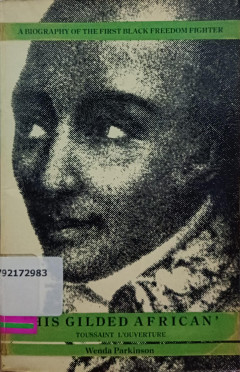
This gilded African: Touissant L'Ouverture
This book is an in-depth biography of Toussaint L'Ouverture, the leader of the slave revolution in Haiti who successfully fought against major colonial powers like France, England, and Spain. Author Wenda Parkinson traces L'Ouverture's journey from slave to brilliant general and statesman, and how his leadership shaped Haiti's independence as the world's first Black republic. The narrative comb…
- Edisi
- -
- ISBN/ISSN
- 0704321874
- Deskripsi Fisik
- xiv, 219 pages : illustration ; 20 cm
- Judul Seri
- -
- No. Panggil
- 972.9403092 PAR t
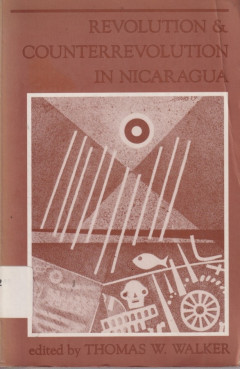
Revolution & counterrevolution in Nicaragua
This edited volume examines the political transformation of Nicaragua during the Sandinista revolution and the subsequent counterrevolution supported by the United States. Bringing together analyses from leading scholars, the book explores the ideological conflicts, economic pressures, and military strategies that shaped Nicaragua from 1979 onward. It provides detailed accounts of the Sandinist…
- Edisi
- -
- ISBN/ISSN
- -
- Deskripsi Fisik
- x, 421 pages ; 23 cm
- Judul Seri
- -
- No. Panggil
- 320.972 WAL r
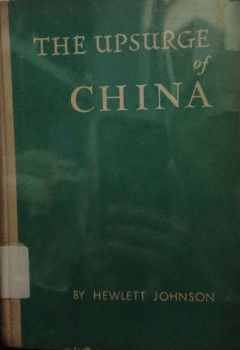
The Upsurge of China
The Upsurge of China is a firsthand account written by Hewlett Johnson—known as the “Red Dean of Canterbury”—documenting his travels and observations in the People’s Republic of China during the early years of the Communist era. Supported by the diaries and drawings of his wife Nowell Johnson and his daughters Kezia and Keren, the book offers a sympathetic portrayal of China’s polit…
- Edisi
- -
- ISBN/ISSN
- -
- Deskripsi Fisik
- 372 pages : Ilustration ; 21 cm
- Judul Seri
- -
- No. Panggil
- 951 JOH t
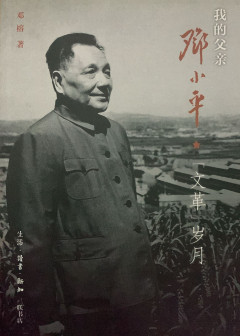
Wo de fuqin Deng Xiaoping wenge suiyue
This book is a memoir and family diary written by Deng Rong (邓榕), Deng Xiaoping's daughter. The book focuses on the "Cultural Revolution" period (1966–1976) — describing the Deng family's personal experiences during the father's two-fold criticism and purge, the family's suffering, details of political events that affected their domestic life, and reflections on Deng Xiaoping's position…
- Edisi
- -
- ISBN/ISSN
- 978-7-108-04322-1
- Deskripsi Fisik
- 496 pages : illustrations ; 24 cm
- Judul Seri
- -
- No. Panggil
- 923.1 DEN w

The Blood of the people: Revolution and the end of traditional rule in Nother…
The Blood of the People examines the social revolution that accompanied Indonesia’s struggle for independence in Northern Sumatra. Anthony Reid analyzes how revolutionary violence led to the collapse of traditional political authority, particularly the power of local aristocracies, during the period following the Japanese occupation and the proclamation of independence. The book explores the …
- Edisi
- -
- ISBN/ISSN
- 0-19-580399-X
- Deskripsi Fisik
- xx, 288 pages : illustration ; 25 cm
- Judul Seri
- -
- No. Panggil
- 595.81 REI b
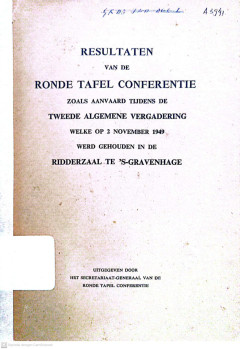
Resultaten van de ronde tafel conferentie
This volume contains the official results of the 1949 Round Table Conference held in the Ridderzaal, The Hague, as adopted during the Second General Meeting on 2 November 1949. The document presents the agreements between the Kingdom of the Netherlands and the Republic of Indonesia regarding the transfer of sovereignty, the establishment of the Republic of the United States of Indonesia (RUSI),…
- Edisi
- -
- ISBN/ISSN
- -
- Deskripsi Fisik
- 182 pages ; 19 cm
- Judul Seri
- -
- No. Panggil
- 959.8 SEC r

American insurgents American patriots
American Insurgents, American Patriots examines the grassroots movements that shaped the early stages of the American Revolution. T. H. Breen argues that the Revolution was driven not only by founding elites but also by ordinary colonists who organized local committees, enforced boycotts, and challenged British authority. Through detailed analysis of political mobilization, community networks, …
- Edisi
- -
- ISBN/ISSN
- 978-0-8090-7588-1
- Deskripsi Fisik
- 337 pages, 24 x 16 cm
- Judul Seri
- -
- No. Panggil
- 973 BRE a
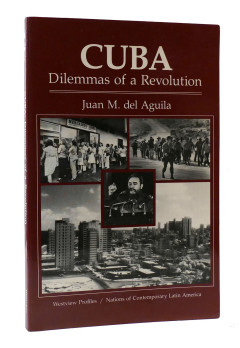
Cuba dilemmas of a revolution
"This book examines Cuba's political journey since the 1959 Revolution, focusing on the internal and external dilemmas facing the revolutionary government. Juan M. Del Aguila analyzes power dynamics, economic challenges, social policies, and Cuba's relations with other countries within the context of the Cold War. As part of the Nations of Contemporary Latin America series, this book provides a…
- Edisi
- -
- ISBN/ISSN
- 0-8133-0032-0
- Deskripsi Fisik
- 193 pages; 23 cm
- Judul Seri
- -
- No. Panggil
- 972.91064 AGU c

The Aftermath of revolution in Latin America
This book provides an in-depth historical analysis of the political, social, and economic consequences that followed the major revolutions in Latin America. Tulio Halperin-Donghi examines how revolutionary movements across the region reshaped national institutions, affected power structures, and influenced long-term development. Focusing on the early nineteenth century, the author explores the …
- Edisi
- -
- ISBN/ISSN
- -
- Deskripsi Fisik
- viii, 149 pages ; 20,5 cm
- Judul Seri
- -
- No. Panggil
- 980.02 DON a

Histoire des relations internationales. Tome quatrième : La Révolution fran…
This book is the fourth volume in the "Histoire des relations internationales" series, written under the direction of Pierre Renouvin. In this volume, André Fugier examines the dynamics of international relations from the French Revolution to the end of the Napoleonic Empire (1789–1815). Discussions cover major European conflicts, French diplomatic strategy, the formation of the anti-Napoleo…
- Edisi
- -
- ISBN/ISSN
- -
- Deskripsi Fisik
- 422 pages : illustration ; 22 cm
- Judul Seri
- -
- No. Panggil
- 327.0903 REN h
 Karya Umum
  Filsafat
  Agama
Agama  Ilmu-ilmu Sosial
  Bahasa
  Ilmu-ilmu Murni
  Ilmu-ilmu Terapan
  Kesenian, Hiburan, dan Olahraga
  Kesusastraan
  Geografi dan Sejarah