Ditapis dengan
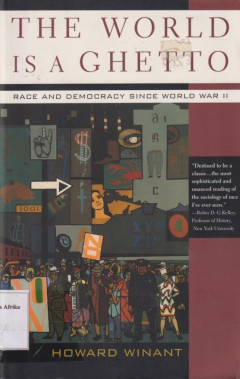
The World is a Ghetto: Race and democracy since World War II
This book examines the evolution of race and democracy in the global context since World War II. Howard Winant explores the transformation of racial politics, the rise of social movements, and the challenges posed by racial inequality in modern democratic societies. Through historical and comparative analysis, the author argues that race has become a central issue in contemporary global politic…
- Edisi
- -
- ISBN/ISSN
- 0-465-04340-2
- Deskripsi Fisik
- xvi, 428 pages ; 23 cm
- Judul Seri
- -
- No. Panggil
- 305.8 WIN w
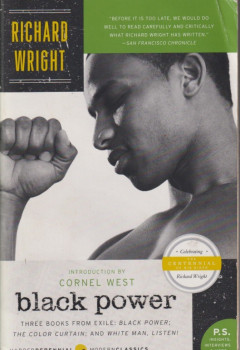
Black Power
Black Power is Richard Wright’s powerful travel narrative documenting his journey through the Gold Coast (now Ghana) during the rise of African nationalism. Through firsthand observation, Wright explores colonial structures, racial politics, cultural identity, and the struggles of African people toward independence. Blending reportage, political analysis, and personal reflection, the book pro…
- Edisi
- -
- ISBN/ISSN
- 978-0-06-145018-6
- Deskripsi Fisik
- xiii, 812 pages : illustrations ; 20 cm
- Judul Seri
- -
- No. Panggil
- 303.484096 WRI b
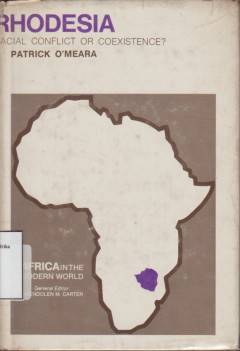
Rhodesia: Racial conflict or coexistence?
Rhodesia: Racial Conflict or Coexistence? examines the political and racial tensions in Rhodesia (modern Zimbabwe) during the late colonial period. Patrick O’Meara analyzes the historical roots of racial conflict, the development of white minority rule, and the rise of African nationalist movements. The book discusses the prospects for racial coexistence, the impact of economic and political …
- Edisi
- -
- ISBN/ISSN
- 0-8014-0923-3
- Deskripsi Fisik
- xxiv, pages ; 20,5 cm
- Judul Seri
- -
- No. Panggil
- 968.91 OME r

The White tribe of Africa : South Africa in perspective
To their many detractors, Afrikaners are impractical, wild-eyed, racist fanatics. To their less numerous supporters, they are fervent anti-Communist crusaders, safeguarding stability and progress at the tip of the 'dark continent'. These strongly held, politically charged, and incompatible views make it virtually impossible for outsiders to distance themselves sufficiently, both intellectually …
- Edisi
- -
- ISBN/ISSN
- 0-520-05066-5
- Deskripsi Fisik
- vii, 307 pages : illustrations ; 24 cm
- Judul Seri
- -
- No. Panggil
- 305.896 HAR w

Carry me home: Birmingham, Alabama: The climactic battle of the civil rights …
"The Year of Birmingham," 1963, was a cataclysmic turning point in America's long civil rights struggle. That spring, child demonstrators faced down police dogs and fire hoses in huge nonviolent marches for desegregation. A few months later, Ku Klux Klansmen retaliated by bombing the Sixteenth Street Baptist Church and killing four young black girls. Diane McWhorter, journalist and daughter of …
- Edisi
- -
- ISBN/ISSN
- 0-7432-1772-1
- Deskripsi Fisik
- 719 pages : illustrations (black and white) : bibl: hlm 677-685 : index ; 23 cm
- Judul Seri
- -
- No. Panggil
- 303.64 Mcw c

Tomorrow is another country: The inside story of South Africa's negotiated re…
South Africa's transformation from apartheid to a non-racial democracy has been called a miracle. But behind the public story lies another, the story of how the Afrikaners' own secret brotherhood, the Broderbund, saw the need for change and met secretly with the ANC in an English village
- Edisi
- -
- ISBN/ISSN
- 1-875015-11-6
- Deskripsi Fisik
- 254 pages : index ; 20 cm
- Judul Seri
- -
- No. Panggil
- 968 Spa t
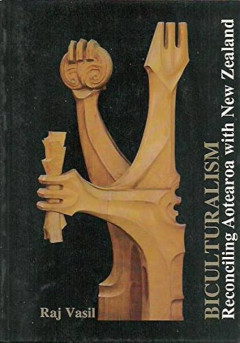
Bicuturalism-reconciling Aotearoa with New Zealand
The chief purpose of public policy in New Zealand in relation to the Maori must be the creation of constitutional-political structures and processes which enable the Pakeha and the Maori (as well as the other ethnic components) to live in peace and harmony, and which facilitate the growth, in the long run, of an integrated new nation based on Western as well as on Maori ways of life and values
- Edisi
- First Edition
- ISBN/ISSN
- 0-86473-165-5
- Deskripsi Fisik
- i, 45 pages ; 21 cm
- Judul Seri
- -
- No. Panggil
- 305.89940931 Vas b
 Karya Umum
  Filsafat
  Agama
Agama  Ilmu-ilmu Sosial
  Bahasa
  Ilmu-ilmu Murni
  Ilmu-ilmu Terapan
  Kesenian, Hiburan, dan Olahraga
  Kesusastraan
  Geografi dan Sejarah