Ditapis dengan

Koran, Kalashnikov and Laptop : The Neo-Taliban insurgency in Afghanistan
Since the Allied invasion of Afghanistan in 2002, the Bush administration has celebrated the imminent demise of the Taliban, with claims of a "moral and psychological defeat" playing a prominent role in the presidential elections of 2004. Some commentators suggested that "reconstruction and development" had won over the Afghan population, despite widespread criticism of the meager distribution …
- Edisi
- -
- ISBN/ISSN
- 978-1-85065-872-6
- Deskripsi Fisik
- xv, 259 pages : illustrations ; 23 cm
- Judul Seri
- -
- No. Panggil
- 958.1047 GIO k
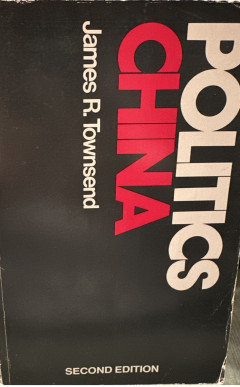
Politics China
Politics in China (Second Edition) provides an overview of China’s political system, its historical foundations, and the key institutions that shape governance. The book explains how the Communist Party functions as the core of political authority, detailing its organizational structure, policy-making processes, and mechanisms of control. It also examines the state apparatus, the role of the …
- Edisi
- 2
- ISBN/ISSN
- 0-316-851310
- Deskripsi Fisik
- xv, 380 pages : illustration ; 19 cm
- Judul Seri
- -
- No. Panggil
- 320.951 TOW p
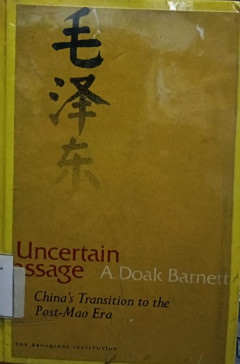
Uncertain Passage : China's transition to the Post-Mao era
Uncertain Passage analyzes China’s political, economic, and social transformation during the critical years following Mao Zedong’s death. The book traces the complexities of the transition period, marked by leadership struggles, policy reevaluations, and the gradual emergence of new reform-oriented directions. It explores how China grappled with stabilizing the state, redefining ideological…
- Edisi
- -
- ISBN/ISSN
- 0-8157-0820-3
- Deskripsi Fisik
- xviii, 387 pages : 20 cm
- Judul Seri
- -
- No. Panggil
- 320.95105 BAR u

Regime Change in Afghanistan : Foreign intervention and the politics of legit…
This book is a study of regime change in an underdeveloped country with a weak state and strong autonomous social organizations. Regime change is in many countries a traumatic and disruptive experience, but few countries have paid as high a cost to retain traditionally accepted relationships of authority as has Afghanistan since the communist coup
- Edisi
- -
- ISBN/ISSN
- 0-8133-1326-0
- Deskripsi Fisik
- viii, 190 pages : 21 cm
- Judul Seri
- -
- No. Panggil
- 958.1040 SAI r
Malaysian politics, 1968-1970 : Crisis and response part 2
This book analyzes the Malaysian political crisis between 1968 and 1970, particularly the riots of May 13, 1969. It highlights the communal tensions between Malays, Chinese, and Indians, as well as the impact of the 1969 elections on national stability. It also discusses the government's response, including the formation of the National Movement Council, and how the political elite maintained c…
- Edisi
- -
- ISBN/ISSN
- -
- Deskripsi Fisik
- 769 pages ; 20 cm
- Judul Seri
- -
- No. Panggil
- 320.959 5 BAS m

A short history of Laos : the land in between
Evans brings Lao history vividly into focus, from ancient times through to the twenty-first century. He recounts the turmoil of independence from France and the war with Vietnam and its aftermath, up to present-day Laos and the country's hopes for its future. Evans traces the compelling story of the emergence of Laos as a modern nation.
- Edisi
- -
- ISBN/ISSN
- 1-86448-997-9
- Deskripsi Fisik
- xvi, 251 pages : ilustrations ; 21 cm
- Judul Seri
- -
- No. Panggil
- 959.4 EVA s
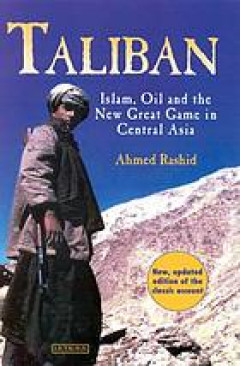
Taliban : Islam, oil and the new great game in central Asia
Since 9/11, the Taliban have dominated headlines around the world. The Taliban government, allied to Osama Bin Laden, collapsed dramatically following the Anglo-American invasion of 2001. Since then however the movement has showed an unexpected ability to evolve, and has drawn the world's only superpower into a protracted and seemingly unwinnable conflict in this strategically vital country. No…
- Edisi
- -
- ISBN/ISSN
- 978 1 84511 788 7
- Deskripsi Fisik
- xxi, 276 pages : 20 cm
- Judul Seri
- -
- No. Panggil
- 958.104 RAS t
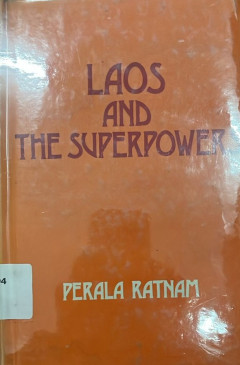
Laos and the superpowers
This book examines the complex international relations of Laos during the Cold War era, focusing on the competing influence of major global powers. It explores how the United States, the Soviet Union, and regional actors sought to shape Laos’s political direction through diplomatic pressure, military involvement, and ideological competition. The author analyzes internal conflicts, foreign int…
- Edisi
- -
- ISBN/ISSN
- -
- Deskripsi Fisik
- vii, 166 pages ; 23 cm
- Judul Seri
- -
- No. Panggil
- 323.594 RAT l
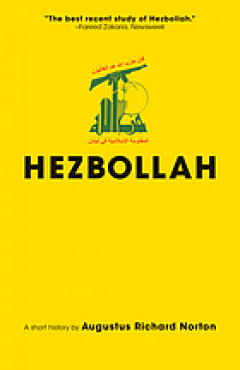
Hezbollah: A short history
With Hezbollah's entry into the Lebanese government in 2009 and forceful intervention in the Syrian civil war, the potent Shi'i political and military organization continues to play an enormous role in the Middle East. A hybrid of militia, political party, and social services and public works provider, the group is the most powerful player in Lebanon. Policymakers in the United States and Israe…
- Edisi
- -
- ISBN/ISSN
- 978-0-691-13124-5
- Deskripsi Fisik
- vi, 187 pages : ilustration ; 24 cm
- Judul Seri
- -
- No. Panggil
- 320.125692 NOR h
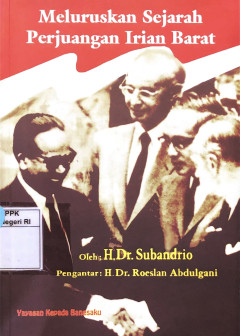
Meluruskan sejarah perjuangan Irian Barat
Buku ini adalah satu sumber rujukan tentang perjuangan mengembalikan Irian Barat ke dalam wilayah persatuan dan kesatuan Negara Republik Indonesia dari kekuasaan kolonial Belanda yang ngotot ingin terus menguasai wilayah itu setelah terjadi kompromi Konperensi Meja Bundar pada tahun 1949 di Den Haag. Isi buku ini menguraikan keberhasilan strategi Bung Karno mewujudkan keutuhan wilayah kesatu…
- Edisi
- Cetakan Kedua
- ISBN/ISSN
- 9799625408
- Deskripsi Fisik
- xxii, 268 halaman ; 23 cm
- Judul Seri
- -
- No. Panggil
- 959.8 Sub m
 Karya Umum
  Filsafat
  Agama
Agama  Ilmu-ilmu Sosial
  Bahasa
  Ilmu-ilmu Murni
  Ilmu-ilmu Terapan
  Kesenian, Hiburan, dan Olahraga
  Kesusastraan
  Geografi dan Sejarah