Ditapis dengan
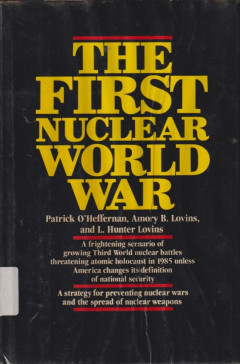
The First nuclear world war
The First Nuclear World War presents a strategic analysis aimed at preventing future nuclear conflicts and limiting the spread of nuclear weapons. Written by Patrick O’Heffernan, Amory B. Lovins, and L. Hunter Lovins, the book explores the political, military, and technological factors that shape global nuclear policy. It examines the dangers posed by nuclear proliferation, the risks of misca…
- Edisi
- -
- ISBN/ISSN
- 0-688-01589-1
- Deskripsi Fisik
- 444 pages ; 24 cm
- Judul Seri
- -
- No. Panggil
- 355.0217 OHE t
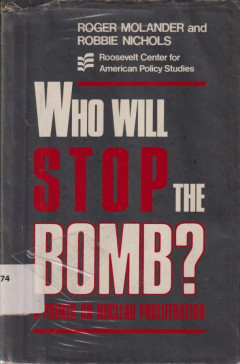
Who will stop the bomb?: A Primer on nuclear proliferation
This book provides a clear introduction to the issues surrounding nuclear proliferation and the global dangers posed by the spread of nuclear weapons. It explains the development of the nuclear arms race, the political and strategic motivations behind nations seeking nuclear capability, and the challenges faced by the international community in preventing further expansion. Molander and Nichols…
- Edisi
- -
- ISBN/ISSN
- 0-8160-1283-0
- Deskripsi Fisik
- x, 150 pages : illustration ; 23,5 cm
- Judul Seri
- -
- No. Panggil
- 327.174 MOL w

Red cloud at dawn: Truman, stalin, and the end of the atomic monopoly
Red Cloud at Dawn depicts the end of the United States' atomic bomb monopoly after the Soviet Union successfully detonated its first atomic bomb in 1949. Michael D. Gordin traces the geopolitical dynamics between Truman and Stalin, the developments in nuclear intelligence, and the global impact of the birth of the nuclear arms competition era. The book combines political history, diplomacy, and…
- Edisi
- Edisi pertama
- ISBN/ISSN
- 978-0-374-25682-1
- Deskripsi Fisik
- xii, 402 pages : illustration ; 23,5 cm
- Judul Seri
- -
- No. Panggil
- 355.0217 GOR d

A World beyond healing: The Prologue and aftermath of nuclear war
Nicholas Wade's A World Beyond Healing is a profound study of the devastating effects of nuclear war, both before and after the explosion. Wade describes how geopolitical tensions and the nuclear arms race create a constant threat to humanity. The book examines the medical, ecological, psychological, and social consequences of nuclear war, as well as the inability of the international system to…
- Edisi
- -
- ISBN/ISSN
- 0-393-02335-4
- Deskripsi Fisik
- 190 pages : illustration ; 21,5 cm
- Judul Seri
- -
- No. Panggil
- 355.0217 WAD w

Political realism and international morality: Ethics in the nuclear age
This book is a collection of papers presented at the Tenth Plenary Conference of the American Section of the International Association for Philosophy of Law and Social Philosophy, held in 1984 at the University of Notre Dame. It provides an in-depth discussion of the relationship between political realism and international morality, particularly in the context of the nuclear age. The contributo…
- Edisi
- -
- ISBN/ISSN
- 0-8133-0456-3
- Deskripsi Fisik
- x, 271 pages ; 23 cm
- Judul Seri
- -
- No. Panggil
- 172.4 KIP p
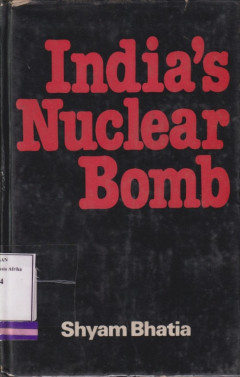
India's nuclear bomb
An in-depth investigation into India’s pursuit of nuclear capability during the Cold War era. The book examines political motivations, scientific developments, and strategic calculations behind India’s nuclear programme. Bhatia discusses key events leading to the first nuclear test in 1974 (“Smiling Buddha”), responses from global powers, and the domestic debates surrounding nuclear pol…
- Edisi
- -
- ISBN/ISSN
- 0-7069-0770-5
- Deskripsi Fisik
- 169 pages ; 22 cm
- Judul Seri
- -
- No. Panggil
- 355.8251 BHA i
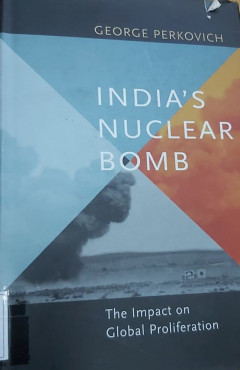
India's nuclear bomb: The Impact on global proliferation
In May 1998, India shocked the world—as well as many of its own citizens—by detonating five nuclear weapons in the Rajasthan desert. This landmark act raised central questions: Why did India pursue nuclear weapon status at a time when 149 nations had signed a ban on nuclear testing? What prompted India’s new Hindu nationalist government to depart from decades of nuclear restraint? And how…
- Edisi
- -
- ISBN/ISSN
- 0-520-21772-1
- Deskripsi Fisik
- xiii, 597 pages ; 25 cm
- Judul Seri
- -
- No. Panggil
- 355.02 PER i
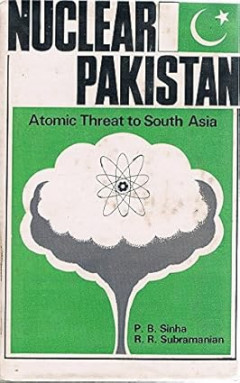
Nuclear Pakistan: Atomic threat to South Asia
Nuclear Pakistan: Atomic Threat to South Asia comprehensively examines the development of Pakistan's nuclear program and its implications for South Asian regional security. P. B. Sinha and R. R. Subramanian explore the political, strategic, and security motivations that drove Pakistan to develop nuclear capabilities following prolonged tensions and rivalry with India. The book's analysis encomp…
- Edisi
- -
- ISBN/ISSN
- -
- Deskripsi Fisik
- vii, 163 pages: illustration; 22 cm
- Judul Seri
- -
- No. Panggil
- 327.5491 SIN n
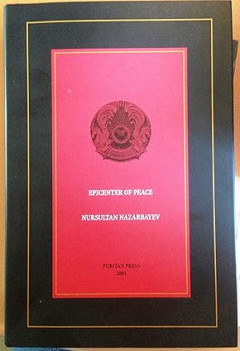
Epicenter of peace
This book describes how the people of Kazakstan's reached the decision to rid themselves of nuclear weapons and argues that peace will come to our multipolar world only through nonproliferation and denuclearization. President Nazarbayev sets the record straight on Kazakstan's dauntless decision to lead the way to a secure future for all our children and grandchildren.
- Edisi
- -
- ISBN/ISSN
- 1-884186-13-0
- Deskripsi Fisik
- xix, 170 pages : illustrations (black and white) : index ; 24 cm
- Judul Seri
- -
- No. Panggil
- 327.16 Naz e
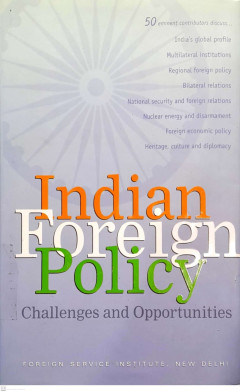
Indian foreign policy: Challenges and opportunities
The world is now engaged with India already established as a major power, advancing in every sphere of development: political, diplomatic, socio-economic, scientific, technological, and cultural. The distinguished foreign affairs analysts, scholars and eminent diplomats invited by the Foreign Service Institute (Government of India) to write chapters for this book on Indian foreign policy, have …
- Edisi
- -
- ISBN/ISSN
- 81-7188-593-4
- Deskripsi Fisik
- 1149 pages ; 24 cm
- Judul Seri
- -
- No. Panggil
- 327.54 Muk i
 Karya Umum
  Filsafat
  Agama
Agama  Ilmu-ilmu Sosial
  Bahasa
  Ilmu-ilmu Murni
  Ilmu-ilmu Terapan
  Kesenian, Hiburan, dan Olahraga
  Kesusastraan
  Geografi dan Sejarah