Ditapis dengan

Failed states: The abuse of power and the assault on democracy
The United States has repeatedly asserted its right to intervene militarily against "failed states" around the globe. Chomsky turns the tables, charging the United States with being a "failed state," and therefore a danger to its own people and the world. "Failed states," Chomsky writes, are those "that do not protect their citizens from violence and perhaps even destruction, that regard themse…
- Edisi
- 1st edition
- ISBN/ISSN
- 978-0-7394-7187-6
- Deskripsi Fisik
- 311 pages : index ; 21 cm.
- Judul Seri
- -
- No. Panggil
- 327 Cho f

The peninsula question: A chronicle of the second Korean nuclear crisis
Through interviews, gives a behind-the-scenes look at negotiations to denuclearize the Korean peninsula. Offering multiple perspectives on the second Korean nuclear crisis, provides a window of understanding on the historical, geopolitical, and security concerns at play on the peninsula since 2002, paying special attention to China's dealings with North Korea
- Edisi
- -
- ISBN/ISSN
- 978-0-8157-3010-1
- Deskripsi Fisik
- xii, 592 pages : index ; 25 cm.
- Judul Seri
- -
- No. Panggil
- 327.1747095193 Fun p

The age of deception: Nuclear diplomacy in treacherous times
The author gives us his account from the centre of the nuclear fray. Readers will sit at the dinner table with Iraqi officials in Baghdad, listening as they bleakly predict the coming war. They will eavesdrop on the exchanges between UN inspectors and U.S. officials observing the behind-the-scenes formulation of an approach to foreign policy and diplomacy that would come to characterise the Bus…
- Edisi
- -
- ISBN/ISSN
- 978-1-4088-2224-1
- Deskripsi Fisik
- 340 pages : index ; 24 cm
- Judul Seri
- -
- No. Panggil
- 327.174 Elb a
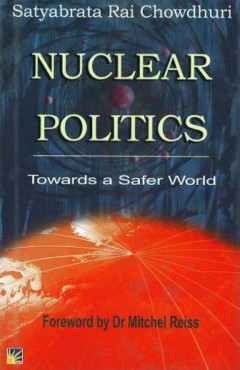
Nuclear politics: Towards a safer world
The past few years have witnessed a number of remarkable developments in the field of nuclear arms control and non proliferation. The United States and the Soviet Union (now Russia) signed the START I and II agreements, which promised to reduce the nuclear arsenals of the two countries by two-thirds, to approximately 3,000 nuclear warheads each by the year 2003. President Bush's announcement on…
- Edisi
- -
- ISBN/ISSN
- 1-932705-02-3
- Deskripsi Fisik
- ix, 672 pages : bibl: hlm 626-650 : index ; 22 cm
- Judul Seri
- -
- No. Panggil
- 327.174 Cho m

Nuclear non-proliferation diplomacy : Nuclear power programmes in the Third W…
The book is an attempt to analyse recent trends in the nuclear non-proliferation diplomacy after the Gulf crisis, with a focus on efforts to strengthen the nuclear export control regime, IAEA 'Special Inspections hased on satellite intelligence, and US policy of establishing regional nuclear nonproliferation regimes. An attempt has been made to examine how the nuclear nonproliferation regime ha…
- Edisi
- -
- ISBN/ISSN
- 8170950368
- Deskripsi Fisik
- xv, 394 pages ; 23 cm
- Judul Seri
- -
- No. Panggil
- 327.174 Kap n
 Karya Umum
  Filsafat
  Agama
Agama  Ilmu-ilmu Sosial
  Bahasa
  Ilmu-ilmu Murni
  Ilmu-ilmu Terapan
  Kesenian, Hiburan, dan Olahraga
  Kesusastraan
  Geografi dan Sejarah