Ditapis dengan
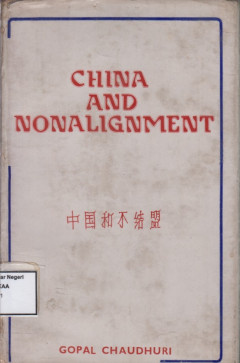
China and Nonalignment
This book examines China’s position and evolving policy toward the Non-Aligned Movement during the Cold War era. Gopal Chaudhuri analyzes China’s diplomatic strategy, ideological considerations, and geopolitical interests that shaped its interactions with developing countries and its stance on global power blocs. The work explores China’s role in supporting Third World solidarity, its eff…
- Edisi
- -
- ISBN/ISSN
- -
- Deskripsi Fisik
- 191 pages ; 22,5 cm
- Judul Seri
- -
- No. Panggil
- 327.51 CHA c

The Soviet Union and the strategy of Non-Alignment in the Third World
This book discusses the Soviet Union's foreign policy strategy towards Third World countries, with a focus on the non-aligned approach. Roy Allison analyzes how the Soviet Union utilized its relations with developing countries as a geopolitical instrument, as well as how international political dynamics influenced Soviet policy. Through theoretical analysis and historical study, this book expla…
- Edisi
- -
- ISBN/ISSN
- 0-521-35511-7
- Deskripsi Fisik
- vi, 298 pages ; 24 cm
- Judul Seri
- -
- No. Panggil
- 327.47 ALL s
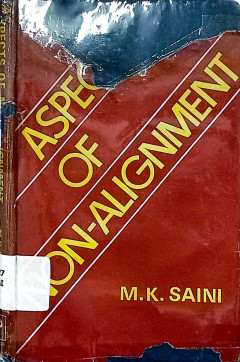
Aspects of non-alignment
Aspects of Non-Alignment is a collection of scholarly essays exploring the ideological, political, and diplomatic dimensions of the Non-Aligned Movement (NAM). Edited by M. K. Saini, the volume examines the evolution and significance of non-alignment as a guiding principle in international relations during the Cold War. The contributors analyze various issues including neutrality, South–South…
- Edisi
- -
- ISBN/ISSN
- -
- Deskripsi Fisik
- 176 pages; 21 cm
- Judul Seri
- -
- No. Panggil
- 327 SAI a
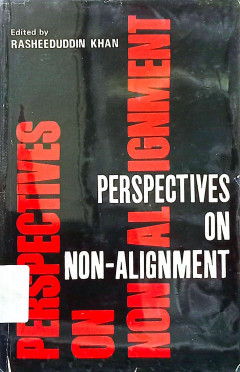
Perspectives on non-alignment
Perspectives on Non-Alignment presents a collection of essays examining the foundations, evolution, and political significance of the Non-Aligned Movement (NAM). Edited by Rasheeduddin Khan, the volume explores diverse viewpoints on the role of non-alignment in international politics, particularly for developing countries seeking autonomy amid global power rivalries during the Cold War. The boo…
- Edisi
- -
- ISBN/ISSN
- -
- Deskripsi Fisik
- 355 pages; 21 cm
- Judul Seri
- -
- No. Panggil
- 327 KHA p
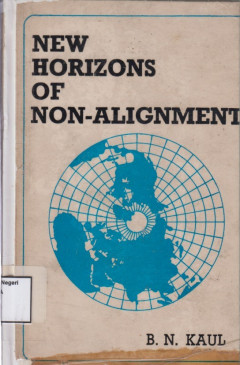
New horizons of non-alignment
New Horizons of Non-Alignment examines the evolution and future direction of the Non-Aligned Movement (NAM) in the context of global political changes during the late 20th century. B. N. Kaul discusses the ideological foundations, diplomatic challenges, and strategic goals of non-aligned countries seeking independence from superpower influence during the Cold War. The book explores issues such …
- Edisi
- -
- ISBN/ISSN
- -
- Deskripsi Fisik
- xix, 184 pages ; 21,5 cm
- Judul Seri
- -
- No. Panggil
- 327 KAU n

Non-aligned movement : Its future and action programme
This book comes out of papers and comments presented during the international conference on The Future of the Non-Aligned Movement held by CSIS 16-17 June 1992, and it reflects the interests and aspirations of the participants. The conference was attended by participants from Non-Aligned countries - India, Indonesia, Yugoslavia, Pakistan, Ghana, Cyprus, Malaysia, Vietnam and Egypt.
- Edisi
- First Published
- ISBN/ISSN
- 979-8026-22-5
- Deskripsi Fisik
- vi, 115 pages ; 21 cm
- Judul Seri
- -
- No. Panggil
- 327.11 Ban n

Non-aligned movement in a changing world
This book contains publications about the non-aligned movement in a changing world that show the political, economic and social emancipation of the third non-aligned movement. The sequence of events starting with the unique Bandung Conference, followed by the meetings in Brioni and Cairo, culminated at the 1961 Belgrade Summit which formally started the periodic gatherings of the Heads of State…
- Edisi
- -
- ISBN/ISSN
- 979-8373-00-6
- Deskripsi Fisik
- iv, 148 pages : illustrations ; 21 cm
- Judul Seri
- -
- No. Panggil
- 327.1 Sia n

The five summit conferences of the non-aligned countries: Documents
The Heads of State or Government of Non-Aligned Countries noting that there are crises that lead towards a world conflict in the transition from and old order based on domination to a new order based on coopera- tion between nations, founded on freedom, equality and social justice for the promotion of prosperity
- Edisi
- -
- ISBN/ISSN
- -
- Deskripsi Fisik
- 397 pages : index ; 18 cm
- Judul Seri
- -
- No. Panggil
- 327.1 Rue f
 Karya Umum
  Filsafat
  Agama
Agama  Ilmu-ilmu Sosial
  Bahasa
  Ilmu-ilmu Murni
  Ilmu-ilmu Terapan
  Kesenian, Hiburan, dan Olahraga
  Kesusastraan
  Geografi dan Sejarah