Ditapis dengan

Making a pathway for Indonesia’s civilian peacekeepers through a national d…
This paper proposes establishing a national database and roster system to enhance Indonesia's contribution as a top ten contributor to UN peacekeeping missions, particularly in civilian roles. While Indonesia's military and police participation is significant, civilian engagement remains limited due to the absence of a structured system to identify, prepare, and deploy civilian experts. Through…
- Edisi
- -
- ISBN/ISSN
- -
- Deskripsi Fisik
- -
- Judul Seri
- -
- No. Panggil
- Sespdiu 80-2026
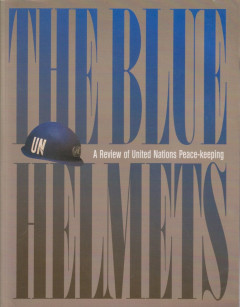
The blue helmets: A Review of United Nations peace-keeping
The Blue Helmets: A Review of United Nations Peace-keeping (Third Edition) provides a comprehensive overview of the history, development, and operations of United Nations peacekeeping missions around the world. Published by the United Nations Department of Public Information, this edition documents key peacekeeping activities, mandates, challenges, and outcomes from various UN missions. It high…
- Edisi
- 3
- ISBN/ISSN
- 92-1-100611-2
- Deskripsi Fisik
- xvi, 808 pages : illustration ; 28 cm
- Judul Seri
- -
- No. Panggil
- 341.584 UNI b
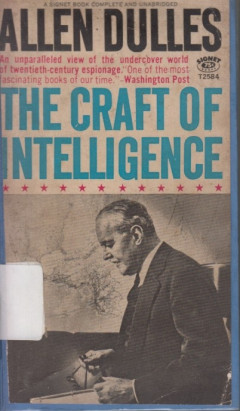
The Craft of intelligence
The Craft of Intelligence by Allen W. Dulles, former Director of the CIA, offers an authoritative overview of the development, methods, and importance of modern intelligence work. The book explains the principles of espionage, counterintelligence, intelligence analysis, and covert operations. Dulles also discusses historical intelligence cases, the role of intelligence in national security, and…
- Edisi
- -
- ISBN/ISSN
- -
- Deskripsi Fisik
- x, 256 pages : illustrations ; 18 cm
- Judul Seri
- -
- No. Panggil
- 355.343 DUL c
Limited war revisited
Limited War Revisited examines the strategic concept of limited war in the context of U.S. military and foreign policy during the 20th century. Robert E. Osgood analyzes how limited war became a central component of American military doctrine, especially during the Cold War era, when nuclear constraints required policymakers to pursue controlled, non-escalatory conflict strategies. This study p…
- Edisi
- -
- ISBN/ISSN
- 0-89158-465-X
- Deskripsi Fisik
- xiii, 124 pages ; 23,5 cm
- Judul Seri
- -
- No. Panggil
- 355.0215 OSG l
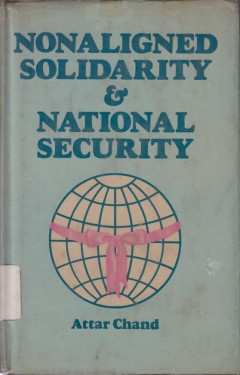
Nonaligned solidarity and national security
This book examines the political significance of the Non-Aligned Movement and its role in shaping national security policies among developing countries. Attar Chand explores how nonalignment emerged as an alternative strategy during the Cold War, offering smaller nations a framework for independence, cooperation, and security outside the major power blocs. The work analyzes the principles of no…
- Edisi
- -
- ISBN/ISSN
- -
- Deskripsi Fisik
- xxxii, 346 pages ; 22,5 cm
- Judul Seri
- -
- No. Panggil
- 327.172 CHA n
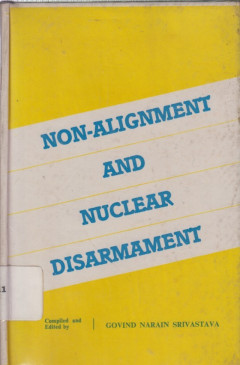
Non-alignment and nuclear disarmament
This volume examines the relationship between the Non-Aligned Movement (NAM) and global efforts toward nuclear disarmament. Compiled and edited by Govind Narain Srivastava, it analyzes NAM’s political stance on nuclear weapons, the advocacy for disarmament, and the movement’s influence on international peace negotiations. The book provides insights into the strategic, moral, and diplomatic …
- Edisi
- -
- ISBN/ISSN
- -
- Deskripsi Fisik
- 97 pages ; 22 cm
- Judul Seri
- -
- No. Panggil
- 327.174 SRI n
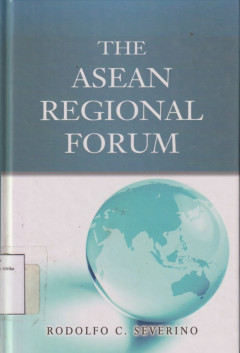
The ASEAN regional forum
The ASEAN Regional Forum by Rodolfo C. Severino provides an in-depth analysis of the origins, development, and role of the ASEAN Regional Forum (ARF) as a key platform for dialogue and cooperation on security issues in the Asia-Pacific region. The book examines the ARF’s objectives, mechanisms, and evolution in addressing regional peace and stability, including discussions on confidence-build…
- Edisi
- -
- ISBN/ISSN
- 978-981-230-990-7
- Deskripsi Fisik
- xiii, 186 pages : illustration ; 23,5 cm
- Judul Seri
- -
- No. Panggil
- 327.17 SEV a

Failed states: The Abuse of power and the assault on democracy
In this book, Noam Chomsky argues that the United States increasingly exhibits the characteristics of a “failed state”—one that disregards international law, undermines democratic principles, and relies on military force to pursue global dominance. Chomsky examines U.S. foreign policy after 2001, focusing on unilateral actions, the Iraq War, counterterrorism strategies, and the erosion of…
- Edisi
- -
- ISBN/ISSN
- 978-0-8050-7912-8
- Deskripsi Fisik
- 311 pages ; 24 cm
- Judul Seri
- -
- No. Panggil
- 327.73 CHO f
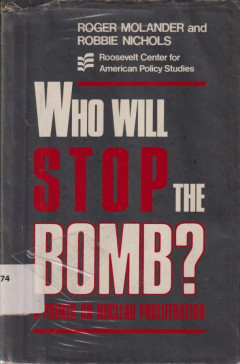
Who will stop the bomb?: A Primer on nuclear proliferation
This book provides a clear introduction to the issues surrounding nuclear proliferation and the global dangers posed by the spread of nuclear weapons. It explains the development of the nuclear arms race, the political and strategic motivations behind nations seeking nuclear capability, and the challenges faced by the international community in preventing further expansion. Molander and Nichols…
- Edisi
- -
- ISBN/ISSN
- 0-8160-1283-0
- Deskripsi Fisik
- x, 150 pages : illustration ; 23,5 cm
- Judul Seri
- -
- No. Panggil
- 327.174 MOL w

War and decision: Inside the pentagon at the dawn of the war on terrorism
This book is a firsthand account of Douglas J. Feith, U.S. Under Secretary of Defense for Policy during President George W. Bush's early term after the September 11, 2001, attacks. In War and Decision, Feith details the Pentagon's decision-making process, the internal dynamics of the U.S. government, and the strategies that shaped the global war on terrorism. The book provides in-depth insights…
- Edisi
- -
- ISBN/ISSN
- 978-0-06-089973-8
- Deskripsi Fisik
- xiv, 674 pages : illustration ; 23,5 cm
- Judul Seri
- -
- No. Panggil
- 355.0217 FEI w
 Karya Umum
  Filsafat
  Agama
Agama  Ilmu-ilmu Sosial
  Bahasa
  Ilmu-ilmu Murni
  Ilmu-ilmu Terapan
  Kesenian, Hiburan, dan Olahraga
  Kesusastraan
  Geografi dan Sejarah