Ditapis dengan
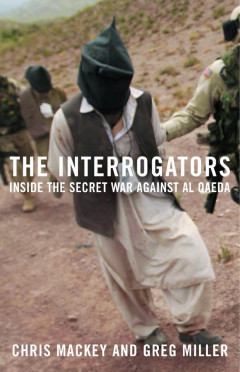
The Interrogators : Inside the secret war agains Al-Qaeda
More than 3,000 prisoners in the war on terrorism have been captured, held, and interrogated in Afghanistan alone. But no one knows what transpired in those interactions between prisoner and interrogator -- until now. In The Interrogators, Chris Mackey, the senior interrogator at Bagram Air Base and in Kandahar, where al-Qaeda and Taliban prisoners were first detained and questioned, lifts the…
- Edisi
- 1
- ISBN/ISSN
- 0-316-87112-5
- Deskripsi Fisik
- xxvii, 484 pages : ilustrations ; 25 cm
- Judul Seri
- -
- No. Panggil
- 958.1 MAC i
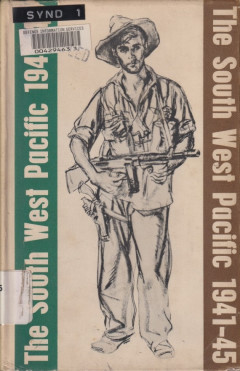
The South West Pacific 1941–45
South West Pacific 1941–45 by Colonel E. G. Keogh provides a detailed military history of the Pacific War as it unfolded in the South West Pacific theatre during World War II. Written by an experienced Australian military officer, the book outlines strategic decisions, major operations, and the participation of Australian, American, and Allied forces in the region. Keogh documents the early J…
- Edisi
- -
- ISBN/ISSN
- -
- Deskripsi Fisik
- 479 pages : illustrations ; 22,5 cm
- Judul Seri
- -
- No. Panggil
- 940.5426 KOE s

Escalation and intervention: Multilateral security and its alternatives
This volume explores the dynamics of military escalation, intervention, and alternative approaches to multilateral security. Bringing together contributions from leading scholars and practitioners, the book examines case studies such as conflicts in Chad, Lebanon, and the Iran–Iraq War to illustrate how states and institutions respond to regional crises. The editors analyze different models o…
- Edisi
- -
- ISBN/ISSN
- 0-8133-7200-3
- Deskripsi Fisik
- x, 181 pages ; 23,5 cm
- Judul Seri
- -
- No. Panggil
- 327.16 DAY e
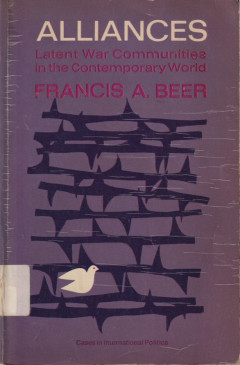
Alliances: Latent war communities in the contemporary world
This book examines the theory and dynamics of international alliances as a form of latent war community in the global political system. Edited by Francis A. Beer, this collection of writings explores how states form coalitions for security purposes, political strategy, and the balance of power. The analysis is presented using a multidisciplinary approach, encompassing international relations th…
- Edisi
- -
- ISBN/ISSN
- 03-076760-1
- Deskripsi Fisik
- viii, 384 pages ; 23 cm
- Judul Seri
- -
- No. Panggil
- 327.17 BEE a

The Chinese military system: An Organizational study of the Chinese people’…
This book provides a comprehensive organizational analysis of the Chinese People’s Liberation Army (PLA) within the political and social framework of the People’s Republic of China after 1949. Harvey W. Nelson examines the structure, command system, political control, and functional roles of the Chinese military, emphasizing its integration with the Chinese Communist Party and state institu…
- Edisi
- -
- ISBN/ISSN
- ISBN 0-89158-221-5
- Deskripsi Fisik
- 266 pages; 30 cm
- Judul Seri
- -
- No. Panggil
- 355.00951 NEL c
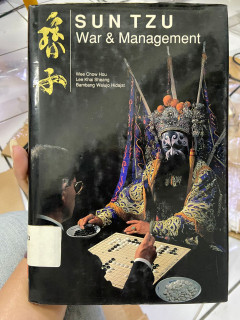
Sun Tzu: War & management
This book explores the principles of The Art of War by Sun Tzu and applies them to modern strategic management and organizational thinking. It bridges classical military philosophy with contemporary business and management practices, demonstrating how ancient strategic insights can guide decision-making, leadership, and competitive strategy in modern institutions.
- Edisi
- -
- ISBN/ISSN
- 0-201-50965-2
- Deskripsi Fisik
- 307 pages; 30 cm
- Judul Seri
- -
- No. Panggil
- 355.03 WEE s
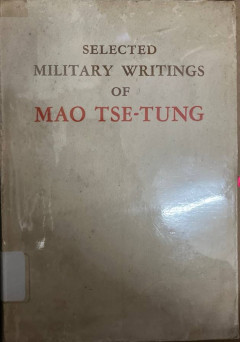
Selected military writings of Mao Tse-tung
Selected Military Writings of Mao Tse-tung is a collection of key essays and directives by Mao Zedong, focusing on military strategy, revolutionary warfare, and the principles of guerrilla tactics. The book covers Mao’s theoretical contributions to the development of the Chinese Communist Party’s military doctrine, including the concepts of protracted war, the mobilization of peasant forces…
- Edisi
- -
- ISBN/ISSN
- -
- Deskripsi Fisik
- 408 pages ; 22 cm
- Judul Seri
- -
- No. Panggil
- 951.04 TSE s

The Chinese military system: An Organizational study of the Chinese people's …
This book provides a comprehensive organizational analysis of the Chinese People’s Liberation Army (PLA). It examines the structure, command system, political control, and functional roles of China’s military within the framework of a socialist state. The study explores the relationship between the Communist Party and the armed forces, highlighting how ideology, organization, and civil–mi…
- Edisi
- -
- ISBN/ISSN
- 0-89158-221-5
- Deskripsi Fisik
- xi, 266 pages ; 23 cm
- Judul Seri
- -
- No. Panggil
- 355.00951 NEL c
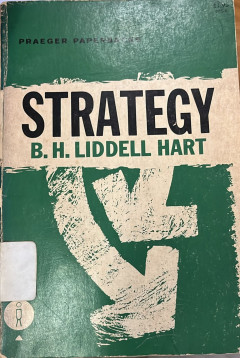
Strategy
Strategy by B. H. Liddell Hart is a seminal work in military theory that examines the evolution of warfare and the principles of effective military strategy. In this revised edition, Hart presents his influential concept of the “Indirect Approach,” arguing that success in war often depends on maneuver, deception, and psychological advantage rather than direct confrontation. Drawing from his…
- Edisi
- -
- ISBN/ISSN
- -
- Deskripsi Fisik
- 420 pages ; 21 cm
- Judul Seri
- -
- No. Panggil
- 355.02 HAR s
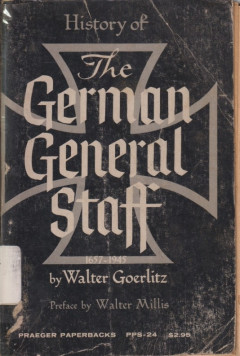
History of the German general staff, 1657–1945
This book presents a comprehensive history of the German General Staff from its formation in the 17th century to its collapse in 1945. Walter Goerlitz outlines the role of the General Staff in shaping Prussian and German military strategy, its influence on national political policy, and its contribution to various major wars, including the Napoleonic Wars, World War I, and World War II. Through…
- Edisi
- -
- ISBN/ISSN
- -
- Deskripsi Fisik
- xviii, 508 pages : illustration ; 20,5 cm
- Judul Seri
- -
- No. Panggil
- 355.00943 GOE h
 Karya Umum
  Filsafat
  Agama
Agama  Ilmu-ilmu Sosial
  Bahasa
  Ilmu-ilmu Murni
  Ilmu-ilmu Terapan
  Kesenian, Hiburan, dan Olahraga
  Kesusastraan
  Geografi dan Sejarah