Ditapis dengan

What went wrong? : The Clash between Islam and modernity in the Middle East
This book explores the historical, cultural, and political factors that shaped the relationship between the Islamic world and modernity. Bernard Lewis examines key turning points in Middle Eastern history, addressing why modernization and technological development progressed differently in Islamic societies compared to the West. Through historical analysis, Lewis discusses political structures,…
- Edisi
- -
- ISBN/ISSN
- 0-06-051605-4
- Deskripsi Fisik
- 186 pages : illustration ; 20,5 cm
- Judul Seri
- -
- No. Panggil
- 956.015 LEW w

The Emergence of the modern Middle East
The Emergence of the Modern Middle East by Albert Hourani provides a comprehensive analysis of the historical transformation of the Middle East from the eighteenth century to the twentieth century. Hourani explores the political, social, and intellectual developments that shaped modern Middle Eastern societies, including the impact of European influence, internal reforms, nationalism, and cultu…
- Edisi
- -
- ISBN/ISSN
- 0-520-03862-6
- Deskripsi Fisik
- xx, 243 pages ; 22 cm
- Judul Seri
- -
- No. Panggil
- 956 HOU e
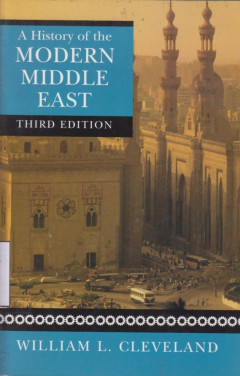
A History of the modern Middle East
“A History of the Modern Middle East” provides a comprehensive and accessible overview of the political, social, and economic developments of the Middle East from the early modern era to the early 21st century. William L. Cleveland examines the fall of the Ottoman Empire, the formation of modern nation-states, colonial legacies, Arab nationalism, the Arab–Israeli conflict, Islamic movemen…
- Edisi
- -
- ISBN/ISSN
- 0-8133-4048-9
- Deskripsi Fisik
- xviii, 588 pages : illustrations ; 23 cm
- Judul Seri
- -
- No. Panggil
- 956.05 CLE h
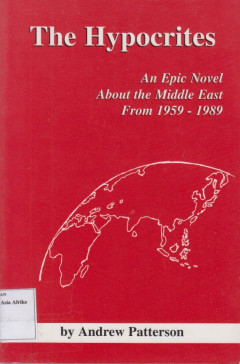
The Hypocrites
This historical–political novel follows events in the Middle East between 1959 and 1989, blending real geopolitical developments with fictional narratives. Andrew M. Patterson presents an epic story that explores political intrigue, shifting alliances, cultural tensions, and the human experiences shaped by decades of regional conflict. Through multiple characters and intertwined storylines, t…
- Edisi
- -
- ISBN/ISSN
- -
- Deskripsi Fisik
- 239 pages ; 23 cm
- Judul Seri
- -
- No. Panggil
- 813.54 PAT h
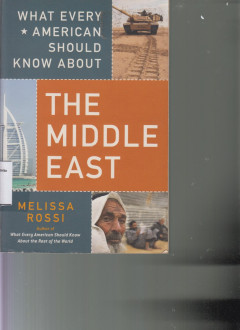
What every American should know about the Middle East
This book provides an accessible and comprehensive overview of the Middle East for general readers, particularly Americans seeking to understand the region’s complex history, politics, religions, and conflicts. Melissa Rossi explains key events, major political actors, cultural dynamics, and U.S. involvement in the region. The text covers historical background, contemporary issues, and geopol…
- Edisi
- -
- ISBN/ISSN
- 978-0-452-28959-8
- Deskripsi Fisik
- xvii, 493 pages : illustrations ; 23 cm
- Judul Seri
- -
- No. Panggil
- 956 ROS w
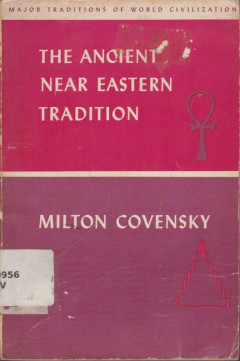
The Ancient near Eastern tradition
The Ancient Near Eastern Tradition by Milton Covensky offers a comprehensive overview of the cultural, social, political, and religious traditions that shaped the earliest civilizations of the Near East. Focusing on the ancient societies of Mesopotamia, Egypt, and surrounding regions, the book examines the development of writing, law, kingship, mythologies, and religious practices that influenc…
- Edisi
- -
- ISBN/ISSN
- -
- Deskripsi Fisik
- xxiii, 134 pages : illustration ; 20 cm
- Judul Seri
- -
- No. Panggil
- 935 COV a

Ancient history of Western Asia, India, and Crete
Ancient History of Western Asia, India, and Crete presents a comprehensive overview of the early civilizations that shaped the ancient world. Bedřich Hrozný discusses the political, cultural, and social development of Western Asia, including Mesopotamia and the Near East, alongside the evolving civilizations of ancient India and Crete. Through archaeological findings, inscriptions, and histor…
- Edisi
- -
- ISBN/ISSN
- -
- Deskripsi Fisik
- viii, 259 pages ; 25 cm
- Judul Seri
- -
- No. Panggil
- 954 HRO a

The modern Middle East: A political history since the first world war
Kamvara provides an in depth analysis not just or political history but also of a variety of other issues that have plagued this part of the world for so many years. - Mahmood Monshipouri. This is an ambitious, stimulating book that analyzes many important issues in the region, emphasizing the challenges countries face in overcoming historical legacie, developing accountable leadership, reco…
- Edisi
- -
- ISBN/ISSN
- 978-0-520-24150-3
- Deskripsi Fisik
- xi, 497 pages : illustrations (black and white) ; 23 cm
- Judul Seri
- -
- No. Panggil
- 956 Kam m

Inside the Middle East: Making sense of the most dangerous and complicated re…
Melamed considers all the major power players in the Middle East, explains the underlying issues, and creates a three-dimensional picture, an illustration that connects the dots and provides a fascinating roadmap. He elucidates developments such as the Arab Spring, the downfall of the Muslim Brotherhood, the rise of ISIS, the epic Sunni-Shiite animosity, the essence of the war in Syria, the rol…
- Edisi
- -
- ISBN/ISSN
- 978-1-63450-572-7
- Deskripsi Fisik
- xviii, 374 pages ; 23 cm
- Judul Seri
- -
- No. Panggil
- 956 Mel i
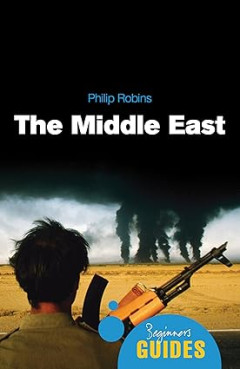
The Middle East: A beginners guide
The Middle East is notorious in the West for many reasons, few of them are positive. Synonymous with terrorism, oil riches, bad governance, corruption, and conflict, it has led many Western commentators to write it off as both backward and insular. In this pioneering introduction, Oxford University's Philip Robins argues that the region is plagued by the same problems that afflict the rest of …
- Edisi
- -
- ISBN/ISSN
- 978-1-85168-675-9
- Deskripsi Fisik
- x, 226 pages : illustrations (black and white) ; 20
- Judul Seri
- -
- No. Panggil
- 956 Rob m
 Karya Umum
  Filsafat
  Agama
Agama  Ilmu-ilmu Sosial
  Bahasa
  Ilmu-ilmu Murni
  Ilmu-ilmu Terapan
  Kesenian, Hiburan, dan Olahraga
  Kesusastraan
  Geografi dan Sejarah