Ditapis dengan

The Bandung Conference and Japan’s Return to Asia: Between the United State…
This book examines Japan’s diplomatic position during the early Cold War, focusing on its participation and political stance surrounding the 1955 Bandung Conference. Miyashiro analyzes Japan’s attempt to reintegrate into Asia while balancing pressure from the United States and its own regional ambitions. The work provides insight into Japan’s foreign policy transformation, regional identi…
- Edisi
- -
- ISBN/ISSN
- 9784794210357
- Deskripsi Fisik
- vii, 229 pages ; 19,5 cm
- Judul Seri
- -
- No. Panggil
- 327.52 DAI b

The Imperial cruise: A Secret history of empire and war
This book reveals President Theodore Roosevelt's major diplomatic expedition in 1905, known as the "Imperial Cruise." Through the American fleet's voyage to Asia, Roosevelt and William Howard Taft crafted a secret policy that shaped the geopolitics of modern East Asia. It explores the impact of this diplomacy on Japan, the Philippines, China, and Korea, and how Roosevelt-era decisions contribut…
- Edisi
- -
- ISBN/ISSN
- 978-0-316-01400-7
- Deskripsi Fisik
- 387 pages : illustration ; 21 cm
- Judul Seri
- -
- No. Panggil
- 359.4 BRA i

The fukuda doctrine and ASEAN: New dimensions in Japanese foreign policy
A burgeoning Japanese rote in the Asia-Pacific region has been one of the most contentious issues to the Southeast Asian Countries in recent years with its positive and negative implications. It is thus timely and significant to come to terms with Japan's "design" in the region from a historical perspective. Attributing Japan's active involvement in Southeast Asian affairs to the proclamation o…
- Edisi
- -
- ISBN/ISSN
- 981-3016-14-0
- Deskripsi Fisik
- xiv, 277 pages : bibl: hlm 256-271 : index ; 23 cm
- Judul Seri
- -
- No. Panggil
- 327.520595 Sud f
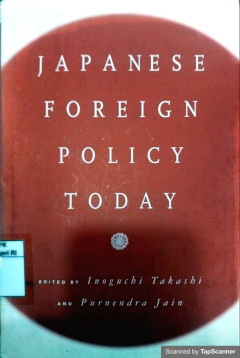
Japanese foreign policy today
In Japan, as elsewhere, the constant rub between domestic and international politics prefigures the landscape in which national foreign policy is planned and played out.
- Edisi
- First Published
- ISBN/ISSN
- 0333915216
- Deskripsi Fisik
- xix, 316 pages : bibl: hlm 297-311 : index ; 25 cm
- Judul Seri
- -
- No. Panggil
- 327.52 Tak j

Japanese foreign policy at the crossroads: Challenges and options for the twe…
The future of foreign policy in Japan is uncertain. The post-World War II paradigm that ensured security and prosperity for the Japanese people has lost much of its effectiveness. This book examines this uncertainty and explores the decision-making processes that have led Japan to this point
- Edisi
- -
- ISBN/ISSN
- 978-0-8157-4869-4
- Deskripsi Fisik
- xii, 163 pages : bibl: hlm 153-154 : index ; 22 cm
- Judul Seri
- -
- No. Panggil
- 327.52 Kaw j

Japan's international relations: Politics, economics, and security
Japan can be explained. It needs to be explained because it matters. That it matters accounts for the wide range of information available in English on Japan's international relations.
- Edisi
- -
- ISBN/ISSN
- 0-415-24098-0
- Deskripsi Fisik
- xxxvi, 532 pages : index ; 25 cm
- Judul Seri
- -
- No. Panggil
- 327.52 Hoo j

Japan's foreign policy maturation: A quest for normalcy
The sudden end of the Cold War took the Japanese foreign policy community by surprise. The Yoshida Doctrine which served Japanese foreign policy so well during the Cold War is no longer a viable foreign policy option. This dissertation examines the restructuring of Japanese foreign policy since the end of the Cold War. Through a series of 56 interviews with Japanese foreign policy elites, the c…
- Edisi
- -
- ISBN/ISSN
- 0-415-93516-4
- Deskripsi Fisik
- xviii, 230 pages : bibl: hlm 205-221 : index ; 24 cm
- Judul Seri
- -
- No. Panggil
- 327.52 Coo f

Japan and China as charm rivals: Soft power in regional diplomacy
In international relations today, influence is a essential as military and economic might. Consequently, leaders promote favorable images of the state in order to attract allies and win support for their policies.
- Edisi
- -
- ISBN/ISSN
- 978-0-472-11833-5
- Deskripsi Fisik
- xii, 231 pages : bibl: hlm 199-213 : index ; 25 cm
- Judul Seri
- -
- No. Panggil
- 327.51052 Sun j
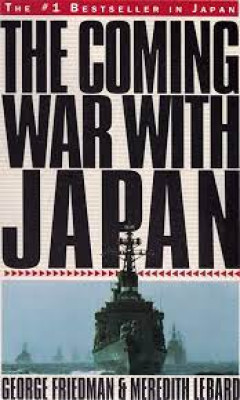
The coming war with Japan
Argues that the post-Cold War world will see the United States and Japan emerge as opponents, traces Japan's increasing power, and contends the United States holds the trump cards in the economic contest.
- Edisi
- -
- ISBN/ISSN
- 0-312-07677-0
- Deskripsi Fisik
- xv, 318 pages : illustration, table, bibliography, index ; 23 cm
- Judul Seri
- -
- No. Panggil
- 327.73052 Fri c

Bridging troubled waters: China, Japan, and maritime order in the East China Sea
In this book, James Manicom contests the orthodox view that the strategic rivalry between China and Japan will escalate into a full blown military conflict. The book concedes that the East China Sea will be the likely medium for Sino-Japanese military rivalry and cyclical tensions will persist; however, it makes the compelling case that cooperation will endure.
- Edisi
- -
- ISBN/ISSN
- 978-1-62616-035-4
- Deskripsi Fisik
- xii, 266 pages ; 23 cm
- Judul Seri
- -
- No. Panggil
- 341.4 Man b
 Karya Umum
  Filsafat
  Agama
Agama  Ilmu-ilmu Sosial
  Bahasa
  Ilmu-ilmu Murni
  Ilmu-ilmu Terapan
  Kesenian, Hiburan, dan Olahraga
  Kesusastraan
  Geografi dan Sejarah