Ditapis dengan
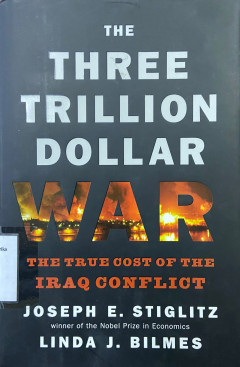
The Three Trillion Dollar War: The True Cost of the Iraq Conflict
The book analyzes the economic cost of the Iraq war, detailing the financial burden of the war on the United States, including military spending, future obligations, and the broader economic effects of the conflict.
- Edisi
- -
- ISBN/ISSN
- 978-0-393-06701-9
- Deskripsi Fisik
- xxiii, 311 pages ; 22 cm
- Judul Seri
- -
- No. Panggil
- 330.9567 STI j

Iraq war and its consequences: Thoughts of Nobel peace laureates and eminent …
The Iraq War and its Consequences is the First and Only book that brings together more than 30 Nobel Peace laureates and eminent scholars to offer opinions, analyses and insights on the war that has drawn both widespread opposition and strong support.In this intellectually captivating book, Professor Irwin Abrams, considered the leading authority world-wide on the history of the Nobel Peace Pri…
- Edisi
- -
- ISBN/ISSN
- 981-238-590-8
- Deskripsi Fisik
- xx, 443 pages ; 23 cm
- Judul Seri
- -
- No. Panggil
- 955 Abr i

The occupation of Iraq: Winning the war, losing the peace
Involved for over thirty years in the politics of Iraq, Ali A. Allawi (the former Minister of Defense and Finance) was a long-time opposition leader against the Baathist regime. In the post-Saddam years he has held important government positions and participated in crucial national decisions and events. In this book, the former Minister of Defense and Finance draws on his unique personal experi…
- Edisi
- -
- ISBN/ISSN
- 978-0300-11015-9
- Deskripsi Fisik
- xxiv, 518 pages : illustration (black and white) ; 24 cm
- Judul Seri
- -
- No. Panggil
- 956.7 All o

Blood money: Wasted billions, lost lives, and corporate greed in Iraq
An explosive indictment of how the Bush Administration wasted billions in Iraq--through sweetheart deals to G.O.P. supporters, outrageous contracts to corrupt companies, and absurdly naïve assumptions. It was supposed to be quick and easy. The Bush Administration even promised that it wouldn't cost American taxpayers a thing Iraqi oil revenues would pay for it all. But billions and billions of…
- Edisi
- -
- ISBN/ISSN
- 978-0-316-16628-7
- Deskripsi Fisik
- xviii, 340 pages ; 21 cm
- Judul Seri
- -
- No. Panggil
- 956.7 Mil b

Bush in Babylon: The recolinisation of Iraq
The assault and capture of Iraq and the resistance it has provoked will shape the politics of the twenty-first century. In this passionate and provocative book, Tariq Ali provides a history of Iraqi resistance against empires old and new, and argues against the view that sees imperialist occupation as the only viable solution to bring about regime-change in corrupt and dictatorial states. Like …
- Edisi
- -
- ISBN/ISSN
- 1-84467-512-2
- Deskripsi Fisik
- 262 pages ; 20 cm
- Judul Seri
- -
- No. Panggil
- 956.7 Ali b

The future of Iraq: Dictatorship, democracy, or division?
The Future of Iraq provides a primer on the history and political dynamics of this pivotal state divided by ethnic, religious and political antagonisms, and provocatively argues that the least discussed future of Iraq might be the best: managed partition. that even a significant American presence will not stabilize Iraq because it is an artificial state and its people have never shared a common…
- Edisi
- ed. 1
- ISBN/ISSN
- 1-4039-6354-1
- Deskripsi Fisik
- x, 260 pages : illustrations (black and white) ; 25 cm
- Judul Seri
- -
- No. Panggil
- 956.7044 And f
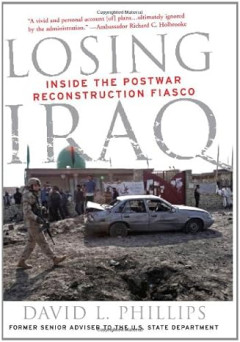
Losing Iraq: Inside the postwar reconstruction fiasco
Things didn't go wrong in postwar Iraq because the United States lacked a plan. Things went wrong because the United States was blinded by ideology and ignored planning that was already underway. Losing Iraq tells the story of the tragedy of Iraq, from the first discreet meetings to plan the political transition through the debacle the United States finally created. Losing Iraq is a stunning an…
- Edisi
- -
- ISBN/ISSN
- 0-8133-4304-6
- Deskripsi Fisik
- ix, 292 pages ; 23 cm
- Judul Seri
- -
- No. Panggil
- 956.704431 Phi l

The right war ?: The conservative debate on Iraq
This book brings together the most articulate and influential voices in the debate among conservatives over the tactics and strategy of America's engagement in Iraq. Its contribution run the gamut from protests to second thoughts to full-throated endorsements, and represent a vivid sampling of the ideological currents likely to influence the Bush administration in its ongoing efforts in Iraq an…
- Edisi
- -
- ISBN/ISSN
- 978-0-521-67318-1
- Deskripsi Fisik
- ix, 254 pages ; 23 cm
- Judul Seri
- -
- No. Panggil
- 956.7 Ros r

Cobra II: The inside story of the invasion and occupation of Iraq
Contents: 1. Snowflakes from the secretary 2. The generated start 3. Smaller is beautiful 4. The other side of the hill 5. Back to the future 6. 'Round and round we go etc.
- Edisi
- -
- ISBN/ISSN
- 0-375-42262-5
- Deskripsi Fisik
- xxxii, 603 pages : illustrations (black and white) ; 24 cm
- Judul Seri
- -
- No. Panggil
- 956.70443 Gor c

American soldier
American Soldier is filled with revelation. Franks describes the covert diplomacy that helped him secure international cooperation for the war, and reveals the role of foreign leaders-and a critical double agent code- named "April Fool"-in the most successful military deception since D-Day in 1944. He speaks frankly of intelligence shortcomings that endangered our troops, and of the credible WM…
- Edisi
- First Edition
- ISBN/ISSN
- 0060731583
- Deskripsi Fisik
- xvii, 590 pages : index ; 23 cm
- Judul Seri
- -
- No. Panggil
- 355.0092 Fra a
 Karya Umum
  Filsafat
  Agama
Agama  Ilmu-ilmu Sosial
  Bahasa
  Ilmu-ilmu Murni
  Ilmu-ilmu Terapan
  Kesenian, Hiburan, dan Olahraga
  Kesusastraan
  Geografi dan Sejarah