Ditapis dengan
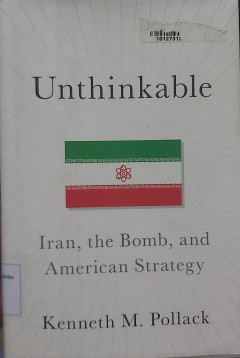
Unthinkable: Iran, the bomb, and American strategy
How close are we to a nuclear Iran? What does it mean for American foreign policy? How did we get to this point? And what do we do now? In Unthinkable, Kenneth Pollack, a former CIA analyst with twenty-five years of experience working on the Middle East, explores America's intractable problem with Iran, Tehran's pursuit of a nuclear weapons capability, and the prolonged clash that led us…
- Edisi
- -
- ISBN/ISSN
- 978-1-4767-3392-0
- Deskripsi Fisik
- xxii, 536 pages ; 24 cm
- Judul Seri
- -
- No. Panggil
- 140 POL u

Iran dan Indonesia: Menjembatani antara timur dan barat dunia islam
Menghadirkan kajian mendalam tentang dimensi historis, kultural, dan geopolitik dalam hubungan antara Republik Islam Iran dan Republik Indonesia. Sebagai dua negara Muslim terbesar yang masing-masing merepresentasikan kekuatan di Timur Tengah (Barat Dunia Islam) dan Asia Tenggara (Timur Dunia Islam), karya ini menyoroti peran strategis keduanya dalam memajukan perdamaian, stabilitas, dan persat…
- Edisi
- -
- ISBN/ISSN
- -
- Deskripsi Fisik
- 99 halaman : ilustrasi ; 28 cm
- Judul Seri
- -
- No. Panggil
- 955 MIN i
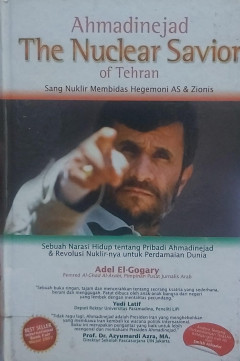
Ahmadinejad: The Nuclear savior of Tehran
"Jika kami menghentikan aktivitas nuklir, lalu apa yang akan kita bicarakan? Mengapa pembangkit nuklir Anda bisa bekerja 24 jam sehari, tetapi Iran dipaksa untuk mematikannya?" Ahmadinejad, KOMPAS "Keberatan AS atas pengembangan nuklir Iran hanya untuk kepentingan Negeri Adidaya itu sendiri. Bush tidak ingin ada negara lain menguasai teknologi nuklir, selain AS. Padahal, Ahmadinejad k…
- Edisi
- -
- ISBN/ISSN
- 979-3371-66-8
- Deskripsi Fisik
- x, 337 halaman : ilustrasi ; 24 cm
- Judul Seri
- -
- No. Panggil
- 923.255 ELG a
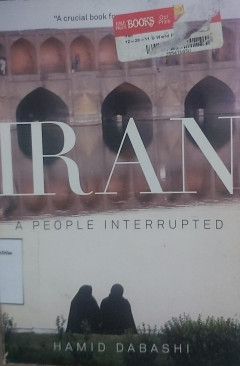
Iran: A People interrupted
Hailed by leading academics as "extraordinary" and provocative, Hamid Dabashi treats the story of Iran over the past two centuries with unparalleled analysis of key events, cultural trends, and political developments leading up to the collapse of the reform movement and the emergence of the new and combative presidency of Mahmoud Ahmadinejad. In an era of escalating tensions in the Middle East,…
- Edisi
- -
- ISBN/ISSN
- 978-1-59558-333-8
- Deskripsi Fisik
- xii, 324 pages ; 21 cm
- Judul Seri
- -
- No. Panggil
- 955 DAB i
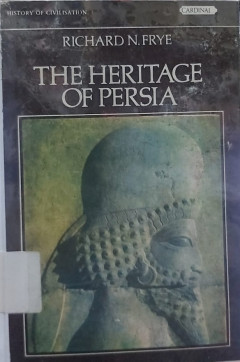
The heritage of Persia
The Heritage of Persia by Richard N. Frye is a comprehensive and accessible study of Persian civilization spanning over 2,500 years. Frye draws on archaeological, linguistic, and documentary sources to trace the development of Persian culture from its earliest Aryan roots through the Zoroastrian heritage, the Achaemenid Empire, Parthian and Sassanian dynasties, and into the early Islamic era. H…
- Edisi
- -
- ISBN/ISSN
- 0-351-16340-9
- Deskripsi Fisik
- xii, 330 pages ; 20 cm
- Judul Seri
- -
- No. Panggil
- 932.016 FRY h
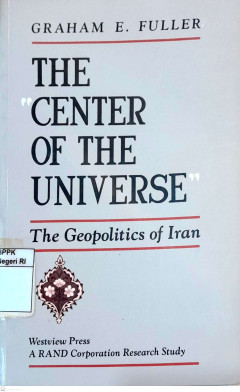
The center of the universe: The geopolitics of Iran
Examines Iran and the nature of its relations with neighbouring states. The author argues that certain characteristics of Iranian society have persistently affected Iran's view of the surrounding world. The book analyzes the impact of historical events, regional demography and past conflicts.
- Edisi
- Hard Cover
- ISBN/ISSN
- 0-8133-1158-6
- Deskripsi Fisik
- xv, 301 pages ; 24 cm.
- Judul Seri
- -
- No. Panggil
- 327.55 FUL c
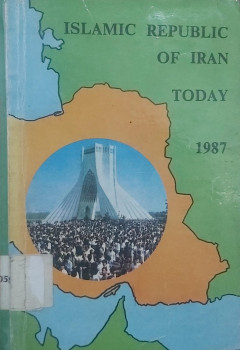
Islamic republic of Iran today (1987)
This book provides an overview of the Islamic Republic of Iran in 1987, highlighting the political, social, and cultural conditions of the country following the 1979 Islamic Revolution. It presents contemporary developments in Iran, including national identity, governance, society, and the experiences of the Iranian people during the early years of the Islamic Republic.
- Edisi
- -
- ISBN/ISSN
- -
- Deskripsi Fisik
- 341 pages : illustrations ; 21 cm
- Judul Seri
- -
- No. Panggil
- 955.053 ISL i
Iran: Quest for security
This book is a study of the quest for political security by Iran's ruling elite: the Shah before the revolution, and the new Islamic leaders, led by Ayatollah Khomeini, today. It argues that, despite the overthrow of the Pahlavi dynasty, there is no basic change in the character of the threat to the Iranian political system. Absolute monarchy has been replaced by another kind of absolutism …
- Edisi
- -
- ISBN/ISSN
- 0-7069-1259-4
- Deskripsi Fisik
- x, 443 pages ; 23 cm
- Judul Seri
- -
- No. Panggil
- 955 SIN i

Letters to my torturer: Love, revolution, and imprisonment in Iran
Letters to My Torturer is a powerful memoir by Iranian journalist and political activist Houshang Asadi, recounting his arrest, torture, and imprisonment under the Iranian regime. Presented as a series of letters addressed to his torturer, the book exposes the brutality of political repression in Iran, while also exploring themes of love, memory, faith, and resilience. Asadi reflects on his exp…
- Edisi
- -
- ISBN/ISSN
- 978-1-85168-750-3
- Deskripsi Fisik
- x, 325 pages ; 23 cm
- Judul Seri
- -
- No. Panggil
- 955 ASA l
Iran: The Untold story
This book provides a detailed historical narrative of the final years of the Pahlavi monarchy in Iran. William H. Forbis examines the political, social, and economic conditions that led to growing unrest, culminating in the 1979 Iranian Revolution. Through journalistic analysis, he portrays the complexities of the Shah’s rule, the rise of opposition movements, and the factors that contributed…
- Edisi
- -
- ISBN/ISSN
- 0-394-52275-3
- Deskripsi Fisik
- 217 pages ; 24 cm
- Judul Seri
- -
- No. Panggil
- 955.053 HEI i
 Karya Umum
  Filsafat
  Agama
Agama  Ilmu-ilmu Sosial
  Bahasa
  Ilmu-ilmu Murni
  Ilmu-ilmu Terapan
  Kesenian, Hiburan, dan Olahraga
  Kesusastraan
  Geografi dan Sejarah