Ditapis dengan
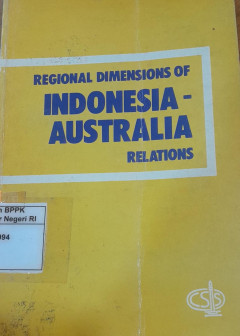
Regional dimensions of Indonesia-Australia relations
contains papers presented at a bilateral con- ference between Indonesians and Australians at the end of 1982. The Conference was sponsored by CSIS and the Department of Foreign Affairs of Australia
- Edisi
- -
- ISBN/ISSN
- -
- Deskripsi Fisik
- viii, 124 p. : ill. ; 22 cm
- Judul Seri
- -
- No. Panggil
- 327.598094 Ind r

Indonesia-Australia relations: Diverse cultures, converging interests
This book is an account of the state of the relationship between Australia and Indonesia, political security and economic dimensions, domestic development, role of the media, provincial relations and lessons from AFTA and the ANZ-CER
- Edisi
- -
- ISBN/ISSN
- 979-8026-28-4
- Deskripsi Fisik
- viii, 452 pages ; 21 cm
- Judul Seri
- -
- No. Panggil
- 327.598 Soe i

Indonesia in transition: Social aspects of reformasi and crisis
Indonesia enters the new millennium at a time of transition. It has experienced several crises - in particular the economic crisis of 1997-98, a severe intensification of its environmental degradation, and more recently the East Timor crisis, the ongoing Aceh demand for independence, the change of government from the autocratic Soeharto regime to one democratically elected and under the leaders…
- Edisi
- -
- ISBN/ISSN
- 9812300937
- Deskripsi Fisik
- xxviii, 379 pages : index ; 23 cm
- Judul Seri
- -
- No. Panggil
- 320.9598 Man i
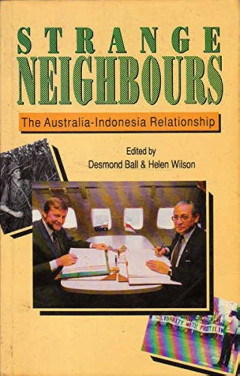
Strange neighbours: The Australia-Indonesia relationship
This book explains about Australia and Indonesia are unusual neighbours. Strange Neighbours provides a basis for greater understanding between Indonesia and Australia, respect for each other's cultural and domestic political values and practices, appreciation of our respective security interested in the future pf the Australia-Indonesia relationship.
- Edisi
- First Edition
- ISBN/ISSN
- 0-04-442233-4
- Deskripsi Fisik
- xix, 268 pages ; 22 cm
- Judul Seri
- -
- No. Panggil
- 327.940598 Ball s

Australia & Indonesia's independence: The Renville Agreement: documents 1948
This is the second of three volumes of documents on Australian policy toward Indonesia in the years 1947-49. It begins with the negotiation of the Renville Agreement in January 1948 and ends with the launching of the second Dutch police action against the Republic in December 1948, Episodes and issues covered include the efforts of Justice R. C. Kirby, Australia's representative on the Committe…
- Edisi
- -
- ISBN/ISSN
- 0 644 45950 6
- Deskripsi Fisik
- xxvi, 601 pages ; ilustrations, index ; 25 cm
- Judul Seri
- -
- No. Panggil
- 327.59894 Dor a
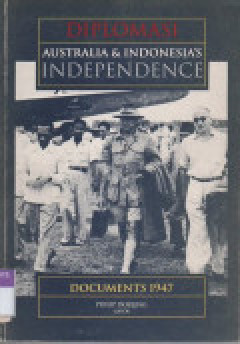
Diplomasi Australia & Indonesia's independence: Documents 1947
Indonesia's independence was an early and critical test of Australia's capacity to respond positively to change in Asia. Before the Second World War much of Aus- tralia's 'near north' was controlled by one or other of the European colonial powers. After the war Asia was transformed as the Philippines, India, Pakistan and Ceylon attained independence. In French Indochina and the Netherlands East…
- Edisi
- -
- ISBN/ISSN
- 0 644 33249 2
- Deskripsi Fisik
- ix, 545 pages ; 25 cm
- Judul Seri
- -
- No. Panggil
- 327.59894 Dor d
 Karya Umum
  Filsafat
  Agama
Agama  Ilmu-ilmu Sosial
  Bahasa
  Ilmu-ilmu Murni
  Ilmu-ilmu Terapan
  Kesenian, Hiburan, dan Olahraga
  Kesusastraan
  Geografi dan Sejarah