Ditapis dengan

Non-Aligned Movement under India’s chairmanship
Published by the Indian Institute for Non-Aligned Studies, the book Non-Aligned Movement Under India’s Chairmanship examines India’s role during its leadership of the Non-Aligned Movement (NAM). First published in November 1986, the book provides an overview of India’s diplomatic activities, work programs, and political positions in guiding the movement’s direction in the mid-1980s. It …
- Edisi
- -
- ISBN/ISSN
- -
- Deskripsi Fisik
- 47 pages; 22 cm
- Judul Seri
- -
- No. Panggil
- 327.172 IND n

India and the Nonaligned Summits : Belgrade to Jakarta
Renu Srivastava's book India and the Nonaligned Summits: Belgrade to Jakarta comprehensively examines India's role in various Non-Aligned Movement (NAM) summits, from the first summit in Belgrade to the Jakarta summit. As one of the founders of NAM, India played a key role in formulating the principles of non-alignment, political independence, and cooperation among developing countries. The boo…
- Edisi
- -
- ISBN/ISSN
- 81-7211-063-4
- Deskripsi Fisik
- ix, 195 pages ; 22 cm
- Judul Seri
- -
- No. Panggil
- 327.172 SRI i

NAM Summit: New Delhi to Harare
NAM Summit: New Delhi to Harare, edited by V. D. Chopra and published by Patriot Publishers on behalf of the Indian Centre for Regional Affairs, examines the development of the Non-Aligned Movement (NAM) from its first summit in New Delhi to its subsequent summit in Harare. It explores the dynamics of international politics during the mid-Cold War era, as developing countries sought to maintain…
- Edisi
- -
- ISBN/ISSN
- 81-7050-030-3
- Deskripsi Fisik
- xiv, 359 pages ; 21,5 cm
- Judul Seri
- -
- No. Panggil
- 327.172 CHO n
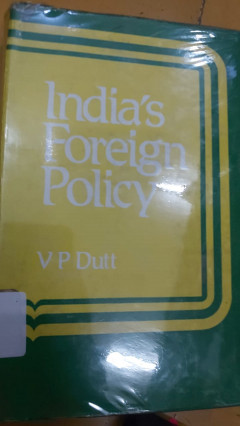
India's foreign policy
The book analyzes India’s foreign policy amid shifting regional and global dynamics. It examines India’s fluctuating relationship with Pakistan, the stalemate in Afghanistan, ethnic conflict in Sri Lanka, and the cautious improvement in relations with China. It discusses new developments in South-East Asia, confusion in Gulf and West Asian politics including the Iran–Iraq war, and Indi…
- Edisi
- -
- ISBN/ISSN
- 0-7069-3310-9
- Deskripsi Fisik
- xiii, 523 pages ; 21,5 cm
- Judul Seri
- -
- No. Panggil
- 327.54 DUT i

Disarmament: India's initiatives
Disarmament: India’s Initiatives is a government-published document by the External Publicity Division of India’s Ministry of External Affairs, outlining India’s long-standing commitment and concrete actions on global disarmament. The publication presents India’s historical proposals, including its call for a nuclear-weapon-free world, the 1988 Action Plan for phased disarmament, and ef…
- Edisi
- -
- ISBN/ISSN
- -
- Deskripsi Fisik
- 135 pages; 24,5 cm
- Judul Seri
- -
- No. Panggil
- 954 EXT d
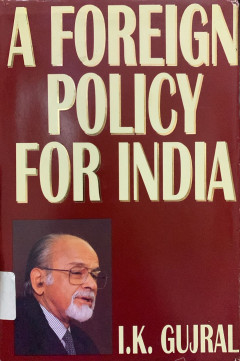
A Foreign policy for India
IK Gujral's "A Foreign Policy for India" outlines the vision and principles behind India's international diplomacy, as articulated by a senior statesman with deep experience in foreign relations. In the book, Gujral outlines his ideas on how India should conduct its foreign policy—emphasizing moral leadership, regional cooperation, and a commitment to peaceful coexistence with its neighbors. …
- Edisi
- -
- ISBN/ISSN
- -
- Deskripsi Fisik
- 337 pages : illustrations ; 24 cm
- Judul Seri
- -
- No. Panggil
- 954 GUJ f
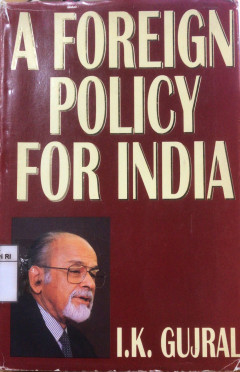
A foreign policy for India
The contents of this book: 1. Essential Tenets - Retrospective and Prospects - Enlighletened Globalism 2. Bilateral Dialogue - India and South Africa: Blueprint for the Future - India and South Africa: Economic Partnership
- Edisi
- -
- ISBN/ISSN
- -
- Deskripsi Fisik
- 337 pages : index ; 23 cm
- Judul Seri
- -
- No. Panggil
- 327.1 Guj f

India's foreign policy and non-alignment
This book attempts to trace the origin and growth of the concept of non-alignment and how it shaped India's foreign policy. The books purports to analyze the position India enjoys in the Non-Aligned Movement especially after the 'healing touch' provided to the Movement under the leadership of Indira Gandhi, who assumed the chairpersonship of the Movement in the New Delhi Conference.
- Edisi
- -
- ISBN/ISSN
- 81-86565-72-8
- Deskripsi Fisik
- viii, 349 pages : bibl: hlm 320-335 : index ; 22 cm
- Judul Seri
- -
- No. Panggil
- 327.1 Jai i
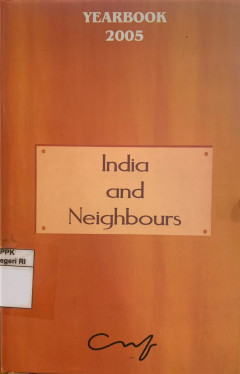
India and neighbours
While India has quietly moved from cold war politics to globalizations, barring China, India's other neighbours are yet to overcome the Cold War mentality. The result is that a section of the ruling elite among India's neighbours perceive things in terms of pressure points vis-a-vis India or try to thrive on anti-India sentiment. This has retarded the growth of healthier relations between India…
- Edisi
- -
- ISBN/ISSN
- 81-89357-00-X
- Deskripsi Fisik
- 283 pages : bibl: hlm 269-275 : index ; 22 cm
- Judul Seri
- -
- No. Panggil
- 327.1 Fea i

Perspectives on Indian foreign policy and international relations
The book provides a timely analysis of the national behaviour of the Indian leadership in its relations with the world community especially the capitalist countries of the west and the communist world. Indian in its foreign relations itself tried to emerge as a leader of the newly independent countries. Contents: 1. Origin of Indian foreign policy 2. India's status as a world power 3. Ind…
- Edisi
- -
- ISBN/ISSN
- 81-7132-180-1
- Deskripsi Fisik
- 210 pages ; 23 cm
- Judul Seri
- -
- No. Panggil
- 327.1 Par p
 Karya Umum
  Filsafat
  Agama
Agama  Ilmu-ilmu Sosial
  Bahasa
  Ilmu-ilmu Murni
  Ilmu-ilmu Terapan
  Kesenian, Hiburan, dan Olahraga
  Kesusastraan
  Geografi dan Sejarah