Ditapis dengan

Non-Aligned Movement under India’s chairmanship
Published by the Indian Institute for Non-Aligned Studies, the book Non-Aligned Movement Under India’s Chairmanship examines India’s role during its leadership of the Non-Aligned Movement (NAM). First published in November 1986, the book provides an overview of India’s diplomatic activities, work programs, and political positions in guiding the movement’s direction in the mid-1980s. It …
- Edisi
- -
- ISBN/ISSN
- -
- Deskripsi Fisik
- 47 pages; 22 cm
- Judul Seri
- -
- No. Panggil
- 327.172 IND n

Modern India: The origins of an Asian democracy, second edition
This comprehensive study explores the historical evolution of India into the world’s largest democracy. Judith M. Brown analyzes the complex processes of change from the height of British imperial rule in the 19th century to the challenges of the late 20th century. The book examines how India's diverse social structures, nationalist movements, and colonial legacy interacted to shape its uniqu…
- Edisi
- -
- ISBN/ISSN
- 0-19-873113-2
- Deskripsi Fisik
- xiv, 459 pages : illustration ; 23 cm
- Judul Seri
- -
- No. Panggil
- 954 BRO m
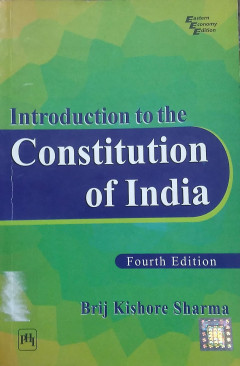
Introduction to the constitution of India
One of the most authoritative and widely used texts on Indian constitutional law. The 21st edition provides a detailed explanation of the historical evolution, structure, and essential features of the Indian Constitution. It covers fundamental rights, directive principles, governmental organs, federalism, emergency provisions, amendment procedures, and the functioning of key constitutional inst…
- Edisi
- -
- ISBN/ISSN
- 978-93-5035-309-7
- Deskripsi Fisik
- xxvii, 526 pages ; 24 cm
- Judul Seri
- -
- No. Panggil
- 342.5402 SHA i

India and the Nonaligned Summits : Belgrade to Jakarta
Renu Srivastava's book India and the Nonaligned Summits: Belgrade to Jakarta comprehensively examines India's role in various Non-Aligned Movement (NAM) summits, from the first summit in Belgrade to the Jakarta summit. As one of the founders of NAM, India played a key role in formulating the principles of non-alignment, political independence, and cooperation among developing countries. The boo…
- Edisi
- -
- ISBN/ISSN
- 81-7211-063-4
- Deskripsi Fisik
- ix, 195 pages ; 22 cm
- Judul Seri
- -
- No. Panggil
- 327.172 SRI i

The Crucial years of non-alignment: USA Korean war India
This book provides an analytical study of the formative period of the Non-Aligned Movement, focusing particularly on India’s diplomatic stance during the Korean War and its interactions with the United States. R. P. Kaushik examines major political developments, decision-making processes, and the broader implications of non-alignment in the early Cold War era. The work highlights how India na…
- Edisi
- -
- ISBN/ISSN
- -
- Deskripsi Fisik
- 264 pages ; 22 cm
- Judul Seri
- -
- No. Panggil
- 327.17 KAU c
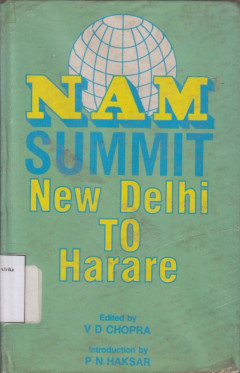
NAM Summit: New Delhi to Harare
NAM Summit: New Delhi to Harare, edited by V. D. Chopra and published by Patriot Publishers on behalf of the Indian Centre for Regional Affairs, examines the development of the Non-Aligned Movement (NAM) from its first summit in New Delhi to its subsequent summit in Harare. It explores the dynamics of international politics during the mid-Cold War era, as developing countries sought to maintain…
- Edisi
- -
- ISBN/ISSN
- 81-7050-030-3
- Deskripsi Fisik
- xiv, 359 pages ; 21,5 cm
- Judul Seri
- -
- No. Panggil
- 327.172 CHO n

India, Pakistan, Nepal and Bangladesh: India as a factor in the intra-regiona…
This book examines the political dynamics and intra-regional interactions among India, Pakistan, Nepal, and Bangladesh in South Asia. P. K. Mishra analyzes India’s central role in shaping regional relations, focusing on historical, political, and strategic factors that influence cooperation and conflict. The study highlights bilateral issues, regional power asymmetry, and the evolution of Sou…
- Edisi
- -
- ISBN/ISSN
- -
- Deskripsi Fisik
- viii, 286 pages : illustration ; 22 cm
- Judul Seri
- -
- No. Panggil
- 327.54 MIS i
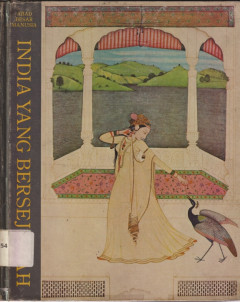
India yang bersejarah: Abad besar manusia sejarah kebudayaan dunia
Buku India yang Bersejarah menyajikan ulasan komprehensif tentang perkembangan panjang peradaban India, mulai dari kebudayaan Lembah Indus, periode Weda, kerajaan-kerajaan klasik, hingga masa kejayaan Hindu-Buddha dan dinasti-dinasti besar seperti Maurya dan Gupta. Lucille Schulberg dan para editor Pustaka Time-Life menghadirkan narasi sejarah yang disertai dokumentasi visual khas Time-Life, me…
- Edisi
- -
- ISBN/ISSN
- -
- Deskripsi Fisik
- 190 halaman : ilustrasi ; 27 cm
- Judul Seri
- -
- No. Panggil
- 954 SCH i
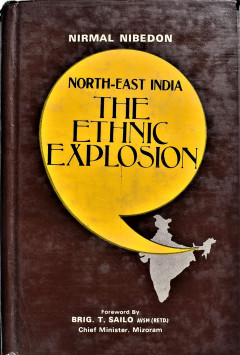
North East India the ethnic explosion
North East India: The Ethnic Explosion by Nirmal Nibedon (1981) is a seminal work analysing the rising tide of ethnic identity politics and communal tensions in India’s northeastern states. Nibedon warns of an “ethnic explosion,” noting that various tribal, linguistic, and racial minorities (especially those of Mongoloid stock) are increasingly mobilizing to assert their distinct identity…
- Edisi
- -
- ISBN/ISSN
- -
- Deskripsi Fisik
- xviii, 220 pages : illustrations ; 22 cm
- Judul Seri
- -
- No. Panggil
- 954.05 NIB n
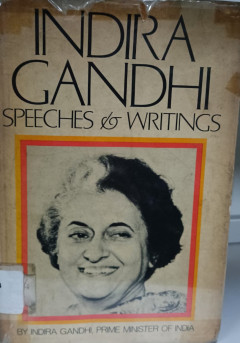
Indira Gandhi: Speeches & writings
Indira Gandhi: Speeches & Writings is a curated collection of speeches, statements, and reflections by Indira Gandhi, India’s first and only female Prime Minister. Originally published as India: The Speeches and Reminiscences of Indira Gandhi, the book provides insight into her political vision, leadership style, and perspectives on national development, foreign policy, social justice, and gl…
- Edisi
- -
- ISBN/ISSN
- 0-06-011407-X
- Deskripsi Fisik
- 221 pages ; 24 cm
- Judul Seri
- -
- No. Panggil
- 954.04 GAN i
 Karya Umum
  Filsafat
  Agama
Agama  Ilmu-ilmu Sosial
  Bahasa
  Ilmu-ilmu Murni
  Ilmu-ilmu Terapan
  Kesenian, Hiburan, dan Olahraga
  Kesusastraan
  Geografi dan Sejarah