Ditapis dengan

Leveraging Indonesia-Australia bilateral relations to enhance Indonesia's hum…
Indonesia’s partnership with Austria offers opportunities to strengthen human capital development and expand employment prospects for skilled Indonesian workers. However, maximizing these benefits requires stronger labor protection, vocational training aligned with Austrian standards, effective implementation of bilateral agreements, and mechanisms for skills transfer and reintegration. Based…
- Edisi
- -
- ISBN/ISSN
- -
- Deskripsi Fisik
- -
- Judul Seri
- -
- No. Panggil
- Sesparlu 76-2025

Migration diplomacy and labour-market access: the role of Indonesian diplomac…
Indonesia can leverage Europe’s growing demand for skilled workers to create safer, higher-value employment opportunities while strengthening skills development and national economic benefits. However, fragmented coordination between labour-market demand, qualification recognition, recruitment, and worker protection limits this potential. This policy brief recommends establishing a National S…
- Edisi
- -
- ISBN/ISSN
- -
- Deskripsi Fisik
- -
- Judul Seri
- -
- No. Panggil
- Sesparlu 79-2026

Strengthening Indonesia’s infrastructure diplomacy through internalizing Be…
Human capital as part of infrastructure diplomacy plays a significant role in achieving Indonesia’s diplomacy. Foreign Minister Retno Marsudi has highlighted that infrastructure diplomacy will be among the priorities of Indonesia’s foreign affairs. Therefore, it is important to strengthen Indonesia’s infrastructure diplomacy of human resources through various avenues. One of the avenues i…
- Edisi
- -
- ISBN/ISSN
- -
- Deskripsi Fisik
- -
- Judul Seri
- -
- No. Panggil
- Sesdilu 72-2022
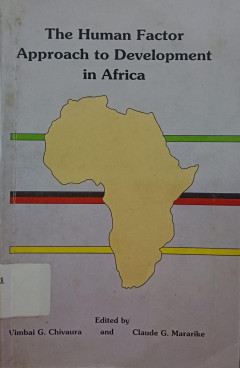
The Human factor approach to development in Africa
This book is a collection of essays exploring the concept of the "Human Factor" as a fundamental foundation for development in Africa. The authors argue that the failure of development programs on the continent is often due to a neglect of human qualities, moral responsibility, and local cultural values. The book emphasizes the importance of developing human character and integrity before imple…
- Edisi
- -
- ISBN/ISSN
- 0908307720
- Deskripsi Fisik
- xi, 240 pages ; 23 cm
- Judul Seri
- -
- No. Panggil
- 338.96 CHI h

In the era of human capital: The emergency of talent, intelligence, and knowl…
This book provides the insights and predictive tools every business will need to stay ahead of the game now that the rules have changed. Understanding how to take advantage of the opportunities of a transformed world--how to reshape business strategies, prepare organizations, plan investments, and adapt or change management methods--requires a breadth of vision few possess.
- Edisi
- -
- ISBN/ISSN
- 0-88730-506-7
- Deskripsi Fisik
- vi, 197 pages : illustrations (black and white) ; 25 cm.
- Judul Seri
- -
- No. Panggil
- 338.064 Cra i

Investing in human capital: A capital markets approach to student funding
This study recommends employing "human capital contracts" wherein students agree to pay a percentage of their income over time in exchange for funds to finance their education. The main difference between "human capital contracts" and loans is the variable value of the payments students make during the repayment period. Their financial consequences, of risk transfer from students to investors a…
- Edisi
- -
- ISBN/ISSN
- 0-521-82840-6
- Deskripsi Fisik
- xxiv, 224 pages ; 23 cm
- Judul Seri
- -
- No. Panggil
- 378.362 Lle i
 Karya Umum
 Filsafat
 Agama
 Ilmu-ilmu Sosial
 Bahasa
 Ilmu-ilmu Murni
 Ilmu-ilmu Terapan
 Kesenian, Hiburan, dan Olahraga
 Kesusastraan
 Geografi dan Sejarah