Ditapis dengan

King Fahd and Saudi Arabia's great evolution
King Fahd and Saudi Arabia’s Great Evolution is a historical‐analytical work that examines the transformation of Saudi Arabia under King Fahd’s leadership. Written by Nasser Ibrahim Rashid and Esber I. Shaheen, the book explores how the Kingdom evolved politically, socially, and economically during Fahd’s reign, especially emphasizing the impact of oil wealth, modernization, and interna…
- Edisi
- -
- ISBN/ISSN
- 0-940485-00-1
- Deskripsi Fisik
- v, 342 pages : illustration ; 24 cm
- Judul Seri
- -
- No. Panggil
- 953.8 RAS k

Koran, Kalashnikov and Laptop : The Neo-Taliban insurgency in Afghanistan
Since the Allied invasion of Afghanistan in 2002, the Bush administration has celebrated the imminent demise of the Taliban, with claims of a "moral and psychological defeat" playing a prominent role in the presidential elections of 2004. Some commentators suggested that "reconstruction and development" had won over the Afghan population, despite widespread criticism of the meager distribution …
- Edisi
- -
- ISBN/ISSN
- 978-1-85065-872-6
- Deskripsi Fisik
- xv, 259 pages : illustrations ; 23 cm
- Judul Seri
- -
- No. Panggil
- 958.1047 GIO k
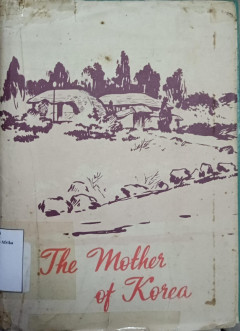
The Mother of Korea
The Mother of Korea presents the life story of Kang Pan-sok—Kim Il Sung's mother—from her family background in Chilgol/Mangyongdae, her role and life as a wife, mother, and caregiver and educator of her children during a crucial period in Korean history. This book describes her personal life and the importance of the role of the mother figure in the history of the country. As a "biographica…
- Edisi
- -
- ISBN/ISSN
- -
- Deskripsi Fisik
- 325 pages ; 21 cm
- Judul Seri
- -
- No. Panggil
- 951.9 FOR t

Apa sebab rakyat Aceh sanggup berperang puluhan tahun melawan agresi Belanda
Buku ini membahas faktor-faktor yang membuat rakyat Aceh mampu bertahan dan berperang selama puluhan tahun melawan agresi kolonial Belanda. A. Hasjmy menjelaskan bahwa kekuatan rakyat Aceh berakar pada semangat keagamaan, kepemimpinan ulama, struktur sosial masyarakat yang kuat, serta nilai-nilai kepahlawanan yang tertanam dalam budaya Aceh. Selain itu, buku ini menguraikan strategi perjuangan,…
- Edisi
- cet. 1
- ISBN/ISSN
- -
- Deskripsi Fisik
- 149 halaman : ilustrasi ; 21 cm
- Judul Seri
- -
- No. Panggil
- 959.8 HAS a

Indonesie In De Veiligheidsraad Van De Verenigde Naties (Februari - December …
This book is a collection of official documents concerning discussions on Indonesia at the United Nations Security Council from February to December 1949. Compiled and published by the Dutch Ministry of Foreign Affairs, this publication contains reports, minutes of meetings, statements by delegations, and resolutions related to the Indonesian-Dutch conflict during the Independence Revolution. T…
- Edisi
- -
- ISBN/ISSN
- -
- Deskripsi Fisik
- 470 pages; 21 cm
- Judul Seri
- -
- No. Panggil
- 959.8035 TIM i
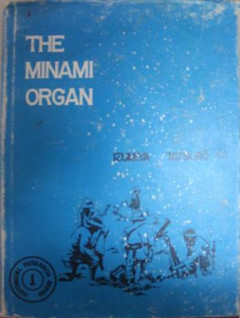
The minami organ
The Minami Organ explores the historical role of Minami Kikan, a Japanese intelligence and political operations agency active in Southeast Asia during the pre-war and wartime period. Written by Izumiya Tatsuro, the book provides detailed accounts of Japan’s political strategies, covert operations, and regional influence. This edition is an English translation by U Tun Aung Chain of the Univer…
- Edisi
- 1
- ISBN/ISSN
- -
- Deskripsi Fisik
- 214 pages : illustrations ; 24,5 cm
- Judul Seri
- -
- No. Panggil
- 959.105 TAT m
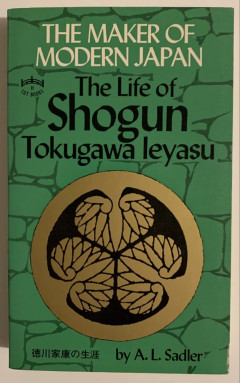
The marker of modern Japan : The Life of tokugawa ieyasu
The Maker of Modern Japan: The Life of Tokugawa Ieyasu presents an in-depth biography of Tokugawa Ieyasu, the founding shogun whose leadership laid the foundations for more than two centuries of peace and stability in Japan. The book traces Ieyasu’s early struggles, political alliances, and military strategies that enabled him to rise to power during Japan’s era of civil war. It highlights …
- Edisi
- 8
- ISBN/ISSN
- 0-8048-1297-7
- Deskripsi Fisik
- 429 pages : illustrations ; 18 cm
- Judul Seri
- -
- No. Panggil
- 952.025 SAD m
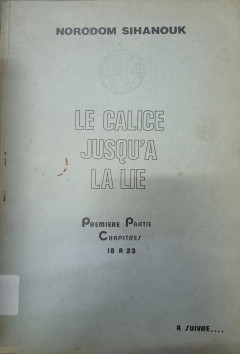
Le calice jusqu’a la lie : Premiere partie chapitres 39 A 54
Le Calice Jusqu’à la Lie – Première Partie, Chapitres presents a detailed and personal account of Cambodia’s political and social transformations as witnessed and experienced by the author. This first part traces the early stages of the nation’s crisis, highlighting key historical events, internal conflicts, and the growing tensions that shaped Cambodia’s modern trajectory. Through …
- Edisi
- -
- ISBN/ISSN
- -
- Deskripsi Fisik
- 40 pages ; 30 cm
- Judul Seri
- -
- No. Panggil
- 327.1596 SIH l
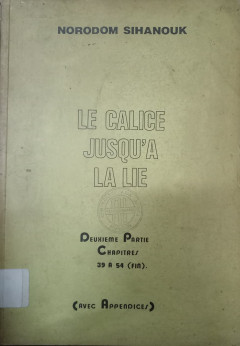
Le calice jusqu’a la lie : Deuxieme partie chapitres 18 A 23
Le Calice Jusqu’à la Lie – Deuxième Partie, Chapitres continues the author’s reflective and historical narrative on Cambodia’s political turmoil and national struggle. In this second part, the book explores pivotal events, personal testimonies, and political developments that shaped the nation during periods of conflict and transition. The chapters delve into the experiences of key fi…
- Edisi
- -
- ISBN/ISSN
- -
- Deskripsi Fisik
- 40 pages ; 30 cm
- Judul Seri
- -
- No. Panggil
- 327.1596 SIH l

Sideshow : Kissinger, Nixon and the destruction of Cambodia
Sideshow: Kissinger, Nixon and the Destruction of Cambodia examines the political decisions and covert military strategies carried out by the Nixon administration and Henry Kissinger during the Vietnam War, with a focus on their impact on Cambodia. The book reveals how secret bombings, military interventions, and diplomatic maneuvers contributed to the destabilization of Cambodia, ultimately pa…
- Edisi
- -
- ISBN/ISSN
- 0-671-23070-0
- Deskripsi Fisik
- 467 pages ; 24 cm
- Judul Seri
- -
- No. Panggil
- 959.70434 SHA s
 Karya Umum
  Filsafat
  Agama
Agama  Ilmu-ilmu Sosial
  Bahasa
  Ilmu-ilmu Murni
  Ilmu-ilmu Terapan
  Kesenian, Hiburan, dan Olahraga
  Kesusastraan
  Geografi dan Sejarah