Ditapis dengan

Histoire des relations internationales. Tome sixième : Le XIXᵉ siècle. II…
This sixth volume of the “Histoire des relations internationales” series examines the development of international relations between 1871 and 1914, a period when Europe reached the peak of its political and economic power. Pierre Renouvin describes the rivalries between major powers, the growth of nationalism, imperialism, the alliance system, and the various international crises that ultim…
- Edisi
- -
- ISBN/ISSN
- -
- Deskripsi Fisik
- 401 pages : illustration ; 22 cm
- Judul Seri
- -
- No. Panggil
- 327.090 REN h

Histoire des relations internationales. Tome cinquième : Le XIXᵉ siècle. …
This book is the fifth volume in the “Histoire des relations internationales” series written by Pierre Renouvin. In this volume, Renouvin examines the dynamics of international relations from 1815 to 1871, a period when Europe experienced the rise of nationalism, political restructuring after the Congress of Vienna, and the emergence of new powers on the international stage. The analysis co…
- Edisi
- -
- ISBN/ISSN
- -
- Deskripsi Fisik
- 421 pages : illustration ; 22 cm
- Judul Seri
- -
- No. Panggil
- 327.090 REN h

Histoire des relations internationales. Tome premier, Le Moyen Âge
This book is the first volume of the “Histoire des relations internationales” series, written under the direction of Pierre Renouvin. François-L. Ganshof examines the development of international relations during the Middle Ages, from the collapse of the Roman Empire to the end of the Middle Ages. The analysis covers the political interactions between kingdoms, churches, and empires, as we…
- Edisi
- -
- ISBN/ISSN
- -
- Deskripsi Fisik
- xvii, 331 pages : illustration ; 22 cm
- Judul Seri
- -
- No. Panggil
- 327.090 REN h
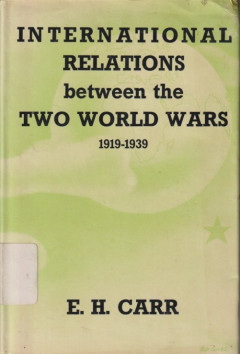
International relations between the two world wars 1919–1939
This book provides a comprehensive analysis of international relations during the interwar period from 1919 to 1939. E. H. Carr examines the political, economic, and diplomatic developments that shaped the fragile international order after World War I. The work discusses the consequences of the peace treaties, the rise of new power dynamics, and the failures of collective security leading to Wo…
- Edisi
- -
- ISBN/ISSN
- 0 333 08318 0
- Deskripsi Fisik
- viii, 302 pages : illustration ; 19 cm
- Judul Seri
- -
- No. Panggil
- 327.090 CAR i

The European Union: Politics and policies
This book provides an in-depth examination of the political systems, institutions, and policymaking processes of the European Union. John McCormick analyzes the historical development of the EU, its governing bodies, and the ways in which political decisions are made across member states. The third edition includes expanded coverage of EU enlargement, institutional reforms, and key policy areas…
- Edisi
- Edisi ketiga
- ISBN/ISSN
- 0-8133-4202-3
- Deskripsi Fisik
- 406 pages; 23 cm
- Judul Seri
- -
- No. Panggil
- 972.8273 MCC e

Worldmark encyclopedia of the nations: Europe (Volume 5)
The Worldmark Encyclopedia of the Nations: Europe (Volume 5, 1976 Edition) is a reference encyclopedia that provides essential information about the countries of the European region. Each country entry includes data on geography, government, economy, population, history, and social conditions. The book also includes an index and bibliography to facilitate information retrieval. As part of the i…
- Edisi
- -
- ISBN/ISSN
- 0-471-74833-1
- Deskripsi Fisik
- 336 pages : illustration ; 28 cm
- Judul Seri
- Worldmark Encyclopedia of the Nations
- No. Panggil
- 910.3 WOR w

Scandinavia
This comprehensive work by Franklin D. Scott provides an in-depth overview of the history, culture, politics, and societal development of the Scandinavian region, including Sweden, Norway, Denmark, Iceland, and Finland. As a revised and enlarged edition, the book explores the evolution of Scandinavian societies from their early origins to the modern era, highlighting their contributions to Euro…
- Edisi
- -
- ISBN/ISSN
- 0-674-79000-6
- Deskripsi Fisik
- x, 330 pages : illustration ; 24 cm
- Judul Seri
- -
- No. Panggil
- 948 SCO s

A History of political thought in the sixteenth century
This classic study by J. W. Allen examines the evolution of political thought in sixteenth-century Europe, a period marked by the Renaissance, the Reformation, and profound social and political transformation. The book explores major political theorists, their ideas, and the intellectual contexts that shaped debates about authority, the state, sovereignty, and religion. Allen provides detailed …
- Edisi
- -
- ISBN/ISSN
- -
- Deskripsi Fisik
- xxii, 527 pages ; 20,5 cm
- Judul Seri
- -
- No. Panggil
- 940.23 ALL h
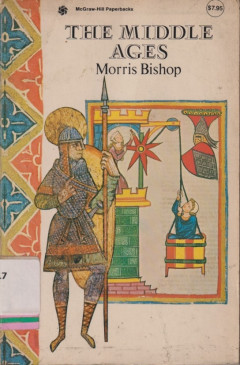
The Middle ages
This book by Morris Bishop provides an engaging and comprehensive overview of the Middle Ages in Europe. Written in a narrative style, it explores political events, social structures, cultural developments, daily life, and major figures that shaped medieval civilization. Bishop presents the era with vivid detail and clarity, offering both scholarly insights and accessible storytelling. The book…
- Edisi
- -
- ISBN/ISSN
- 07-005466-5
- Deskripsi Fisik
- 386 pages : illustration ; 21 cm
- Judul Seri
- -
- No. Panggil
- 940.1 BIS m

A History of Europe from 911 to 1198
This book by Z. N. Brooke provides a detailed account of European history from 911 to 1198, a formative period in the development of medieval Europe. It examines political, social, and religious transformations, including the rise of monarchies, the influence of the Church, the growth of feudal institutions, and the shaping of medieval society. The narrative offers insight into major events and…
- Edisi
- -
- ISBN/ISSN
- -
- Deskripsi Fisik
- xx, 553 pages : illustration ; 22 cm
- Judul Seri
- -
- No. Panggil
- 940.12 BRO h
 Karya Umum
 Filsafat
 Agama
 Ilmu-ilmu Sosial
 Bahasa
 Ilmu-ilmu Murni
 Ilmu-ilmu Terapan
 Kesenian, Hiburan, dan Olahraga
 Kesusastraan
 Geografi dan Sejarah