Ditapis dengan

Modern Egypt: The Formation of a nation-state
Modern Egypt: The Formation of a Nation-State provides a comprehensive historical study of Egypt’s political, social, and institutional transformation from the late eighteenth century to the modern era. Arthur Goldschmidt Jr. examines how Egypt evolved into a centralized nation-state through complex processes involving colonial influence, internal reform, nationalism, and socio-economic chang…
- Edisi
- -
- ISBN/ISSN
- 0-86531-182-X
- Deskripsi Fisik
- x, 211 pages ; 23,5 cm
- Judul Seri
- -
- No. Panggil
- 962 GOL m
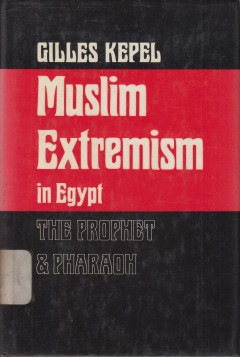
Muslim extremism in Egypt: The Prophet and pharaoh
“Muslim Extremism in Egypt: The Prophet and Pharaoh” provides a foundational analysis of the rise of radical Islamist movements in Egypt during the 1970s and early 1980s. Gilles Kepel explores the ideological roots, political context, and social dynamics that shaped militant groups, examining their interpretations of Islam, their confrontation with the Egyptian state, and the broader region…
- Edisi
- -
- ISBN/ISSN
- 0-520-05687-6
- Deskripsi Fisik
- 281 pages ; 21 cm
- Judul Seri
- -
- No. Panggil
- 322.10962 KEP m

White paper on the nationalisation of the Suez Maritime Canal company
This official White Paper, published by the Government of Egypt in August 1956, outlines the legal, political, and economic grounds for the nationalisation of the Suez Maritime Canal Company. Issued by the Ministry for Foreign Affairs, the document presents Egypt’s justification for reclaiming sovereignty over the Canal, the historical background of foreign control, and the government’s pos…
- Edisi
- -
- ISBN/ISSN
- -
- Deskripsi Fisik
- 72 pages ; 24 cm
- Judul Seri
- -
- No. Panggil
- 956.043 REP w

Party politics in Egypt: The Wafd & its rivals, 1919–1939
Party Politics in Egypt: The Wafd & Its Rivals, 1919–1939 provides an in-depth study of the political landscape of modern Egypt during the interwar period. Marius Deeb examines the emergence and evolution of the Wafd Party, its struggle for national independence, and its political rivalry with other parties and forces—including monarchists, palace factions, and British colonial interests. T…
- Edisi
- -
- ISBN/ISSN
- 0-903729-40-7
- Deskripsi Fisik
- 451 pages ; 22 cm
- Judul Seri
- -
- No. Panggil
- 324.2621 DEE b

The Ancient kingdoms of the Nile: And The Doomed monuments of Nubia
The Ancient Kingdoms of the Nile presents an accessible and richly illustrated exploration of the early civilizations that flourished along the Nile River, including Egypt and Nubia. Written by archaeologist Walter A. Fairservis, Jr., this volume provides a comprehensive account of the political, cultural, and artistic achievements of these ancient societies, as well as the archaeological disco…
- Edisi
- -
- ISBN/ISSN
- -
- Deskripsi Fisik
- 269 pages : illustration ; 18 cm
- Judul Seri
- -
- No. Panggil
- 932 FAI a

The Egypt story: Its Art, its monuments, its people, its history
The Egypt Story presents a richly illustrated exploration of Egypt’s ancient civilization, showcasing its art, monuments, people, and historical legacy. Featuring the photography of Fred J. Maroon and text by P. H. Newby, the book captures Egypt's architectural wonders, archaeological treasures, and cultural heritage through vivid images and scholarly commentary. It provides readers with an i…
- Edisi
- -
- ISBN/ISSN
- 0-8109-0920-0
- Deskripsi Fisik
- 259 pages : illustration ; 31 cm
- Judul Seri
- -
- No. Panggil
- 932 MAR e
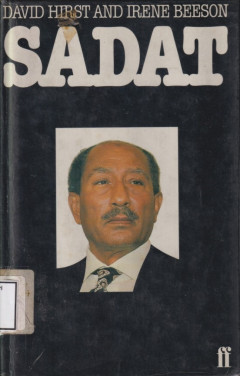
Sadat
This biography by David Hirst and Irene Beeson offers an in-depth and critical study of Anwar el-Sadat, the third president of Egypt and one of the most controversial leaders of the modern Middle East. The book traces Sadat’s early life, his role in the Free Officers Movement, and his unexpected rise to the presidency following the death of Gamal Abdel Nasser. It examines his political transf…
- Edisi
- -
- ISBN/ISSN
- 0–571–11690–6
- Deskripsi Fisik
- 384 pages ; 22,5 cm
- Judul Seri
- -
- No. Panggil
- 962.054 HIR s
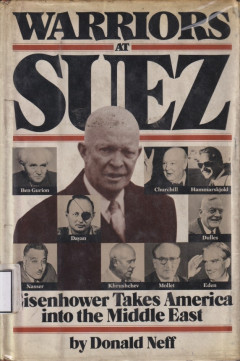
Warriors at suez
Warriors at Suez is Donald Neff’s detailed account of the 1956 Suez Crisis, one of the defining events in modern Middle Eastern and Cold War history. Through extensive research and compelling narrative, Neff examines the motivations and actions of Egypt, Britain, France, and Israel as they moved toward military confrontation following President Gamal Abdel Nasser’s nationalization of the Su…
- Edisi
- -
- ISBN/ISSN
- 0-671-41010-5
- Deskripsi Fisik
- 479 pages : illustration ; 24 cm
- Judul Seri
- -
- No. Panggil
- 956.044 NEF w

An Account of the manners and customs of the modern Egyptians: Written in Egy…
An Account of the Manners and Customs of the Modern Egyptians is a classic ethnographic study by Edward William Lane, based on his direct observations during his stay in Egypt from 1833 to 1835. The book provides a detailed and comprehensive description of Egyptian society in the 19th century, covering social structure, daily life, religious practices, ceremonies, clothing, customs, education, …
- Edisi
- -
- ISBN/ISSN
- 0-85692-010-X
- Deskripsi Fisik
- 583 pages : illustration ; 21,5 cm
- Judul Seri
- -
- No. Panggil
- 962.02 LAN a

Egypt after mubarak: Liberalism, islam, and democracy in the Arab world
Egypt After Mubarak examines the political dynamics shaping Egypt’s future in the early 21st century. Bruce K. Rutherford analyzes the competing forces of liberalism, political Islam, and state authoritarianism, focusing on their potential to influence democratic development in the Arab world’s most populous nation. Drawing on constitutional analysis, interviews, and the historical evolutio…
- Edisi
- -
- ISBN/ISSN
- 978-0-691-13665-3
- Deskripsi Fisik
- Deskripsi fisik : x, 292 pages ; 24 cm
- Judul Seri
- -
- No. Panggil
- 320.962 RUT e
 Karya Umum
  Filsafat
  Agama
Agama  Ilmu-ilmu Sosial
  Bahasa
  Ilmu-ilmu Murni
  Ilmu-ilmu Terapan
  Kesenian, Hiburan, dan Olahraga
  Kesusastraan
  Geografi dan Sejarah