Ditapis dengan

Meeting of the standing ministerial committee for economic cooperation of the…
This publication contains the final documents of the Meeting of the Standing Ministerial Committee for Economic Cooperation of the Non-Aligned Movement held in Bali from 10 to 13 May 1993. The volume includes resolutions, policy statements, and proposals addressing economic cooperation among developing countries within the framework of the Non-Aligned Movement. It highlights issues such as trad…
- Edisi
- -
- ISBN/ISSN
- -
- Deskripsi Fisik
- 91 pages ; 24 cm
- Judul Seri
- -
- No. Panggil
- 337.15 STA m
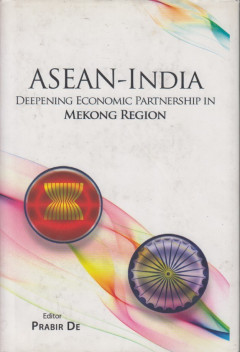
ASEAN–India: Deepening economic partnership in Mekong region
This book examines the evolving economic partnership between ASEAN and India, with a special focus on the Mekong region. It analyzes trade relations, regional connectivity, investment flows, and policy frameworks that shape cooperation between India and Southeast Asian countries. Through research-based chapters, the volume explores opportunities and challenges in deepening regional integration,…
- Edisi
- -
- ISBN/ISSN
- 81-7122-102-5
- Deskripsi Fisik
- xxxv, 314 pages : illustrations ; 23,5 cm
- Judul Seri
- -
- No. Panggil
- 337.159 RDE a
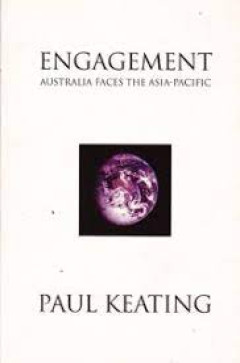
Engagement : Australia faces the Asia-Pacific
Engagement is Paul Keating's account of his involvement in Australia's foreign affairs, and his reflections on Australia's place in the world. It is a detailed look at the development of APEC; Australia's relationship with its largest neighbour, Indonesia; the role of the United States in the Asia-Pacific; China's re-entry into the world community; and the particular problems of Australia's sma…
- Edisi
- -
- ISBN/ISSN
- 0-7329-1019-6
- Deskripsi Fisik
- ix, 310 pages : illustrations : index ; 24 cm
- Judul Seri
- -
- No. Panggil
- 327.94 Kea e
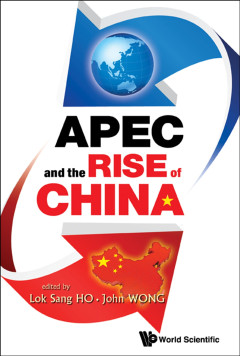
APEC and the rise of China
Intra-regional trade has been rising rapidly, especially after China's accession to the WTO in 2001. China's economy is expanding rapidly, and has already passed Japan in 2010 to become the world's second largest economy. It is clearly producing a huge impact on the world economy, and particularly on ASEAN countries. This is the appropriate time to take stock: what has APEC achieved so far? How…
- Edisi
- -
- ISBN/ISSN
- 978-981-4329-40-8
- Deskripsi Fisik
- xiii, 234 pages : illustrations (black and white) ; 24 cm
- Judul Seri
- -
- No. Panggil
- 337.59051 San a

The future of APEC and regionalism in Asia Pacific
This volume is a collection of recent essays on Asia Pacific economic cooperation and confronts some of the most pressing issues in trans-Pacific cooperation today. The phenomenal economic growth and development achieved during this current era of globalization has been accompanied by the contradictory forces of fragmentation and integration. Links between individuals are unprecedented and info…
- Edisi
- -
- ISBN/ISSN
- 979-8026-88-8
- Deskripsi Fisik
- v, 130 halaman : ilustrasi ; 24 cm
- Judul Seri
- -
- No. Panggil
- 337.1 Bor f

Sourcebook on the travel and tourism industry in the APEC Region
This book provides a list of key government and industry association contacts, ultimate responsibility for accuracy rest with original source cited, and also the following statistics and market profiles.
- Edisi
- -
- ISBN/ISSN
- -
- Deskripsi Fisik
- 163 pages : illustration (black and white) ; 30 cm.
- Judul Seri
- -
- No. Panggil
- 338.476 Tra s
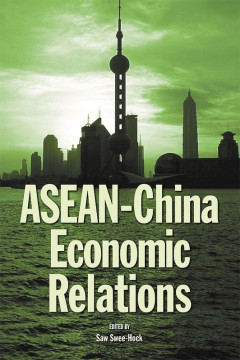
ASEAN-China economics relations
This book, a project of the ASEAN-China Study Programme of ISEAS, examines the rapidly expanding economic relations between ASEAN and China in recent years. The fifteen chapters discuss in considerable detail these relations in terms of many important topics such as trade, the ASEAN-China Free Trade Agreement (ACFTA), investments, services trade, energy cooperation, cooperation in developing th…
- Edisi
- Cet. 1
- ISBN/ISSN
- 978-981-230-408-7
- Deskripsi Fisik
- xi, 375 pages : illustrations (black and white) ; 23 cm
- Judul Seri
- -
- No. Panggil
- 337.1 Hoc a

APEC as an institution: Multilateral governance in the Asia-Pacific
APEC is an experimental multilateralism, relying not on a large bureaucracy but rather upon national government agencies, semi-autonomous inter-govermental committees and "virtual" associations. Organized around the principles of enforced through monitoring and robust compliance mechanisms. This volume assesses the strengths and weaknesses of APEC's "soft" institutionalism, and it's the credibi…
- Edisi
- -
- ISBN/ISSN
- 981-230-209-3
- Deskripsi Fisik
- xvi, 275 pages ; 23 cm
- Judul Seri
- -
- No. Panggil
- 337.1 Fei a
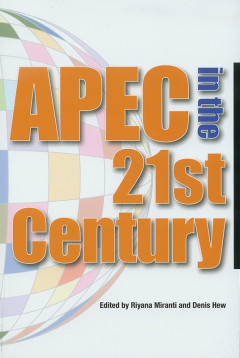
APEC in the 21st century
APEC is a unique organization that promotes economic cooperation in the Asia-Pacific region. It remains an informal intergovernmental organization that provides a useful platform for leaders, ministers, businessmen and experts to discuss regional issues on a regular basis. This book examines APECs accomplishments in recent years and the challenges it faces in the new century. These challenges i…
- Edisi
- -
- ISBN/ISSN
- 981-230-253-0
- Deskripsi Fisik
- xi, 302 pages ; 23 cm.
- Judul Seri
- -
- No. Panggil
- 382.095 Mir a

Perkembangan APEC dan dampaknya terhadap ASEAN serta upaya - upaya pemanfaata…
The development of APEC (Asia-Pacific Economic Cooperation) and its impact on ASEAN (Association of Southeast Asian Nations) has significant implications in the context of regional cooperation in Asia Pacific. Following are some important aspects of the development of APEC and its impact on ASEAN and efforts to exploit it
- Edisi
- -
- ISBN/ISSN
- -
- Deskripsi Fisik
- ix, 179 halaman ; 22 cm
- Judul Seri
- -
- No. Panggil
- 337. 1 Jam p
 Karya Umum
  Filsafat
  Agama
Agama  Ilmu-ilmu Sosial
  Bahasa
  Ilmu-ilmu Murni
  Ilmu-ilmu Terapan
  Kesenian, Hiburan, dan Olahraga
  Kesusastraan
  Geografi dan Sejarah