Ditapis dengan
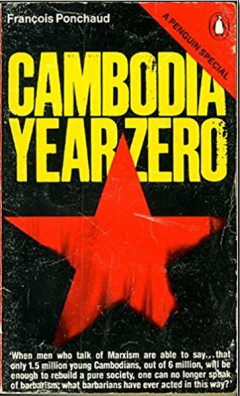
Cambodia year zero
Cambodia Year Zero documents the dramatic and devastating transformation of Cambodia following the rise of the Khmer Rouge in 1975. The book provides a detailed account of the regime’s radical policies, including forced evacuations, abolition of urban life, collectivization of agriculture, and the systematic dismantling of social, cultural, and political structures. Through eyewitness testimo…
- Edisi
- -
- ISBN/ISSN
- -
- Deskripsi Fisik
- 231 pages ; 18 cm
- Judul Seri
- -
- No. Panggil
- 959.604 PON c
Cambodia: 1975 - 1982
Presents a carefully researched analysis of the Democratic Kampuchea regime of Pol Pot and the Khmer Rouge (1975-79) and the early years of the People's Republic of Kampuchea (1979-89). This book presents a fresh interpretation based on the earliest primary sources - interviews with the Khmer people themselves.
- Edisi
- -
- ISBN/ISSN
- 0-89608-189-3
- Deskripsi Fisik
- xx, 369 pages ; 22 cm
- Judul Seri
- -
- No. Panggil
- 959.6 VIC c
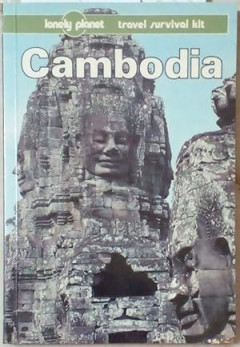
Cambodia : A Travel survival kit
Cambodia: A Travel Survival Kit serves as a comprehensive guide for travelers seeking practical information and cultural insight about Cambodia. The book provides essential details on transportation, accommodation, local customs, and key destinations, helping visitors navigate the country safely and efficiently. It also includes historical background, cultural notes, and advice on interacting w…
- Edisi
- -
- ISBN/ISSN
- 0-86442-174-5
- Deskripsi Fisik
- 122 pages : illustrations ; 19 cm
- Judul Seri
- -
- No. Panggil
- 915.96044 ROB c

The French presence in Cochinchina and Cambodia: Rule and response (1859–1905)
Milton E. Osborne's The French Presence in Cochinchina and Cambodia examines French colonial policy in Southeast Asia, particularly in Cochinchina (South Vietnam) and Cambodia, from 1859 to 1905. It examines the occupation process, colonial administration, the political relationship between France and local elites, and the forms of resistance and responses of local communities. Drawing on prima…
- Edisi
- -
- ISBN/ISSN
- 0-8014-0512-2
- Deskripsi Fisik
- xvi, 379 pages : illustration ; 21,5 cm
- Judul Seri
- -
- No. Panggil
- 959.6 OSB f
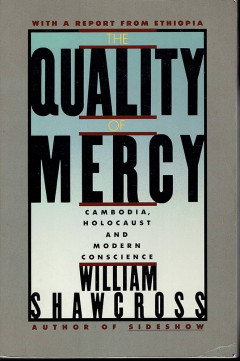
The quality of mercy: Cambodia, Holocaust and modern conscience
Study of the role of developed countries, the role of UN (UN and specialized agencies) and of nongovernmental organizations in providing emergency relief and food aid to alleviate hunger in Cambodia in 1979 - examines the functioning of responsible agencies in response to a disaster, the economic implications and political problems involved; discusses the conflict between politics and humanitar…
- Edisi
- -
- ISBN/ISSN
- 0-671-44022-5
- Deskripsi Fisik
- 464 pages : bibliography, index ; 25 cm
- Judul Seri
- -
- No. Panggil
- 959.604 SHA q

Participatory monitoring of humanitarian mine action: Giving voice to citizen…
Since its entry into force on 1 March 1999, the Mine Ban Treaty (MBT) has been successful in attaining its aim of abolishing anti-personnel landmines. However, in terms of mine victim assistance, another goal sanctioned by the treaty, results have been much less heartening. This may be partially due to the weakness of existing formal monitoring of victim assistance mechanisms that fail to expos…
- Edisi
- -
- ISBN/ISSN
- 92-9045-146-7
- Deskripsi Fisik
- xiii, 107 pages : color illustrations ; 21 cm
- Judul Seri
- -
- No. Panggil
- 327.1743 Wil p

We didn't start the fire : My struggle for democracy in Cambodia
Cambodia's long-time opposition leader and former finance minister Sam Rainsy is committed to establishing democracy in his homeland. He is in exile in France to avoid a twelve-year prison sentence on politically motivated charges and is banned from contesting the July 2013 elections. In this autobiography he recounts his early years in Cambodia, his family's expulsion, his relationship with Si…
- Edisi
- -
- ISBN/ISSN
- 978-616-215-063-0
- Deskripsi Fisik
- x, 210 pages : index ; 21 cm
- Judul Seri
- -
- No. Panggil
- 321.8 Rai w
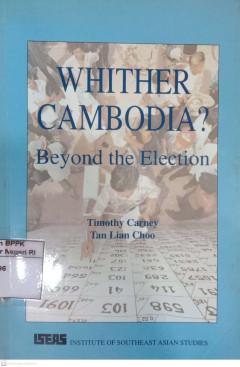
Whither Cambodia: Beyond the election
The international community as a whole and ASEAN in particular have paid in diplomatic and political capital, in dollars and in blood to effect a solution to the Cambodia problem that works. Singapore led a successful diplomatic pressure campaign throughout the dec- ade after Vietnamese forces chased the Democratic Kampuchea regime from Phnom Penh.
- Edisi
- -
- ISBN/ISSN
- 981-3016-62-0
- Deskripsi Fisik
- 51 pages ; 23 cm
- Judul Seri
- -
- No. Panggil
- 324.69596 Car w

The Khmers: The peoples of South-East Asia and the Pacific
This is a history of the Khmers, the people who for thousands of years inhabited the wooded interior of Cambodia. One hundred and fifty years ago the representatives of imperial France were astonished to find half-buried within the jungle the still magnificent ruins of vast temples. Justly described as one of the wonders of the world, these were the remnants of the once great Angkor empire. Sin…
- Edisi
- -
- ISBN/ISSN
- 0-631-20298-6
- Deskripsi Fisik
- x, 289 pages ; 23 cm
- Judul Seri
- -
- No. Panggil
- 959.6 Mab k
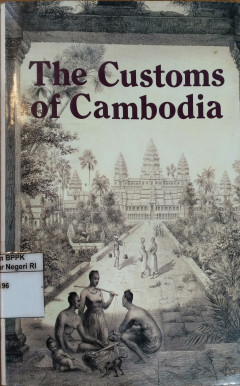
The customs of Cambodia
This book contains about: 1. The walled city 2. Cambodian dwellings 3. Clothing 4. Functionaries 5. The three religious groups 6. The natives 7. Childbirth 8. Maidenhood etc.
- Edisi
- Ed. 2
- ISBN/ISSN
- 974-8359-68-9
- Deskripsi Fisik
- xx, 73 pages : illustrations ; 22 cm
- Judul Seri
- -
- No. Panggil
- 392 Kua c
 Karya Umum
  Filsafat
  Agama
Agama  Ilmu-ilmu Sosial
  Bahasa
  Ilmu-ilmu Murni
  Ilmu-ilmu Terapan
  Kesenian, Hiburan, dan Olahraga
  Kesusastraan
  Geografi dan Sejarah