Ditapis dengan
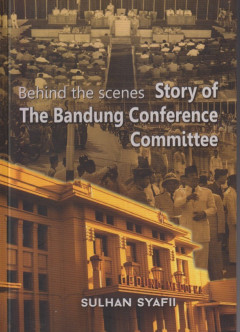
Behind the scenes: Story of the Bandung conference committee
This book presents an inside look at the organizing committee behind the historic 1955 Bandung Conference. Written by Sulhan Syafii, it explores the preparation, coordination, and behind-the-scenes efforts that shaped one of the most important diplomatic gatherings of the twentieth century. Through research contributions from multiple team members, the book highlights the roles, challenges, and…
- Edisi
- -
- ISBN/ISSN
- -
- Deskripsi Fisik
- viii, 166 pages : illustrations ; 21 cm
- Judul Seri
- -
- No. Panggil
- 327.172 SYA b

The Bandung connection: The Asia-Africa conference in Bandung in 1955
This book presents a detailed account of the 1955 Asia-Africa Conference held in Bandung, Indonesia, written by Dr. Roeslan Abdulgani, one of the key figures behind the historic event. It explores the political background, preparation, major participants, and the global significance of the conference, which later became the foundation of the Non-Aligned Movement. Translated into English by Moll…
- Edisi
- 2
- ISBN/ISSN
- 9971-927-01-2
- Deskripsi Fisik
- viii, 195 pages : illustrations ; 21 cm
- Judul Seri
- -
- No. Panggil
- 327.172 ABD b
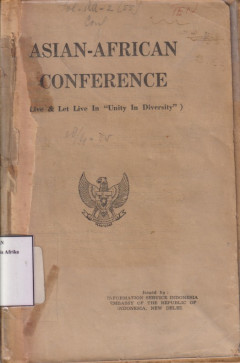
Asian-African conference: Live and let live in “Unity in diversity”
This publication presents an overview of the Asian-African Conference and its guiding principle, “Live and Let Live in Unity in Diversity.” It highlights the historical background, political significance, and outcomes of the 1955 Bandung Conference, which brought together leaders from Asia and Africa to promote peace, solidarity, and cooperation among newly independent nations. The book emp…
- Edisi
- -
- ISBN/ISSN
- -
- Deskripsi Fisik
- 302 pages : illustrations ; 20,5 cm
- Judul Seri
- -
- No. Panggil
- 327.172 COM a
Final communiqué of the Asian-African conference
This volume contains the full text of the Final Communiqué of the 1955 Asian-African Conference, presented in multiple languages and published in April 1985 to commemorate the thirtieth anniversary of the Bandung Conference. The communiqué outlines the principles, resolutions, and collective commitments adopted by the participating nations, including solidarity among developing countries, ant…
- Edisi
- -
- ISBN/ISSN
- -
- Deskripsi Fisik
- 6 pages ; 30 cm
- Judul Seri
- -
- No. Panggil
- 327.172 NAT f
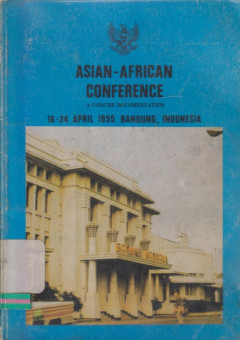
Asian-African Conference: A Concise Documentation
This concise documentation provides an overview of the historic Asian-African Conference held in Bandung, Indonesia, on 18–24 April 1955. Published by the Department of Information of the Republic of Indonesia, the book summarizes key events, participating countries, resolutions, speeches, and the political context that shaped the conference. It highlights the emergence of Asian-African solid…
- Edisi
- -
- ISBN/ISSN
- -
- Deskripsi Fisik
- 86 pages : illustrations ; 21 cm
- Judul Seri
- -
- No. Panggil
- 327.095 TIM a
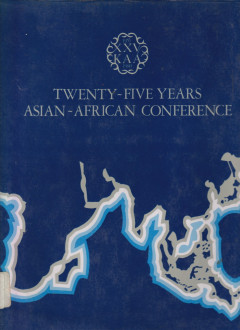
Twenty-Five years Asian-African Conference
This commemorative volume, published by the Department of Foreign Affairs of the Republic of Indonesia in 1980, marks the twenty-fifth anniversary of the 1955 Asian-African Conference held in Bandung. The book reviews the historical background, achievements, and global impact of the Conference, which gathered leaders from Asia and Africa to promote solidarity, anti-colonialism, and internationa…
- Edisi
- -
- ISBN/ISSN
- -
- Deskripsi Fisik
- 175 pages : illustrations ; 31 cm
- Judul Seri
- -
- No. Panggil
- 327.172 DEP t

The Bandung Conference and Japan’s Return to Asia: Between the United State…
This book examines Japan’s diplomatic position during the early Cold War, focusing on its participation and political stance surrounding the 1955 Bandung Conference. Miyashiro analyzes Japan’s attempt to reintegrate into Asia while balancing pressure from the United States and its own regional ambitions. The work provides insight into Japan’s foreign policy transformation, regional identi…
- Edisi
- -
- ISBN/ISSN
- 9784794210357
- Deskripsi Fisik
- vii, 229 pages ; 19,5 cm
- Judul Seri
- -
- No. Panggil
- 327.52 DAI b

Sejarah, cita-cita dan pengaruhnya Konperensi Asia–Afrika Bandung
Buku Sejarah, Cita-cita dan Pengaruhnya Konperensi Asia–Afrika Bandung merupakan transkripsi ceramah Dr. H. Roeslan Abdulgani, tokoh utama penyelenggaraan KAA 1955. Disampaikan pada 26 Oktober 1974 di Gedung Kebangkitan Nasional Jakarta, ceramah ini menguraikan latar belakang lahirnya Konferensi Asia–Afrika, tujuan dan cita-cita para pendirinya, serta pengaruh KAA bagi perkembangan solidari…
- Edisi
- -
- ISBN/ISSN
- -
- Deskripsi Fisik
- 35 halaman : ilustrasi ; 20,5 cm
- Judul Seri
- -
- No. Panggil
- 327.17 ABD s
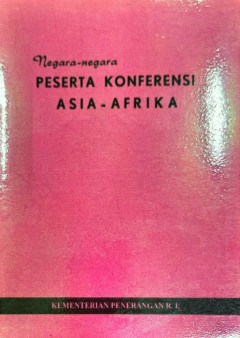
Negara-negara peserta Konferensi Asia-Afrika
Buku Negara-Negara Peserta Konferensi Asia–Afrika merupakan publikasi resmi Kementerian Penerangan Republik Indonesia yang berisi uraian ringkas mengenai negara-negara yang hadir dalam Konferensi Asia–Afrika tahun 1955 di Bandung. Buku ini menyajikan profil setiap negara peserta, termasuk struktur pemerintahan, latar belakang politik, kondisi ekonomi, serta posisi mereka dalam dinamika inte…
- Edisi
- -
- ISBN/ISSN
- -
- Deskripsi Fisik
- 170 halaman: ilustrasi; 22 cm
- Judul Seri
- -
- No. Panggil
- 327 TIM n

Histoire de l’Afro-Asiatism jusqu’à Bandung : La naissance du Tiers-Monde
This book explores the historical development of the Afro-Asian movement leading up to the 1955 Bandung Conference, considered a foundational moment in the emergence of the Third World. Pierre Queuille traces the political, cultural, and ideological forces that shaped Afro-Asian solidarity during the mid-20th century. Through a historical analysis of decolonization, international diplomacy, and…
- Edisi
- -
- ISBN/ISSN
- -
- Deskripsi Fisik
- 326 pages ; 22,5 cm
- Judul Seri
- -
- No. Panggil
- 327.17 QUE h
 Karya Umum
  Filsafat
  Agama
Agama  Ilmu-ilmu Sosial
  Bahasa
  Ilmu-ilmu Murni
  Ilmu-ilmu Terapan
  Kesenian, Hiburan, dan Olahraga
  Kesusastraan
  Geografi dan Sejarah