Ditapis dengan
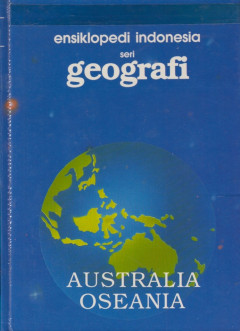
Ensiklopedi Indonesia seri geografi: Australia & Oseania
Ensiklopedi Seri Indonesia: Geografi – Australia & Oseania menyajikan informasi mengenai kondisi geografis kawasan Australia dan negara-negara di Oseania. Pembahasan meliputi iklim, bentang alam, flora dan fauna, masyarakat, serta karakteristik fisik tiap negara. Buku ini disusun sebagai rujukan untuk pelajar, guru, dan masyarakat umum yang membutuhkan pengetahuan dasar mengenai wilayah Austr…
- Edisi
- -
- ISBN/ISSN
- -
- Deskripsi Fisik
- 272 halaman : ilustrasi ; 26,5 cm
- Judul Seri
- -
- No. Panggil
- 919 ICH e

The War in the air 1914–1994: The Proceedings of a conference held by the R…
This book is a collection of conference proceedings held by the Royal Australian Air Force (RAAF) in Canberra in March 1994 to discuss the development of air warfare from 1914 to 1994. In it, military experts and practitioners discuss the history, strategy, and theory of air power, as well as the role of technology in modern air operations. The proceedings highlight the evolution of air power t…
- Edisi
- -
- ISBN/ISSN
- 0 642 20180 3
- Deskripsi Fisik
- xviii, 368 pages ; 26 cm
- Judul Seri
- -
- No. Panggil
- 358.40994 STE w
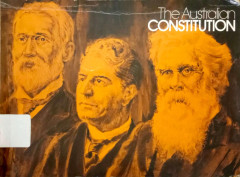
The Australian constitution
The Australian Constitution by Geoffrey Sawer provides a concise and authoritative explanation of the origins, structure, and functioning of Australia’s constitutional system. Written by a leading legal scholar, the book outlines the historical development of the Constitution, the roles of key founding figures, and the principles that shape federal governance in Australia. It serves as an acc…
- Edisi
- -
- ISBN/ISSN
- -
- Deskripsi Fisik
- 159 pages : illustration ; 17,5 cm
- Judul Seri
- -
- No. Panggil
- 342.94 SAW a
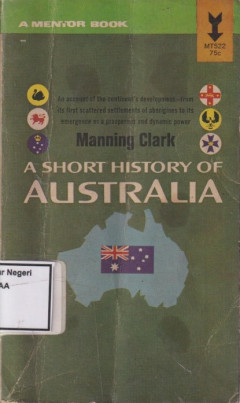
A Short history of Australia
A Short History of Australia presents a concise overview of Australia’s development from early European exploration to the emergence of a modern nation. Manning Clark traces the social, political, and cultural forces that shaped Australia’s identity, highlighting key events, influential figures, and the evolution of national consciousness. Written in an accessible style, the book offers rea…
- Edisi
- -
- ISBN/ISSN
- -
- Deskripsi Fisik
- 256 pages ; 18 cm
- Judul Seri
- -
- No. Panggil
- 994 CLA s
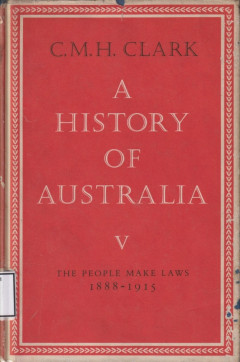
A History of Australia, Volume V
Volume V of C. M. H. Clark’s seminal series traces the political, legal, and social transformation of Australia between 1888 and 1915. In this period, Australians increasingly shaped their own laws, institutions, and national identity. Clark examines the debates surrounding federation, the rise of organized labour, democratic reforms, and the tensions between conservative and progressive visi…
- Edisi
- 5
- ISBN/ISSN
- 0-522-84223-2
- Deskripsi Fisik
- xv, 448 pages : illustration ; 24 cm
- Judul Seri
- -
- No. Panggil
- 994.03 CLA h
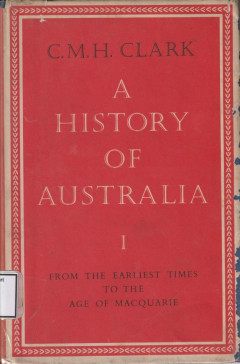
A History of Australia, Volume I
This first volume of A History of Australia presents a comprehensive narrative of the continent’s early history up to the year 1821. Clark examines the origins of European exploration, the establishment of the first British colonies, the social and political structures that emerged, and the interactions between settlers and Indigenous peoples. Through detailed archival research, the book trac…
- Edisi
- 1
- ISBN/ISSN
- 0-522-84008-6
- Deskripsi Fisik
- 422 pages : illustration ; 24 cm
- Judul Seri
- -
- No. Panggil
- 994 CLA h
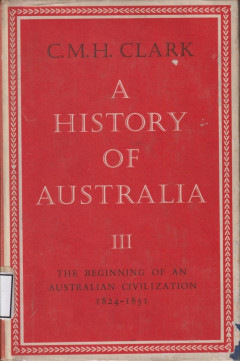
A History of Australia, Volume III
This third volume of A History of Australia explores the formative years of Australian civilization between 1824 and 1851. C. M. H. Clark examines the political, social, and cultural transformations that shaped the colonies during this period, including the development of colonial government, the growth of settler society, economic expansion, and complex interactions between European settlers a…
- Edisi
- 3
- ISBN/ISSN
- 0-522-84054-X
- Deskripsi Fisik
- xv, 491 pages : illustration ; 24 cm
- Judul Seri
- -
- No. Panggil
- 994 CLA h
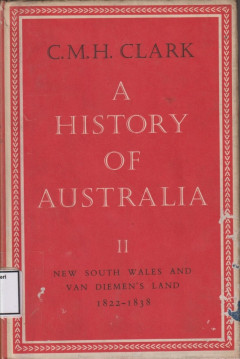
A History of Australia, Volume II
This second volume of A History of Australia covers the critical years between 1822 and 1838, tracing the social, political, and administrative evolution of the Australian colonies. Clark examines the growth of New South Wales and Van Diemen’s Land, the transformation of penal settlements, the development of local governance, and the tensions between authority and emerging settler society. Dr…
- Edisi
- 2
- ISBN/ISSN
- 0-522-84166-X
- Deskripsi Fisik
- 364 pages : illustration ; 24 cm
- Judul Seri
- -
- No. Panggil
- 994.03 CLA h
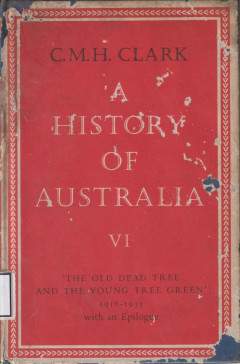
A History of Australia, Volume VI
This sixth volume of C. M. H. Clark’s monumental “A History of Australia” explores the nation’s political, cultural, and social transformations from 1916 to 1935. Through the metaphor of “the old dead tree and the young tree green,” Clark examines the tensions between tradition and emerging modern identities in Australia during the interwar years. The book traces shifts in national …
- Edisi
- 6
- ISBN/ISSN
- 0-522-84352-2
- Deskripsi Fisik
- xvi, 522 pages : illustration ; 24 cm
- Judul Seri
- -
- No. Panggil
- 994.04 CLA h

Looking north to South-East Asia: The View from Australia
This volume examines Australia’s evolving perspectives toward the nations of South-East Asia during the mid-twentieth century. Bringing together analyses by multiple contributors, the book discusses political, strategic, economic, and diplomatic factors that shaped Australia’s regional outlook. It explores the historical context of Australia’s relationship with its northern neighbors, ass…
- Edisi
- -
- ISBN/ISSN
- 0-8248-0531-3
- Deskripsi Fisik
- x, 278 halaman ; 22 cm
- Judul Seri
- -
- No. Panggil
- 327.94059 WOL l
 Karya Umum
  Filsafat
  Agama
Agama  Ilmu-ilmu Sosial
  Bahasa
  Ilmu-ilmu Murni
  Ilmu-ilmu Terapan
  Kesenian, Hiburan, dan Olahraga
  Kesusastraan
  Geografi dan Sejarah