Ditapis dengan
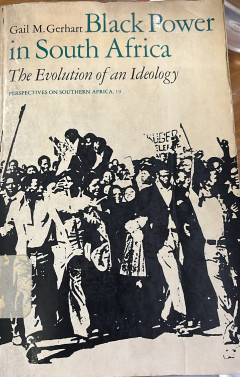
Black power in South Africa: The evolution of an ideology
This book examines the rise and development of the Black Power movement in South Africa as an ideological response to apartheid and racial domination. Written by Gail M. Gerhart, the work traces the historical roots, philosophical foundations, and political impact of Black Consciousness and related movements from the 1960s onward. Through detailed analysis, the author explores how Black Power s…
- Edisi
- -
- ISBN/ISSN
- 0-520-03933-5
- Deskripsi Fisik
- xi, 364 pages ; 22 cm
- Judul Seri
- -
- No. Panggil
- 968.06 GER b

Gott segne Afrika : Texte und Predigten des Friedensnobelpreisträgers
This book is a collection of texts, sermons, and reflections by Desmond Tutu, Nobel Peace Prize laureate and leading moral voice in the struggle against apartheid in South Africa. Written during a period of intense political repression, the work combines theological insight with sharp social critique, emphasizing justice, reconciliation, and human dignity. Tutu addresses the moral responsibilit…
- Edisi
- -
- ISBN/ISSN
- 3-499-15626-1
- Deskripsi Fisik
- 155 pages : Illustrations ; 19 cm
- Judul Seri
- -
- No. Panggil
- 968.065 TUT g

Apartheid : A Graphic guide
This book presents a concise and accessible introduction to apartheid in South Africa through a graphic narrative format. Written by Donald Woods and illustrated by Mike Bostock, it explains the origins, ideology, and implementation of apartheid policies, as well as their social, political, and human consequences. Using visual storytelling, the book highlights racial segregation, state violence…
- Edisi
- -
- ISBN/ISSN
- 0-8050-0609-5
- Deskripsi Fisik
- 148 pages : illustrations ; 21 cm
- Judul Seri
- -
- No. Panggil
- 968.065 WOO a

Fight against apartheid : India’s pioneering role in the world campaign aga…
This book examines India’s pioneering role in the global struggle against apartheid and racial discrimination in South Africa. Written by T. G. Ramamurthi, the work highlights India’s diplomatic, political, and moral leadership in mobilizing international opposition to apartheid through the United Nations and other global forums. The book documents historical developments, policy initiative…
- Edisi
- -
- ISBN/ISSN
- -
- Deskripsi Fisik
- 191 pages ; 22 cm
- Judul Seri
- -
- No. Panggil
- 325.26 RAM f

Apartheid and the homelands in South Africa
Apartheid and the Homelands in South Africa: A New Zealander’s View presents an external and independent perspective on the apartheid system and the creation of “homelands” (Bantustans) in South Africa. Written from the viewpoint of a New Zealand observer, the book analyzes how apartheid policies shaped racial segregation, political control, and socio-economic inequality. It examines the …
- Edisi
- -
- ISBN/ISSN
- -
- Deskripsi Fisik
- 39 pages : illustrations : 21 cm
- Judul Seri
- -
- No. Panggil
- 968.9704 LAN a
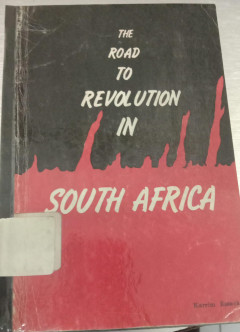
The Road to revolution in South Africa
This book examines the journey to revolution in South Africa during the apartheid era. Karrim Essack outlines the political conditions, social structures, racial injustice, and the development of the liberation movement that opposed the apartheid regime. Through historical and political analysis, the book provides an overview of the factors that drove popular resistance, the strategies of the s…
- Edisi
- -
- ISBN/ISSN
- -
- Deskripsi Fisik
- 118 pages; 21 cm
- Judul Seri
- -
- No. Panggil
- 968 ESS r
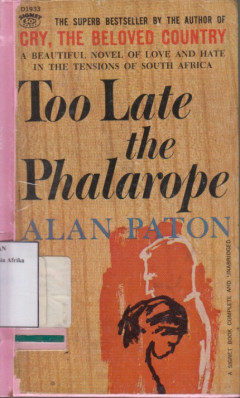
Too Late the phalarope
Too Late the Phalarope is a novel by South African writer Alan Paton that tells the tragic story of Pieter van Vlaanderen, a respected policeman whose life begins to collapse after he commits a forbidden act under apartheid law. Through themes of guilt, moral struggle, family pressure, and racial injustice, the novel portrays the destructive force of apartheid on individuals and society. Narrat…
- Edisi
- -
- ISBN/ISSN
- -
- Deskripsi Fisik
- 190 pages ; 18 cm
- Judul Seri
- -
- No. Panggil
- 823.914 PAT l

The Sun will rise: Statements from the dock by Southern African political pri…
The Sun Will Rise is a powerful collection of statements made in court by Southern African political prisoners during the apartheid era. Edited by Mary Benson, the volume documents the voices of individuals charged under oppressive legislation in South Africa and neighboring countries. These statements reveal the moral, political, and personal convictions of activists who resisted racial segre…
- Edisi
- -
- ISBN/ISSN
- 0-904759-43-1
- Deskripsi Fisik
- 80 pages : illustration ; 21 cm
- Judul Seri
- -
- No. Panggil
- 323.26 BEN s
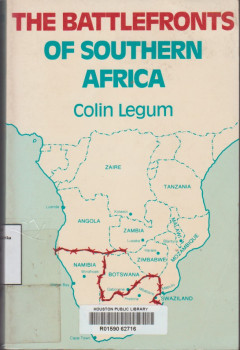
The Battlefronts of Southern Africa
he Battlefronts of Southern Africa by Colin Legum provides a detailed examination of the political and military struggles that shaped Southern Africa during the late twentieth century. Drawing on material previously published in Africa Contemporary Record, the book analyzes regional conflicts, South Africa’s foreign policy under apartheid, and the liberation movements that arose in neighborin…
- Edisi
- -
- ISBN/ISSN
- 0-8419-1135-5
- Deskripsi Fisik
- xxix, 451 pages : illustration ; 23 cm
- Judul Seri
- -
- No. Panggil
- 327.68 LEG b
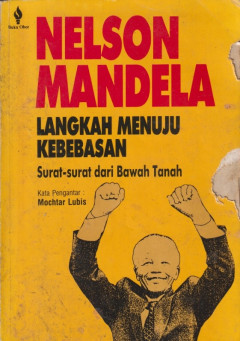
Langkah menuju kebebasan: Surat-surat dari bawah tanah
This book is a collection of Nelson Mandela's writings and letters written before and during the underground struggle against apartheid in South Africa. Through these writings, Mandela explains his views on racial injustice, the oppression of Black people, and the urgent need to fight for freedom and equality. This Indonesian translation presents important reflections on Mandela's political str…
- Edisi
- -
- ISBN/ISSN
- 979-461-129-8
- Deskripsi Fisik
- xvii, 214 pages ; 20,5 cm
- Judul Seri
- -
- No. Panggil
- 305.567 MAN l
 Karya Umum
  Filsafat
  Agama
Agama  Ilmu-ilmu Sosial
  Bahasa
  Ilmu-ilmu Murni
  Ilmu-ilmu Terapan
  Kesenian, Hiburan, dan Olahraga
  Kesusastraan
  Geografi dan Sejarah