Ditapis dengan

Black Power
Black Power is Richard Wright’s powerful travel narrative documenting his journey through the Gold Coast (now Ghana) during the rise of African nationalism. Through firsthand observation, Wright explores colonial structures, racial politics, cultural identity, and the struggles of African people toward independence. Blending reportage, political analysis, and personal reflection, the book pro…
- Edisi
- -
- ISBN/ISSN
- 978-0-06-145018-6
- Deskripsi Fisik
- xiii, 812 pages : illustrations ; 20 cm
- Judul Seri
- -
- No. Panggil
- 303.484096 WRI b
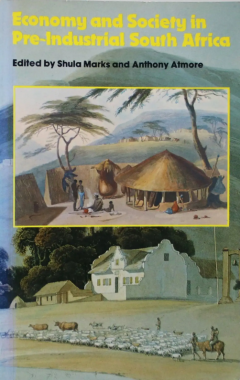
Economy and society in pre-industrial South Africa
Over the past forty years there has been a revolution in South African historiography, yet no broadly interpretative essay on South African history has appeared. The essays in this volume aim to provide such a reinterpretation for the nineteenth century before the discovery of minerals transformed the nature of South African societies, and help to shed light on earlier phases of South Africa's …
- Edisi
- -
- ISBN/ISSN
- 0-582-64656-1
- Deskripsi Fisik
- 385 pages ; 22 cm
- Judul Seri
- -
- No. Panggil
- 330.68 MAR e

Apartheid and the homelands in South Africa
Apartheid and the Homelands in South Africa: A New Zealander’s View presents an external and independent perspective on the apartheid system and the creation of “homelands” (Bantustans) in South Africa. Written from the viewpoint of a New Zealand observer, the book analyzes how apartheid policies shaped racial segregation, political control, and socio-economic inequality. It examines the …
- Edisi
- -
- ISBN/ISSN
- -
- Deskripsi Fisik
- 39 pages : illustrations : 21 cm
- Judul Seri
- -
- No. Panggil
- 968.9704 LAN a
The Museum of the Asian-African Conference, an expanded role
This paper examines the role of the Museum of the Asian-African Conference (MKAA) in revitalizing the spirit of cooperation among the global south. The Bandung Conference, also known as the Asian-African Conference, held in 1955, aimed to create an international forum representing the common interests of colonized countries and to change the political dynamics of the time. The conference addres…
- Edisi
- -
- ISBN/ISSN
- -
- Deskripsi Fisik
- -
- Judul Seri
- -
- No. Panggil
- Sesdilu 74-2023

Cultivating cooperation: A strategic framework for Indonesia – Africa agric…
This paper proposes a strategic framework to strengthen agricultural partnerships between Indonesia and Africa. Relations between both regions are rooted in the 1955 Asian–African Conference and sustained through South–South and Triangular Cooperation (SSTC), knowledge exchange, and capacity building. Although Indonesia brings agricultural expertise and Africa offers vast fertile lands and …
- Edisi
- -
- ISBN/ISSN
- -
- Deskripsi Fisik
- -
- Judul Seri
- -
- No. Panggil
- Sesdilu 79-2025

Sub-Saharan Africa as strategic posts for Indonesian Diplomats
The overseas assignments of diplomats in the Indonesian Missions in Sub-Saharan Africa remain one of the Ministry of Foreign Affairs' human resource issues. The lack of interest among diplomats to be deployed to the region has resulted in lengthy vacancies, which has a negative impact on the performance of the affected missions. The situation is ironic, given that the Indonesian government has …
- Edisi
- -
- ISBN/ISSN
- -
- Deskripsi Fisik
- -
- Judul Seri
- -
- No. Panggil
- Sesparlu 73-2023
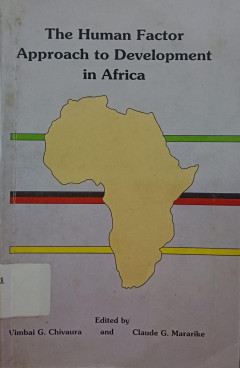
The Human factor approach to development in Africa
This book is a collection of essays exploring the concept of the "Human Factor" as a fundamental foundation for development in Africa. The authors argue that the failure of development programs on the continent is often due to a neglect of human qualities, moral responsibility, and local cultural values. The book emphasizes the importance of developing human character and integrity before imple…
- Edisi
- -
- ISBN/ISSN
- 0908307720
- Deskripsi Fisik
- xi, 240 pages ; 23 cm
- Judul Seri
- -
- No. Panggil
- 338.96 CHI h

Turning points in history book 3: Mogration land and minerals inn the making …
The book examines how migration, land distribution, and the mining industry played pivotal roles in shaping the history and development of South Africa. Through a focus on historical events and policy decisions, it explores the socio-political impact of these factors on South African society.
- Edisi
- -
- ISBN/ISSN
- 1-919855-31-9
- Deskripsi Fisik
- 80 pages : illustrations ; 24 cm
- Judul Seri
- -
- No. Panggil
- 968 NAS t
Asia and Africa: Fundamental changes
A collection of analytical essays discussing major political, social, and economic transformations occurring in Asia and Africa during the mid-twentieth century. Edited by Soviet scholars, the book examines decolonization, national liberation movements, and the emergence of newly independent states. It highlights ideological, cultural, and geopolitical shifts that shaped Asia-Africa relations i…
- Edisi
- -
- ISBN/ISSN
- -
- Deskripsi Fisik
- 384 pages ; 16,5 cm
- Judul Seri
- -
- No. Panggil
- 327.5 PAV a
 Karya Umum
 Filsafat
 Agama
 Ilmu-ilmu Sosial
 Bahasa
 Ilmu-ilmu Murni
 Ilmu-ilmu Terapan
 Kesenian, Hiburan, dan Olahraga
 Kesusastraan
 Geografi dan Sejarah