Ditapis dengan

Introducing Ireland
Contents: 1. Finding focus 2. Above politics 3. On politics 4. Government 5. Public administration etc.
- Edisi
- -
- ISBN/ISSN
- 0-85342-996-0
- Deskripsi Fisik
- 432 pages : illustrations (black and white) ; 21 cm
- Judul Seri
- -
- No. Panggil
- 941.5 Eat i
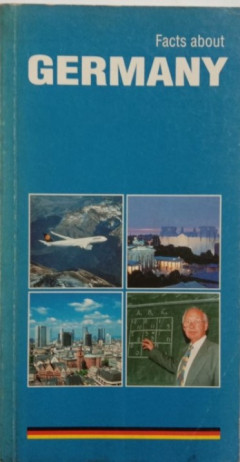
Facts about Germany
Contents: 1. History 2. Country and people 3. The federal states 4. Political system, constitution, law etc.
- Edisi
- -
- ISBN/ISSN
- 3-7973-0592-3
- Deskripsi Fisik
- 492 pages ; illustrations ; 19 cm
- Judul Seri
- -
- No. Panggil
- 943 Kap f
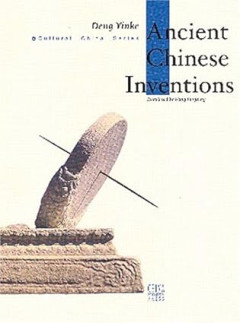
Ancient Chinese inventions
The book introduces many Chinese inventions covering all aspects of life, from the four major inventions a gunpowder, paper, printing, compass -- to numerous other major and smart inventions such as iron and steel smelting, the decimal and binary systems, acupuncture, kite, abacus, parachute, and many more. China as an important source of human civilization had given birth to brilliant ancient …
- Edisi
- -
- ISBN/ISSN
- 7-5085-0873-8
- Deskripsi Fisik
- 134 pages : illustrations ; 23 cm
- Judul Seri
- -
- No. Panggil
- 931 Yin a

Studies in the history and archaeology of Jordan IV
This book contains: 1. General introduction to the theme "Sites and settlements in Jordan" 2. Demographic issues in pleistocene prehistory 3. Earthquake effects on Bilad Ash-Shaam settlements 4. Periods of ore exploitation and metal production in the area of Feinan 5. Environmental, economic, and political constraints on ancient settlement patterns in the Wadi Al-Yabis region
- Edisi
- -
- ISBN/ISSN
- -
- Deskripsi Fisik
- 421 pages ; 28 cm
- Judul Seri
- -
- No. Panggil
- 956.95 Tel s
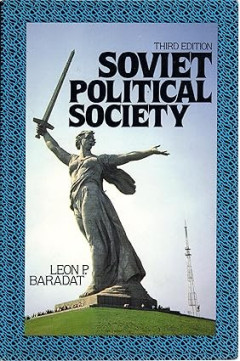
Soviet political society
This revised edition examines the Soviet political system from the perspective of geography, history, cultural factors and social problems as well as from the traditional aspects of the Communist Party and government. Contents: 1. Geography 2. Russian history 3. Soviet history 4. The communist and other parties 5. Soviet governmet, etc.
- Edisi
- ed.3
- ISBN/ISSN
- 0-13-824962-8
- Deskripsi Fisik
- xvi, 461 pages : illustrations (black and white) ; 23 cm
- Judul Seri
- -
- No. Panggil
- 947 Bar s
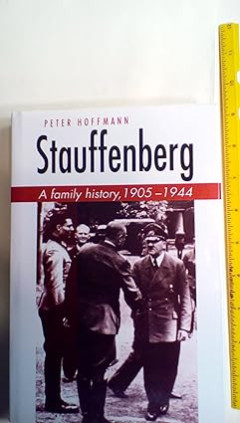
Stauffenberg: A family history, 1905–1944
This book examines the extraordinary personality of Claus Count Stauffenberg, a key figure in the 1944 coup attempt against Hitler. Stauffenberg personality is thrown into relief by a study of his two brothers and other family members and friends. The three Stauffenberg brothers, Berthold, Alexander, and Claus, were inseparable both emotionally and intellectually. Their view of human existence …
- Edisi
- -
- ISBN/ISSN
- 0-521-45307-0
- Deskripsi Fisik
- xvii, 424 pages : illustrations (black and white) ; 23 cm
- Judul Seri
- -
- No. Panggil
- 943.086 Hof s

The new regime: Transformations of the French civic order, 1789-1820s
Contents: 1. Lawmaking and local authority 2. Political participations : The first waves 3. Political participation : The denouement 4. Integrating the villages 5. State intervention in village life 6. Primary education, etc.
- Edisi
- -
- ISBN/ISSN
- 0-393-31397-2
- Deskripsi Fisik
- 536 pages ; 23 cm
- Judul Seri
- -
- No. Panggil
- 944 Wol n
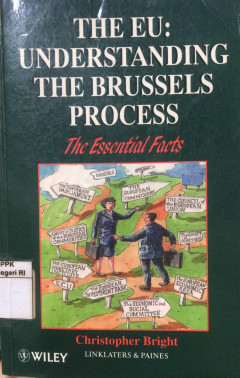
The EU: Understanding the Brussels process
Map of the Member States of the European Union 1. Introduction 2. Council of the European Union 3. European Commission 4. European Parliament 5. Court of Justice of the European Communities (ECJ) 6. Other Community Bodies 7. EC Legislative Process 8. Enforcing EC Rights 9. Council of Europe 10. New Europe
- Edisi
- -
- ISBN/ISSN
- 0471-95608-2
- Deskripsi Fisik
- xii, 238 pages : illustrations (black and white) ; 23 cm
- Judul Seri
- -
- No. Panggil
- 940 Bri e
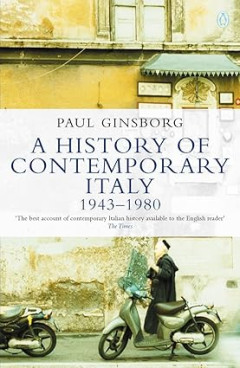
A history of contemporary Italy 1943-1980
Traces the history of Italy since World War II, focusing on its transformation from a poor, agrarian, war torn country to an urban industrialized one, and its simultaneous failure to achieve political reform.
- Edisi
- -
- ISBN/ISSN
- 978-0-140-12496-5
- Deskripsi Fisik
- 586 pages : illustrations (black and white) ; 20 cm
- Judul Seri
- -
- No. Panggil
- 945 Gin h

A short history of the Netherlands from prehistory to the present day
The development of the Netherlands over the centuries has been a remarkable one. Situated at "the end of Europe," between land and water, its people have, for more than three thousand years, fought to makethe best of a country unfavoured by nature. They have shaped it into one of the world's foremost economic powers but also, and even more importantly, into a society that prides itself on havin…
- Edisi
- cet. 3
- ISBN/ISSN
- 90-6109-4402
- Deskripsi Fisik
- 160 pages : illustrations ; 23 cm
- Judul Seri
- -
- No. Panggil
- 949.2 Rie s
 Karya Umum
  Filsafat
  Agama
Agama  Ilmu-ilmu Sosial
  Bahasa
  Ilmu-ilmu Murni
  Ilmu-ilmu Terapan
  Kesenian, Hiburan, dan Olahraga
  Kesusastraan
  Geografi dan Sejarah