Ditapis dengan

China and Asia's security: China in the globalized world series volume 1
The China in the globalized world series examines regionalism and regional studies, economics and policy studies, politics and international relations. China's role in the globalized world will be studied, taking into account the social and economic developments as well as cultural and theoretical developments in contemporary China. The aim is to present a different perspective on developmen…
- Edisi
- Vol. 1
- ISBN/ISSN
- 981-210-426-7
- Deskripsi Fisik
- v, 97 pages ; 23 cm
- Judul Seri
- -
- No. Panggil
- 951 Stu c
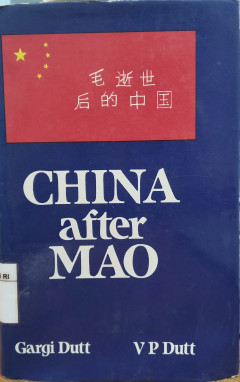
China after Mao
Contents: 1. The trauma of Tiananmen 2. From Hua Guofeng to Deng Xiaoping 3. Era of reforms: The first phase 4. Reform with tears: The gathering storm 5. Reforms with tears II etc.
- Edisi
- -
- ISBN/ISSN
- 0-7069-5331-2
- Deskripsi Fisik
- viii, 509 pages ; 22 cm
- Judul Seri
- -
- No. Panggil
- 951 Dut c

La francophonie: Histoire, problematique, perspectives
The most comprehensive work on the subject to date. It describes the evolution of the Francophonie and analyzes the issues that are likely to shape its future. It also provides a synthesis of the faith and passion that drove the builders of the Francophonie.
- Edisi
- Ed. 3
- ISBN/ISSN
- 2-7601-1922-X
- Deskripsi Fisik
- 426 pages : illustrations (black and white) ; 23 cm
- Judul Seri
- -
- No. Panggil
- 943.3 Tet f

Cina, Quo Vadis: Pasca Deng Xiaoping
Buku ini berisi tulisan-tulisan yang berupaya untuk merekam berbagai ketidakpastian perkembangan politik dan ekonomi di China. Daftar isi: 1. Partai komunis Cina menghadapi badai 2. Cina pasca Deng Xiaoping, Quo Vadis? 3. Dimensi baru pergulatan politik Cina 4. Status super power, kegelisahan tetangga 5. Ekonomi China : Antara sosialisme dan kapitalisme.
- Edisi
- -
- ISBN/ISSN
- 979-416-357-0
- Deskripsi Fisik
- xii, 173 halaman ; 20 cm
- Judul Seri
- -
- No. Panggil
- 951 Bak c
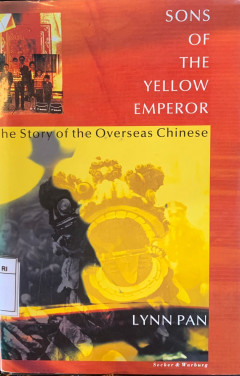
Sons of the Yellow Emperor: The story of the overseas Chinese
An examination of the Chinese emigrant experience, examining the history of Chinese emigration, its effects on emigrants and host nations alike and the culture and achievements of Chinese who have settled abroad. The Chinese diaspora, the most widespread varied and prolonged series of emigrations by one nation, began in the 1500s and continues to this day. This study covers the emigration from …
- Edisi
- -
- ISBN/ISSN
- 0-436-35374-1
- Deskripsi Fisik
- xvii, 408 pages ; 24 cm
- Judul Seri
- -
- No. Panggil
- 920 Pan s

The proud tower: A portrait of the world before the war, 1890-1914
During the fateful quarter century leading up to World War I, the climax of a century of rapid, unprecedented change, a privileged few enjoyed luxury as the underclass was “heaving in its pain, its power, and its hate.” In "The Proud Tower", Barbara W. Tuchman brings the era to vivid life: the decline of the Edwardian aristocracy, the Anarchists of Europe and America, Germany and its sel…
- Edisi
- -
- ISBN/ISSN
- 0-345-40501-3
- Deskripsi Fisik
- xiii, 528 pages : illustrations (black and white) ; 20 cm
- Judul Seri
- -
- No. Panggil
- 909.821 Tuc p

Westerling: Kudeta yang gagal
Bagi beberapa prajurit,perang adalah kehidupan ataupun sumber penghidupan. Namun bagi Westerling,perang adalah petualangan yang menyenangkan. Prahara di Paris van Java yang dilakukan Raymond Westerling meninggalkan luka dalam sejarah Indonesia. Indonesia baru saja mendapat pengakuan de jure dari Belanda. Indonesia juga dihadapkan pada bentuk negara federasi berupa Republik Indonesia Serikat.…
- Edisi
- -
- ISBN/ISSN
- 979-222-194-8
- Deskripsi Fisik
- 127 halaman ; 21 cm
- Judul Seri
- -
- No. Panggil
- 900 Mat w

Millennium: A history of our last thousand years
Presenting a narrative history of the world over the last 1000 years, this book shows how it might be regarded by a remote future age. The traditional Europe-centred world image is questioned. Contents: 1. The springs of initiative 2. The springs uncoiled 3. The atlantic crisis 4. The twist of initiative 5. The pacific challenge.
- Edisi
- -
- ISBN/ISSN
- 0-385-25545-4
- Deskripsi Fisik
- xvi, 830 : illustrations (black and white) ; 23 cm
- Judul Seri
- -
- No. Panggil
- 909 Arm m

Early kingdoms of the Indonesian archipelago and the Malay peninsula
At a time when sea navigation depended more on the skill and courage of sailors than on technology, men were nonetheless able to build maritime regional empires that stretched from Indochina to the Indonesian Archipelago. This book, which draws on a huge body of archaeological and documentary research, provides a much-needed overview of the history of the Malay Peninsula and insular Southeast A…
- Edisi
- -
- ISBN/ISSN
- 981-4155-67-5
- Deskripsi Fisik
- 392 pages : illustrations (black and white) ; 21 cm
- Judul Seri
- -
- No. Panggil
- 959.8 Mun e

Das vierte Reich: Deutschlands spater sieg
The contents of this book: 1. The moment of truth 2. The performance machine 3. The victors and the vanquished 4. The peaceful revenge, etc.
- Edisi
- -
- ISBN/ISSN
- 3-89136-304-4
- Deskripsi Fisik
- 288 pages ; 22 cm
- Judul Seri
- -
- No. Panggil
- 943 San d
 Karya Umum
  Filsafat
  Agama
Agama  Ilmu-ilmu Sosial
  Bahasa
  Ilmu-ilmu Murni
  Ilmu-ilmu Terapan
  Kesenian, Hiburan, dan Olahraga
  Kesusastraan
  Geografi dan Sejarah