Ditapis dengan

The logic of political survival
The authors of this ambitious book address a fundamental political question: why are leaders who produce peace and prosperity turned out of office while those who preside over corruption, war, and misery endure? Considering this political puzzle, they also answer the related economic question of why some countries experience successful economic development and others do not.
- Edisi
- -
- ISBN/ISSN
- 9780262524407
- Deskripsi Fisik
- xiii, 536 pages : index ; 22 cm.
- Judul Seri
- -
- No. Panggil
- 320.01 Mes l
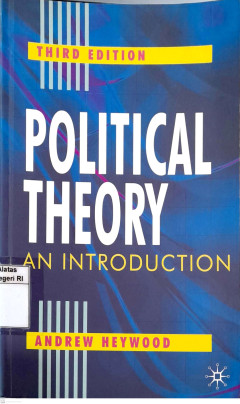
Political theory: An introduction
The new third edition of the highly successful text has been revised and updated throughout to take account of new issues such as identity and difference, globalization and multiculturalism. The book provides a clear and accessible introduction to political theory and key concepts in political analysis. Each chapter discusses a cluster of interrelated terms, examines how they have been used by …
- Edisi
- 3rd edition
- ISBN/ISSN
- 978-0-333-96180-3
- Deskripsi Fisik
- xvi, 416 pages : bibl: hlm 376-387 : index ; 24 cm
- Judul Seri
- -
- No. Panggil
- 320.01 Hey p
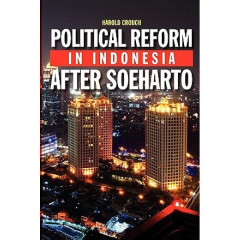
Political reform in Indonesia after Soeharto
Indonesia was in a parlous condition in 1998. Only a few years earlier, in of the Third World's the mid-1990s, it had often been portrayed as one of success stories.¹ President Soeharto's military-backed New Order was certainly authoritarian but it had underwritten political stability for almost three decades since the bloody upheaval surrounding the collapse of President Soekarno's Guided Dem…
- Edisi
- -
- ISBN/ISSN
- 978-981-230-920-4
- Deskripsi Fisik
- xi, 390 pages : bibl: hlm 351-371 : index ; 23 cm
- Judul Seri
- -
- No. Panggil
- 320.01 Cro p

Power and choice: An introduction to political science
Known for its comparative approach and its strong balance between theory and practical real-world examples, Power and choice continues as a best-seller, offering a brief but rich introduction to Political Science. Organized topically, this text maintains its use of extended examples of appropriate countries and its strong underlying theme: the contrasting purpose of political institutions as a …
- Edisi
- Fifth Edition
- ISBN/ISSN
- 0-07-057187-2
- Deskripsi Fisik
- xvii, 377 pages : bibliography, index, illustration ; 24 cm
- Judul Seri
- -
- No. Panggil
- 320 Shi p

Power and choice: An introduction to political science
This text embraces a comparative approach with a balance of theory and practical examples. Updated to reflect the current global condition, the book is aimed at lecturers who like to use a core main text and supplement it with readers, handouts, and other classroom activities.
- Edisi
- Second Edition
- ISBN/ISSN
- 0-07-056992-4
- Deskripsi Fisik
- xvii, 342 pages : bibliography, index, illustration ; 24 cm
- Judul Seri
- -
- No. Panggil
- 320 Shi p
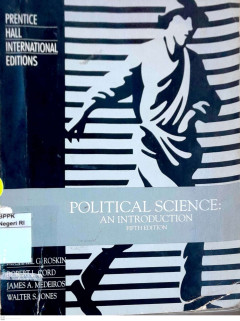
Political science: An introduction
The fifth edition continues with an eclectic approach that avoids selling any single theory, conceptual framework, or paradigm as the key to political science. Attempts to impose a methodological grand design are both unwarranted by the nature of the discipline and unconducive to the broadening of students in- tellectual horizons Instructors with a wide variety of viewpoints should have no trou…
- Edisi
- Ed.5
- ISBN/ISSN
- 0-13-098021-8
- Deskripsi Fisik
- xiv, 402 pages : index ; 24 cm
- Judul Seri
- -
- No. Panggil
- 320 Ros p
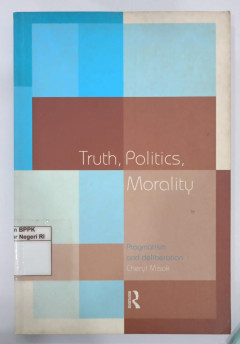
Truth, politics, morality: Pragmatism and deliberation
This book is in a way the final chapter of my D.Phil. thesis on pragmatism and truth, which was submitted at Oxford University over a decade ago. I had intended then to say something about moral judgement, but David Wiggins, who supervised that thesis, showed me just how far I had to go before I got anything close to right enough.
- Edisi
- -
- ISBN/ISSN
- 0-415-14036-6
- Deskripsi Fisik
- x, 182 pages : bibl: hlm 168-179 : index ; 23 cm
- Judul Seri
- -
- No. Panggil
- 320 Mis t

The great issues of politics: An introduction to political science
Presenting humanistic, ethical approach to the study of government, The Great Issues of Politics clarifies the fundamentals of politics in terms of five universal issues, each offering a choice that remains constant over time. The first issue deals with the reciprocal rights and duties of members of the state; the second, with the scope of governmental functions; the third, with the birthplace…
- Edisi
- Cetakan Kesembilan
- ISBN/ISSN
- 0-13-364407-3
- Deskripsi Fisik
- xvii, 414 pages : bibl: hlm 399 : index ; 24 cm
- Judul Seri
- -
- No. Panggil
- 320 Lip g
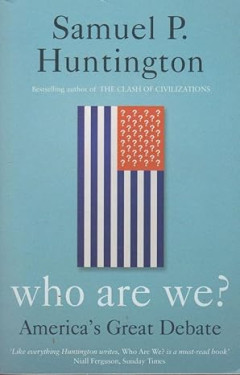
Who are we?: America's great debate
In Who are we? author Samuel Huntington turns his attention from international cultural divides to the cultural rifts in America. The patriotic response to the events of September 11 only highlighted the loss of American identity at home, says Huntington, and already patriotic fervour has begun to subside. The United States was founded by British settlers who brought with them a distinct cultur…
- Edisi
- -
- ISBN/ISSN
- 0-684-86669-2
- Deskripsi Fisik
- xviii, 428 pages : illustrations (black and white) : index ; 20 cm
- Judul Seri
- -
- No. Panggil
- 320 Hun w

The exception to the rulers : Exposing oily politicians, war profiteers, and …
Contents: 1. Blowback 2. OILYgarchy 3. Drilling and killing : Chevron and Nigeria's oil dictatorship 4. Crackdown 5. Smackdown 6. Lockdown 7. Lies of our times 8. State media, American style, etc.
- Edisi
- -
- ISBN/ISSN
- 1-4013-0799-X
- Deskripsi Fisik
- xix, 342 pages : index ; 20 cm
- Judul Seri
- -
- No. Panggil
- 320 Goo e
 Karya Umum
  Filsafat
  Agama
Agama  Ilmu-ilmu Sosial
  Bahasa
  Ilmu-ilmu Murni
  Ilmu-ilmu Terapan
  Kesenian, Hiburan, dan Olahraga
  Kesusastraan
  Geografi dan Sejarah