Ditapis dengan
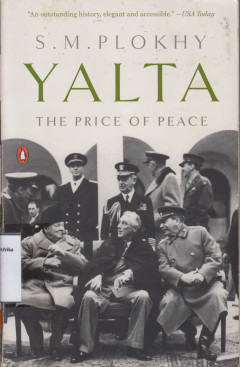
Yalta: The Price of peace
“Yalta: The Price of Peace” by historian Serhii Plokhy provides a comprehensive examination of the 1945 Yalta Conference, where Roosevelt, Churchill, and Stalin negotiated the political shape of the postwar world. Drawing from newly available archival materials, Plokhy reveals the strategic calculations, personal dynamics, and geopolitical pressures that shaped the decisions leading to the …
- Edisi
- -
- ISBN/ISSN
- ISBN 978-0-670-02141-3
- Deskripsi Fisik
- xxviii, 451 pages ; 21,5 cm
- Judul Seri
- -
- No. Panggil
- 940.5314 PLO y
The American constitution: Its Origins and development
This widely used academic text provides a comprehensive historical analysis of the origins and evolution of the United States Constitution. In this fifth edition, Alfred H. Kelly and Winfred A. Harbison trace the development of constitutional principles from the colonial era through the founding period and into the twentieth century. The book explores the philosophical foundations of American c…
- Edisi
- -
- ISBN/ISSN
- 0-393-09176-7
- Deskripsi Fisik
- xvii, 1196 pages ; 24,5 cm
- Judul Seri
- -
- No. Panggil
- 342.73029 KEL a
A Strategy of peace in a changing world
In this influential work, Arthur N. Holcombe examines the challenges of creating and sustaining peace in a rapidly changing international environment. He discusses the political, economic, and strategic forces shaping world affairs during the mid-twentieth century and explores the role of the United States in promoting global stability. Holcombe analyzes the requirements of an effective peace s…
- Edisi
- -
- ISBN/ISSN
- -
- Deskripsi Fisik
- 332 pages ; 21,5 cm
- Judul Seri
- -
- No. Panggil
- 327.172 HOL s

State of war: The Secret history of the CIA and the bush administration
James Risen’s investigative work exposes the clandestine operations and internal conflicts within the CIA during the George W. Bush administration. Drawing on confidential sources and classified accounts, the book reveals intelligence failures, unauthorized surveillance, covert missions, and the political pressures that shaped U.S. national security strategy after 9/11. Risen documents how di…
- Edisi
- -
- ISBN/ISSN
- 978-0-7432-7066-3
- Deskripsi Fisik
- xi, 240 pages : illustrations ; 23,5 cm
- Judul Seri
- -
- No. Panggil
- 327.1273 RIS s
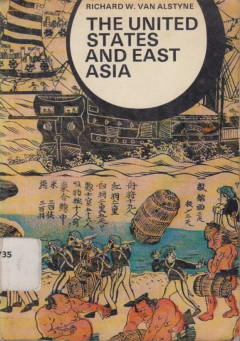
The United States and East Asia
This book provides a comprehensive historical survey of the political, economic, and diplomatic relations between the United States and East Asia. Richard W. Van Alstyne examines major developments in U.S. foreign policy toward China, Japan, Korea, and Southeast Asia, highlighting both cooperation and conflict from the nineteenth century through the Cold War era. The work explores the strategic…
- Edisi
- -
- ISBN/ISSN
- 0-500-71002-3
- Deskripsi Fisik
- 180 pages : illustrations ; 21 cm
- Judul Seri
- -
- No. Panggil
- 327.73 ALS u
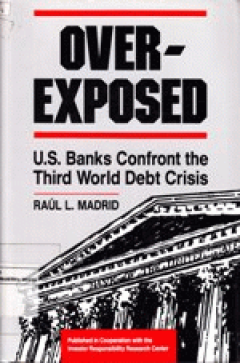
Over-exposed: U.S. Banks confront Third World debt crisis
Raul Madrid's Over-exposed represents the first in-depth study of the involvement of U.S. banks in the Third World debt crisis. Based on extensive interviews with commercial bankers, the book examines the decision-making process at U.S. banks that led to the lending boom of the 1970s and early 1980s as well as the role the banks played in the management of the debt crisis. Madrid argues that ba…
- Edisi
- -
- ISBN/ISSN
- 0-931-035-50-3
- Deskripsi Fisik
- xvi, 260 pages ; 24 cm
- Judul Seri
- -
- No. Panggil
- 336.343 MAD o

The Realities behind diplomacy: Background influences on British external pol…
This book examines the fundamental factors that influenced British foreign policy from the mid-19th century to 1980. Paul Kennedy examines the various aspects—economic strength, geographic location, social structure, strategic interests, and global power dynamics—that shaped how Britain responded to international change. Using historical approaches and political analysis, the book explains …
- Edisi
- -
- ISBN/ISSN
- -
- Deskripsi Fisik
- 416 pages ; 19,5 cm
- Judul Seri
- -
- No. Panggil
- 327.41009 KEN r
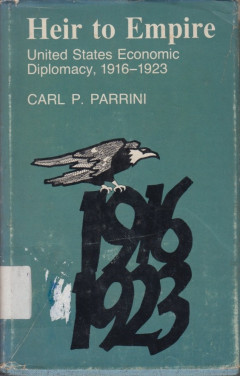
Heir to empire: United States economic diplomacy, 1916–1923
This scholarly work by Carl P. Parrini analyzes the emergence and evolution of United States economic diplomacy during the years 1916 to 1923, a period marked by World War I and the early postwar international order. Parrini examines how American policymakers, bankers, and business leaders shaped global financial structures and sought to expand U.S. influence through loans, trade policy, and ec…
- Edisi
- -
- ISBN/ISSN
- 0-8229-3178-8
- Deskripsi Fisik
- x, 303 pages ; 22,5 cm
- Judul Seri
- -
- No. Panggil
- 337.73 PAR h
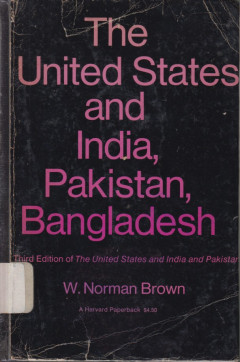
The United States and India, Pakistan, Bangladesh
This third edition by W. Norman Brown provides a comprehensive overview of the political, historical, and diplomatic relations between the United States and the major nations of South Asia—India, Pakistan, and the newly formed Bangladesh. Brown analyzes the evolution of American policy in the region, the influence of geopolitical tensions, and the differing national priorities that shaped int…
- Edisi
- -
- ISBN/ISSN
- -
- Deskripsi Fisik
- ix, 462 pages ; 23,5 cm
- Judul Seri
- -
- No. Panggil
- 327.73054 BRO u
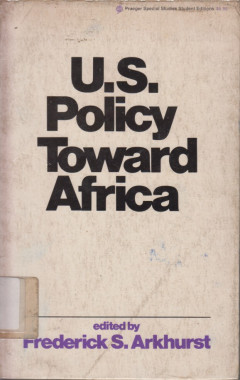
U.S. policy toward Africa
This volume examines the evolution of United States policy toward Africa during the post–World War II era, focusing on political, economic, and strategic factors that shaped American engagement with the continent. Edited by Frederick S. Arkhurst and produced in cooperation with the Phelps-Stokes Fund, the book provides analyses from multiple scholars and policymakers on issues such as decolon…
- Edisi
- -
- ISBN/ISSN
- 0-275-05330-X
- Deskripsi Fisik
- xi, 259 pages ; 23 cm
- Judul Seri
- -
- No. Panggil
- 327.7306 ARK u
 Karya Umum
  Filsafat
  Agama
Agama  Ilmu-ilmu Sosial
  Bahasa
  Ilmu-ilmu Murni
  Ilmu-ilmu Terapan
  Kesenian, Hiburan, dan Olahraga
  Kesusastraan
  Geografi dan Sejarah