Ditapis dengan
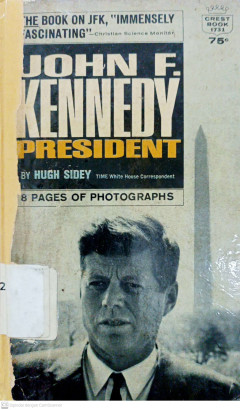
John F Kennedy president
John F. Kennedy, President by Hugh Sidey offers a vivid and intimate portrait of the 35th President of the United States. Written by a journalist who closely observed Kennedy throughout his political career, the book explores Kennedy’s leadership style, personal character, decision-making challenges, and the historical forces shaping his presidency. Sidey provides eyewitness accounts of Kenne…
- Edisi
- -
- ISBN/ISSN
- -
- Deskripsi Fisik
- x, 400 pages, 18 x 11 cm
- Judul Seri
- -
- No. Panggil
- 973.922 SID j
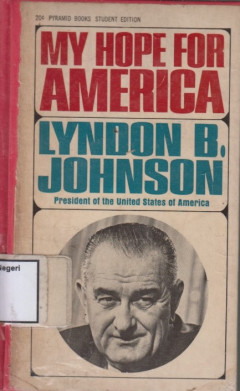
My Hope for America
My Hope for America presents Lyndon B. Johnson’s vision for the nation during a transformative era in American history. Through a collection of speeches, personal reflections, and policy statements, Johnson articulates his aspirations for civil rights progress, economic opportunity, education, healthcare, and national unity. The book offers insight into the philosophy behind Johnson’s “Gr…
- Edisi
- -
- ISBN/ISSN
- -
- Deskripsi Fisik
- 127 pages, 18 x 12 cm
- Judul Seri
- -
- No. Panggil
- 973.922 JOH h

Remembering America: A Voice from the sixties
Remembering America: A Voice from the Sixties is Richard N. Goodwin’s powerful memoir chronicling his experiences as a political aide and speechwriter during one of the most transformative decades in United States history. Goodwin provides an insider’s account of his work with President John F. Kennedy, President Lyndon B. Johnson, and other key figures shaping the era. The book explores ci…
- Edisi
- -
- ISBN/ISSN
- 0-316-32024-2
- Deskripsi Fisik
- viii, 552 pages ; 24 cm
- Judul Seri
- -
- No. Panggil
- 973.922 GOO r
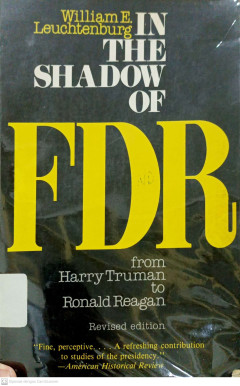
In the Shadow of FDR
In the Shadow of FDR examines how Franklin D. Roosevelt’s legacy shaped the American presidency from Harry Truman through Ronald Reagan. William E. Leuchtenburg analyzes how each president confronted, adapted, or struggled against the dominant expectations created during the New Deal era. Through historical narrative and political analysis, the book explores presidential power, public percept…
- Edisi
- -
- ISBN/ISSN
- 0-8014-9303-X
- Deskripsi Fisik
- xii, 355 pages, 23 x 15 cm
- Judul Seri
- -
- No. Panggil
- 973.92 LEU i
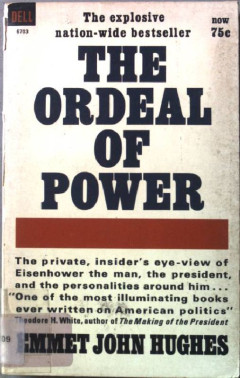
The Ordeal of power
“The Ordeal of Power” is a political memoir by Emmet John Hughes, who served as a close advisor and speechwriter to President Dwight D. Eisenhower. In this insightful narrative, Hughes provides a behind-the-scenes account of the inner workings of the Eisenhower administration, offering candid reflections on presidential decision-making, political challenges, and the complex realities of pow…
- Edisi
- -
- ISBN/ISSN
- -
- Deskripsi Fisik
- 320 pages, 18 x 11 cm
- Judul Seri
- -
- No. Panggil
- 973.921 HUG o
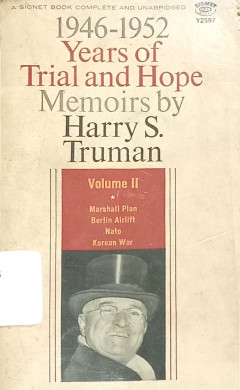
1946-1952 years of trial and hope: Memoirs by Harry S. Truman
Years of Trial and Hope, the second volume of Harry S. Truman’s memoirs, provides a firsthand account of the major political, diplomatic, and personal challenges faced during his presidency from 1945 to 1953. In this compelling narrative, Truman reflects on critical events such as the end of World War II, the decision to use the atomic bomb, the reconstruction of Europe through the Marshall P…
- Edisi
- Second Volume
- ISBN/ISSN
- -
- Deskripsi Fisik
- 638 pages ; 18 cm
- Judul Seri
- -
- No. Panggil
- 973.918 TRU m
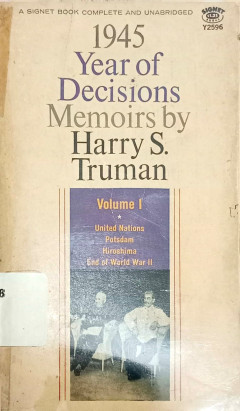
1945 year of decisions memoirs by Harry S. Truman
“Year of Decisions,” the first volume of Harry S. Truman’s memoirs, recounts Truman’s personal and political journey from the final months of World War II through the early years of his presidency. The book provides an inside perspective on major decisions such as the use of the atomic bomb, the founding of the United Nations, postwar reconstruction, and the beginnings of the Cold War. …
- Edisi
- First Volume
- ISBN/ISSN
- -
- Deskripsi Fisik
- x, 637 pages ; 18 cm
- Judul Seri
- -
- No. Panggil
- 973.918 TRU m
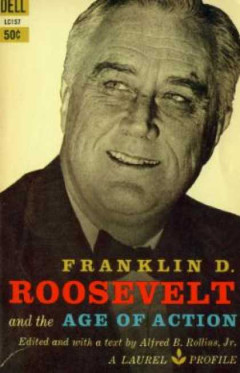
Roosevelt and the age of action
Franklin D. Roosevelt and the Age of Action provides an accessible profile of the life, leadership, and political legacy of the 32nd President of the United States. Edited and written by Alfred B. Rollins, Jr., the book explores Roosevelt’s rise to national prominence, his response to the Great Depression, and the transformative policies of the New Deal. It also examines the social, economic,…
- Edisi
- -
- ISBN/ISSN
- -
- Deskripsi Fisik
- 384 pages, 16 x 11 cm
- Judul Seri
- -
- No. Panggil
- 973.917 ROL f

When the cheering stopped
When the Cheering Stopped is a compelling historical narrative that explores the final years of President Woodrow Wilson, focusing on his declining health, political struggles, and the downfall of his dream for the League of Nations. Gene Smith offers an intimate portrayal of Wilson’s personal and political challenges after World War I, revealing the tensions within his administration, his de…
- Edisi
- -
- ISBN/ISSN
- -
- Deskripsi Fisik
- xiii, 305 pages ; 17,5 cm
- Judul Seri
- -
- No. Panggil
- 973.913 SMI w
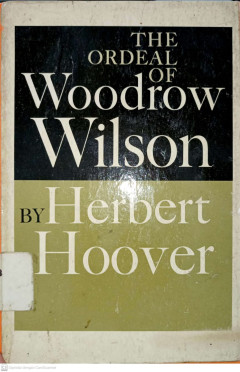
The Ordeal of Woodrow Wilson
The Ordeal of Woodrow Wilson is Herbert Hoover’s personal and political account of President Woodrow Wilson during the turbulent years surrounding World War I and its aftermath. Drawing from his close relationship with Wilson as head of wartime relief efforts, Hoover offers an insider’s perspective on Wilson’s struggles to negotiate peace, lead the United States through global crisis, and…
- Edisi
- -
- ISBN/ISSN
- -
- Deskripsi Fisik
- xiii, 318 pages : illustrations ; 20,1 cm
- Judul Seri
- -
- No. Panggil
- 973.913 HOO o
 Karya Umum
  Filsafat
  Agama
Agama  Ilmu-ilmu Sosial
  Bahasa
  Ilmu-ilmu Murni
  Ilmu-ilmu Terapan
  Kesenian, Hiburan, dan Olahraga
  Kesusastraan
  Geografi dan Sejarah