Ditapis dengan
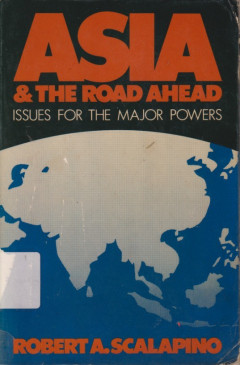
Asia and the road ahead: Issues for the major powers
This book presents an in-depth analysis of Asia’s evolving strategic landscape and the key issues shaping the region’s political future. Robert A. Scalapino examines the roles and interactions of major world powers—including the United States, China, Japan, and the Soviet Union—in influencing Asia’s political direction. The work highlights geopolitical tensions, security challenges, i…
- Edisi
- -
- ISBN/ISSN
- 0-520-03173-3
- Deskripsi Fisik
- x, 337 pages : illustration ; 21 cm
- Judul Seri
- -
- No. Panggil
- 327.5 SCA a
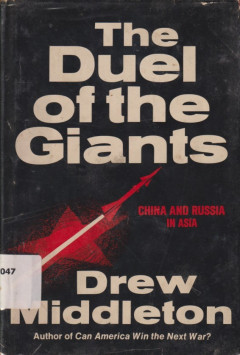
The Duel of the giants: China and Russia in Asia
This book provides an in-depth analysis of the geopolitical rivalry between China and Russia in Asia during the Cold War. Drew Middleton explores the historical roots of tensions, diplomatic conflicts, military strategies, and political motivations that shaped bilateral relations between the two major powers. The work examines how their competition influenced regional stability, foreign policy …
- Edisi
- -
- ISBN/ISSN
- 0-684-15785-3
- Deskripsi Fisik
- viii, 241 pages ; 21,5 cm
- Judul Seri
- -
- No. Panggil
- 327.51047 MID d

Strategies of Survival: The foreign policy dilemmas of smaller Asian States
Strategies of Survival examines how smaller Asian states navigate the complex realities of international politics amid pressure from major powers. Morrison and Suhrke analyze the diplomatic challenges, security concerns, and strategic responses adopted by Southeast Asian nations during the Cold War era. The book highlights patterns of alignment, balancing, and foreign policy adaptation as these…
- Edisi
- -
- ISBN/ISSN
- 0-7022-1117-6
- Deskripsi Fisik
- x, 346 pages ; 22,5 cm
- Judul Seri
- -
- No. Panggil
- 327.59 SUH s

Southeast Asia and the world of tomorrow
“This publication discusses the political, economic, and strategic challenges facing Southeast Asia and explores possible future developments for the region. Produced by the Centre for Strategic and International Studies (CSIS) Jakarta, the work outlines regional dynamics, international alignments, and prospects for Southeast Asia’s role in global affairs. It reflects early scholarly assess…
- Edisi
- -
- ISBN/ISSN
- -
- Deskripsi Fisik
- xi, 406 pages ; 21,5 cm
- Judul Seri
- -
- No. Panggil
- 327.59 CEN s

Southeast Asia: Problems of United States policy
This book examines the major issues faced by the United States in formulating its policy toward Southeast Asia during the early Cold War period. Edited by William Henderson, it analyzes political, economic, and security considerations that shaped American involvement in the region. Through contributions by subject-matter experts, the volume explores regional dynamics, nationalist movements, the…
- Edisi
- -
- ISBN/ISSN
- -
- Deskripsi Fisik
- xiv, 273 pages ; 21 cm
- Judul Seri
- -
- No. Panggil
- 327.59 HEN s

The Role of middle powers in the Pacific: Indonesia–Canada relations toward…
This book presents a collection of papers from the First Indonesia–Canada Conference, held in Sanur, Bali, in February 1985. It explores the evolving roles of middle powers in the Pacific region, focusing particularly on Indonesia–Canada relations and their strategic outlook towards the year 2000. The discussions address political cooperation, economic engagement, regional security, and the…
- Edisi
- -
- ISBN/ISSN
- 979-8026-00-4
- Deskripsi Fisik
- vi, 193 pages ; 21,5 cm
- Judul Seri
- -
- No. Panggil
- 327.598 CEN r

Le Moyen-Orient au XXᵉ siècle: Sociétés politiques et relations internat…
This book presents an analytical overview of the political evolution and international relations of the Middle East during the twentieth century. Jean-Pierre Derriennic examines the region’s various political systems, social structures, interstate dynamics, and the major conflicts that shaped contemporary Middle Eastern societies. Emphasizing comparative political analysis, the work explores …
- Edisi
- -
- ISBN/ISSN
- -
- Deskripsi Fisik
- 282 pages : illustrations ; 23 cm
- Judul Seri
- -
- No. Panggil
- 956.05 DER l
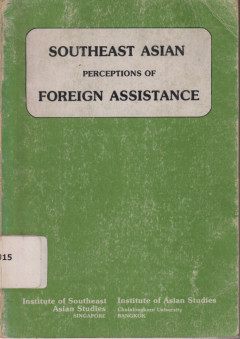
Southeast Asian perceptions of foreign assistance
This volume presents the papers and proceedings of a workshop held at Chulalongkorn University in June 1976, jointly organized by the Institute of Southeast Asian Studies (Singapore) and the Institute of Asian Studies of Chulalongkorn University. The book explores how Southeast Asian countries perceive foreign assistance, examining political, economic, and social dimensions of aid in the region…
- Edisi
- -
- ISBN/ISSN
- -
- Deskripsi Fisik
- x, 185 pages ; 21 cm
- Judul Seri
- -
- No. Panggil
- 337.159 LIM s

From Bandung to Colombo: Conferences of the non-aligned countries, 1955–75
This book provides a comprehensive overview of the Non-Aligned Movement from the 1955 Bandung Conference to the 1975 Colombo Conference. Edited by A. W. Singham and Tran Van Dinh, the volume presents key documents, speeches, resolutions, and commentary on the political and diplomatic evolution of the non-aligned countries during the Cold War. It examines the struggle for independence, global so…
- Edisi
- -
- ISBN/ISSN
- 0-89388-220-8
- Deskripsi Fisik
- v, 223 pages : illustrations ; 28 cm
- Judul Seri
- -
- No. Panggil
- 327.172 SIN f

Southeast Asia in international politics, 1941-1956
This book provides a comprehensive analysis of Southeast Asia’s position in international politics from 1941 to 1956, a period marked by World War II, Japanese occupation, postwar reconstruction, and the emergence of nationalist movements throughout the region. Evelyn Colbert examines how global power rivalries—particularly between the United States, the United Kingdom, and emerging Asian s…
- Edisi
- -
- ISBN/ISSN
- 0-8014-0971-3
- Deskripsi Fisik
- 372 pages ; 23,5 cm
- Judul Seri
- -
- No. Panggil
- 327.0959 COL s
 Karya Umum
  Filsafat
  Agama
Agama  Ilmu-ilmu Sosial
  Bahasa
  Ilmu-ilmu Murni
  Ilmu-ilmu Terapan
  Kesenian, Hiburan, dan Olahraga
  Kesusastraan
  Geografi dan Sejarah