Ditapis dengan
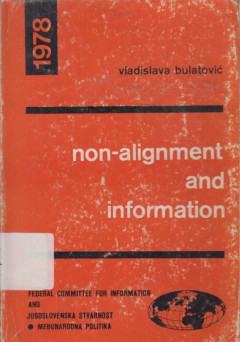
Non-alignment and information
This book analyzes the role of information policy within the Non-Aligned Movement, focusing on how communication, media, and state information systems influence political positioning among developing countries. Vladislava Bulatović discusses Yugoslavia’s informational strategy and the broader effort of Non-Aligned nations to establish an independent and balanced global information order. The…
- Edisi
- -
- ISBN/ISSN
- -
- Deskripsi Fisik
- 119 pages ; 20 cm
- Judul Seri
- -
- No. Panggil
- 327.17 BUL n

Report and selected documents of the forty-first session, Abuja, Nigeria, 15â…
This volume contains the official report and selected documents of the Forty-First Session of the Asian-African Legal Consultative Organization (AALCO), held in Abuja, Nigeria, from 15 to 19 July 2002. The publication records discussions, resolutions, and legal studies presented by member states, focusing on issues of international law relevant to Asia and Africa. It serves as a key reference f…
- Edisi
- -
- ISBN/ISSN
- -
- Deskripsi Fisik
- xiii, 654 pages ; 24 cm
- Judul Seri
- -
- No. Panggil
- 341.023 ASI r
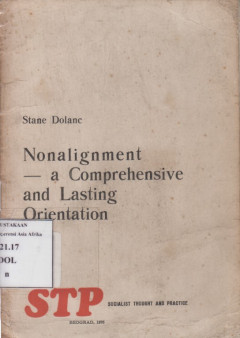
Nonalignment — a comprehensive and lasting orientation
This publication presents a political address by Stane Dolanc, offering a comprehensive analysis of the Non-Aligned Movement as a long-term and principled orientation for developing countries. Dolanc discusses the ideological foundations of nonalignment, its importance in preserving independence amid global power blocs, and its role in promoting peaceful coexistence, international cooperation, …
- Edisi
- -
- ISBN/ISSN
- -
- Deskripsi Fisik
- 24 pages ; 20 cm
- Judul Seri
- -
- No. Panggil
- 327.17 DOL n

Basic information on Asian and African sub regional organizations
This book provides essential reference information on various Asian and African sub-regional organizations. Compiled by the Department of Foreign Affairs of the Republic of Indonesia, it outlines the background, structure, objectives, and activities of regional bodies operating across Asia and Africa. The publication aims to support diplomatic, academic, and policy research by offering concise …
- Edisi
- -
- ISBN/ISSN
- -
- Deskripsi Fisik
- 106 pages; 19 cm
- Judul Seri
- -
- No. Panggil
- 327.17 DEP b

Final documents: The Conference of ministers of food and agriculture of the n…
This volume contains the final documents of the Conference of Ministers of Food and Agriculture of the Non-Aligned Movement, held in Bali, Indonesia, from October 7–11, 1994. It includes resolutions, declarations, policy recommendations, and action frameworks addressing food security challenges in developing countries. The documents highlight the role of South–South cooperation, sustainable…
- Edisi
- -
- ISBN/ISSN
- -
- Deskripsi Fisik
- iii, 213 pages ; 24 cm
- Judul Seri
- -
- No. Panggil
- 338.19 CON f
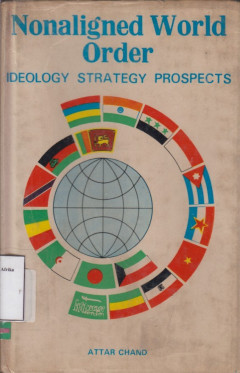
Nonaligned world order: Ideology, strategy, prospects
This book presents an analytical study of the ideology, strategic foundations, and future prospects of the Non-Aligned Movement within the global political order. Attar Chand examines the philosophical principles behind nonalignment, the geopolitical realities of the Cold War era, and the aspirations of developing nations seeking independence from the influence of superpowers. The work discusse…
- Edisi
- -
- ISBN/ISSN
- -
- Deskripsi Fisik
- lxiii, 262 pages ; 22,5 cm
- Judul Seri
- -
- No. Panggil
- 327.172 CHA n
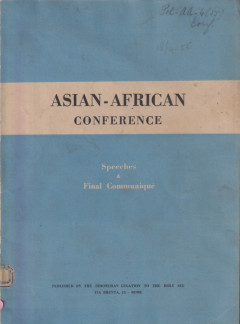
Asian-African conference: Speeches & final ommuniqué
This publication contains the official speeches and the Final Communiqué of the 1955 Asian-African Conference held in Bandung, Indonesia. Issued by the Indonesian Legation to the Holy See in Rome, the document presents the political statements, deliberations, and collective resolutions of 29 participating nations from Asia and Africa. It reflects the spirit of solidarity among newly independen…
- Edisi
- -
- ISBN/ISSN
- -
- Deskripsi Fisik
- 63 pages : illustrations ; 23 cm
- Judul Seri
- -
- No. Panggil
- 327.17 ASI a

The Color curtain: A Report on the Bandung conference
This book by Richard Wright offers a first-hand journalistic and reflective account of the 1955 Asian-African Conference held in Bandung, Indonesia. Through vivid narrative and political observation, Wright explores the aspirations, tensions, and historical context behind the gathering of newly independent nations of Asia and Africa. The work highlights issues of race, colonialism, nationalism,…
- Edisi
- -
- ISBN/ISSN
- 0-87805-748-X
- Deskripsi Fisik
- 245 pages ; 21 cm
- Judul Seri
- -
- No. Panggil
- 327.506 WRI c
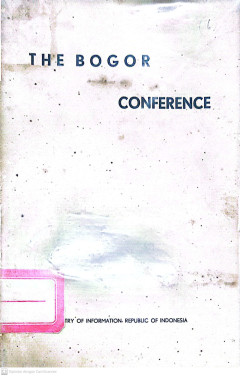
The Bogor conference
This publication presents an official account of the Bogor Conference of 1954, a crucial preparatory meeting leading to the Asian-African Conference in Bandung in 1955. Issued by the Ministry of Information of the Republic of Indonesia, the book outlines the discussions, objectives, and political atmosphere surrounding the Bogor Meeting. It highlights the emerging solidarity among Asian and Afr…
- Edisi
- -
- ISBN/ISSN
- -
- Deskripsi Fisik
- 51 pages ; 21 cm
- Judul Seri
- -
- No. Panggil
- 327.598 MIN b

The Third world without superpowers: The Collected documents of the non-align…
This fourth volume of The Third World Without Superpowers completes the collection of official documents produced by the Non-Aligned Countries during the formative period of the movement. It features resolutions, declarations, meeting records, and policy statements reflecting the political, economic, and diplomatic concerns of developing nations during the Cold War. Edited by Odette Jankowitsch…
- Edisi
- -
- ISBN/ISSN
- 0-379-00968-4
- Deskripsi Fisik
- xiv, 2522 pages ; 26 cm
- Judul Seri
- -
- No. Panggil
- 327.09172 JAN t
 Karya Umum
  Filsafat
  Agama
Agama  Ilmu-ilmu Sosial
  Bahasa
  Ilmu-ilmu Murni
  Ilmu-ilmu Terapan
  Kesenian, Hiburan, dan Olahraga
  Kesusastraan
  Geografi dan Sejarah