Ditapis dengan

Spanning a revolution: Kisah Mohamad Bondan, eks-digulis, dan pergerakan nasi…
Dalam buku ini Molly Bondan mengisahkan kehidupan suaminya, Mohamad Bondan, tokoh pergerakan Nasional yang sejak usia remaja memperjuangkan kemerdekaan bagi Indonesia. Karena aktifitas politiknya mendukung Kemerdekaan Indonesia pada 1945, ia ditangkap oleh pemerintah kolonial Belanda. Molly, yang bernama asli Molly Warner, berasal dari Australia. Pada perkembangannya, ia tertarik dengan poli…
- Edisi
- cet.1
- ISBN/ISSN
- 978-979-461-698-7
- Deskripsi Fisik
- xx, 423 pages : illustrations (black and white) ; 21 cm
- Judul Seri
- -
- No. Panggil
- 923.2 BON s

Toward freedom: The Autobiography of Jawaharlal Nehru
Toward Freedom is the autobiographical account of Jawaharlal Nehru, one of India’s foremost leaders and the first Prime Minister of independent India. Written during his imprisonment by British authorities, the book offers a vivid narrative of Nehru’s personal life, political awakening, and philosophical reflections. It highlights his experiences in the Indian independence movement, his r…
- Edisi
- -
- ISBN/ISSN
- -
- Deskripsi Fisik
- xii, 449 pages : illustrations ; 22,2 cm
- Judul Seri
- -
- No. Panggil
- 954.04 NEH t
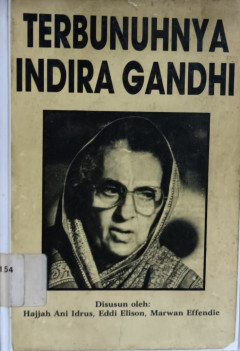
Terbunuhnya Indira Gandhi
Pembunuhan Indira Gandhi menyajikan laporan jurnalistik dan historis tentang peristiwa-peristiwa yang mengelilingi pembunuhan Perdana Menteri India Indira Gandhi pada Oktober 1984. Disusun oleh Hajjah Ani Idrus, Eddi Elison, dan Marwan Effendie, buku ini mendokumentasikan ketegangan politik sebelum pembunuhan, keadaan serangan, dampak di India, dan reaksi publik di seluruh dunia. Ditulis d…
- Edisi
- -
- ISBN/ISSN
- -
- Deskripsi Fisik
- 250 pages : illustrations ; 21,3 cm
- Judul Seri
- -
- No. Panggil
- 954.04 IDR t

Jawaharlal Nehru: A Biography. Volume One, 1889–1947
Jawaharlal Nehru: A Biography, Volume One, 1889–1947 is the first part of Sarvepalli Gopal’s definitive and scholarly biography of India’s first prime minister. This volume traces Nehru’s early life, education, and political awakening, offering a detailed account of his involvement in India’s struggle for independence alongside Mahatma Gandhi. Gopal examines Nehru’s evolving pol…
- Edisi
- -
- ISBN/ISSN
- 0-19-561617-2
- Deskripsi Fisik
- 398 pages : illustrations ; 23,7 cm
- Judul Seri
- -
- No. Panggil
- 954.03 GOP j

Jawaharlal Nehru: A Biography. Volume Two, 1947–1956
Jawaharlal Nehru: A Biography, Volume Two, 1947–1956 continues Sarvepalli Gopal’s authoritative and detailed account of the life of India’s first Prime Minister. This volume begins with India’s independence in 1947 and explores Nehru’s central role in shaping the new nation—politically, socially, and institutionally. Gopal examines Nehru’s leadership in establishing democratic…
- Edisi
- -
- ISBN/ISSN
- 0-19-561810-8
- Deskripsi Fisik
- 346 pages : illustrations ; 23,7 cm
- Judul Seri
- -
- No. Panggil
- 954.04 GOP j

Jawaharlal Nehru: A Biography, volume Three, 1956–1964
Jawaharlal Nehru: A Biography, Volume Three, 1956–1964 by historian Sarvepalli Gopal is the concluding volume of the authoritative and most comprehensive biography of India’s first prime minister. Covering the final years of Nehru’s life, the book examines his political challenges, including India’s evolving foreign policy, relations with China leading to the 1962 war, the reorganizatio…
- Edisi
- -
- ISBN/ISSN
- -
- Deskripsi Fisik
- 336 pages : illustrations ; 23,7 cm
- Judul Seri
- -
- No. Panggil
- 954.04 GOP j
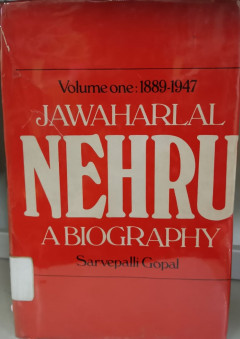
Jawaharlal Nehru: A Biography, volume one: 1889-1947
An authoritative and comprehensive account of Jawaharlal Nehru’s early life, political awakening, and his prominent role in India’s struggle for independence. Drawing from private letters, archival materials, and official documents, Gopal presents an in-depth analysis of Nehru’s intellectual development, his relationship with Mahatma Gandhi, and his emergence as a leading figure of the In…
- Edisi
- -
- ISBN/ISSN
- -
- Deskripsi Fisik
- 398 pages : illustrations ; 23,7 cm
- Judul Seri
- -
- No. Panggil
- 954.04 GOP j

Jawaharlal Nehru: A Biography, volume two: 1947-1956
A detailed historical and political account of Nehru’s crucial early years as the first Prime Minister of independent India. This volume explores Nehru’s leadership during the nation-building period, his domestic policies, foreign relations, and the challenges India faced after independence. Drawing on archival materials, personal papers, and official documents, Gopal provides deep insights…
- Edisi
- -
- ISBN/ISSN
- -
- Deskripsi Fisik
- 346 pages : illustrations ; 23,7 cm
- Judul Seri
- -
- No. Panggil
- 954.04 GOP j

Gandhi: His life and message for the world
A concise and engaging biography of Mohandas K. Gandhi written by renowned journalist and historian Louis Fischer. The book highlights Gandhi’s early life, moral development, and his leadership in India’s nonviolent struggle for independence. Fischer captures Gandhi’s spiritual principles, political strategies, and enduring influence on global movements for peace, justice, and human right…
- Edisi
- -
- ISBN/ISSN
- -
- Deskripsi Fisik
- 189 pages ; 18 cm
- Judul Seri
- -
- No. Panggil
- 954.035092 FIS g
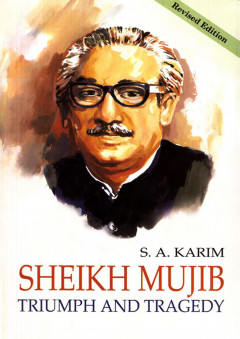
Sheikh Mujib: Triumph and tragedy
Writing an objective biography of Sheikh Mujibur Rahman, the only larger-than-life political figure of Muslim Bengal, is no easy task for a historian. In this well-researched book, Sayyid A. Karim has given a fascinating account of the life of Sheikh Mujib and makes an assessment of his legacy.Separating the man from the myth, the author has drawn a moving portrait of a heroic man who triumphed…
- Edisi
- -
- ISBN/ISSN
- 978 984 506 153 7
- Deskripsi Fisik
- xvi, 402 pages ; 22 cm
- Judul Seri
- -
- No. Panggil
- 954.92 KAR s
 Karya Umum
  Filsafat
  Agama
Agama  Ilmu-ilmu Sosial
  Bahasa
  Ilmu-ilmu Murni
  Ilmu-ilmu Terapan
  Kesenian, Hiburan, dan Olahraga
  Kesusastraan
  Geografi dan Sejarah